
Chief Operating Officer - COO
Just assume you are in the middle of constructing your dream house. You have your walls up, they are starting to design, and then your contractor says, The price of steel just increased.
Suddenly, your budget plan becomes more or less under control. It is a fact of life for thousands of Pakistanis every month.
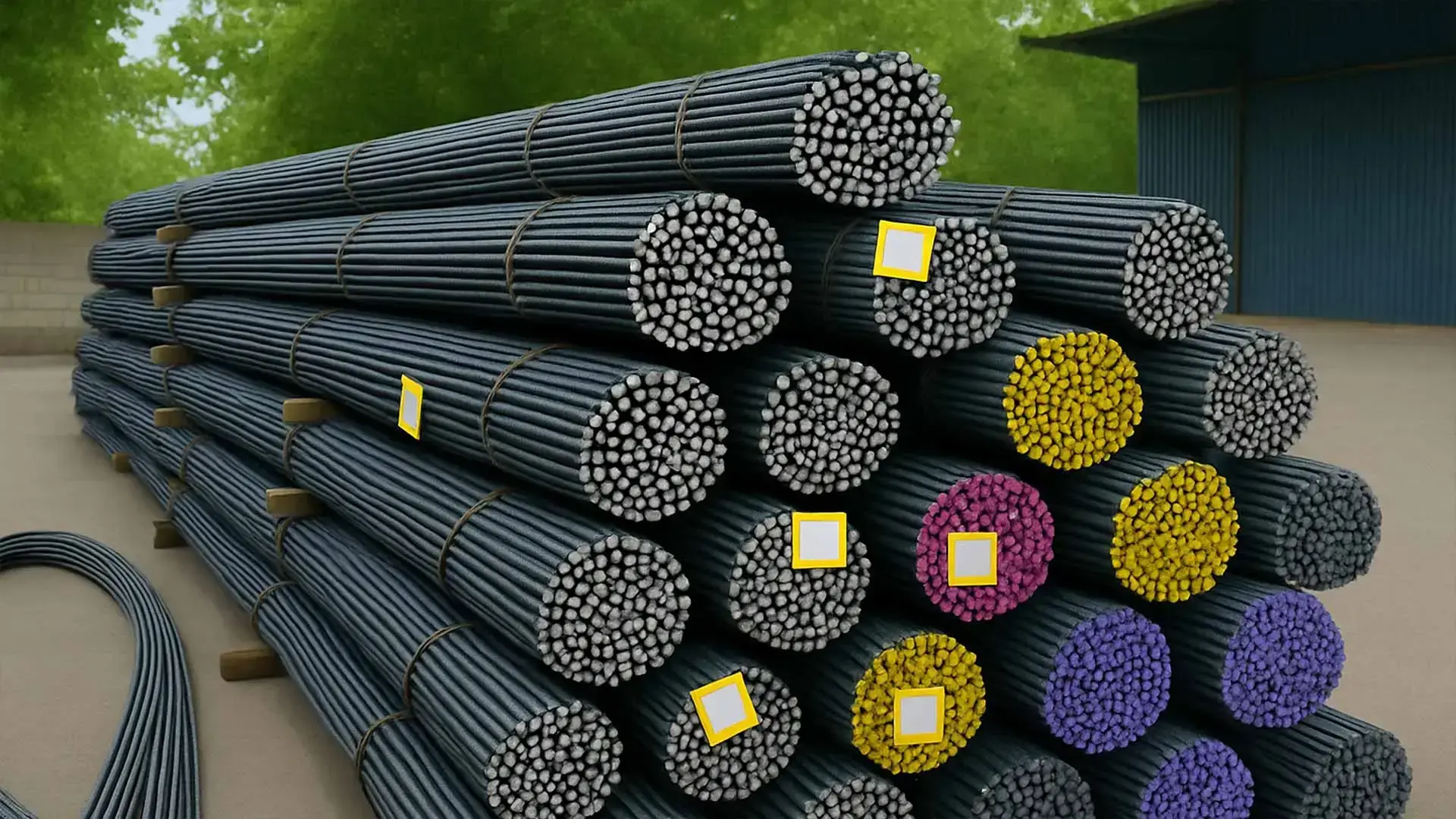
Steel is not a building material like any other. It is the framework of your home, the structure that supports the whole. And due to the frequent change in the price of steel, being up to date with the latest steel price in Pakistan (August 2025 update) can prevent unpleasant surprises.
In Short:
Local saria available in Faisalabad and Multan costs 226,000 per ton (local saria), but branded Grade 60, such as Amreli and Agha Steel, costs 254,000 per ton (August 2025, steel prices in Pakistan).
Prices depend on the brands, grades, and cities, and Grade 60 will always be at a premium of 10-15% more because it is stronger and more durable.
We have assembled the latest quoted prices: branded steel, local area or city price, grade-based saria, in easy-to-read tables.
| Size (Sutar/mm) | Grade 40 Rate (Rs/kg) | Grade 40 Rate (₨/MT) | Grade 60 Rate (₨/kg) | Grade 60 Rate (₨/MT) |
| 3 Sutar (10mm) | 240 | 240,000 | 242 | 242,000 |
| 4 Sutar(12mm) | 238 | 238,000 | 240 | 240,000 |
| 5 Sutar(16mm) | 238 | 238,000 | 240 | 240,000 |
| 6 Sutar(20mm) | 238 | 238,000 | 240 | 240,000 |
| 7 Sutar(22mm) | 238 | 238,000 | 240 | 240,000 |
| 8 Sutar(25mm) | 238 | 238,000 | 240 | 240,000 |
| Brand | Grade 40 (Rs/kg) | Grade 40 (Rs/MT) | Grade 60 (Rs/kg) | Grade 60 (Rs/MT) |
| Five Star Steel | 240 | 240,000 | 242 | 242,000 |
| Amreli Steels | 252 | 252,000 | 254 | 254,000 |
| Mughal Steel | 251 | 251,000 | 253 | 253,000 |
| Rasheed Steel | 242 | 242,000 | 244 | 244,000 |
| Agha Steel | 252 | 252,000 | 254 | 254,000 |
| AF Steel | 251 | 251,000 | 253 | 253,000 |
| Moiz Steel | 247 | 247,000 | 249 | 249,000 |
| Union Steel | 247 | 247,000 | 247 | 247,000 |
| Naveena Steel | 246 | 246,000 | 248 | 248,000 |
| City | Rate (Rs/kg) | Rate (Rs/MT) |
| Karachi | 232 | 232,000 |
| Lahore | 228 | 228,000 |
| Islamabad | 230 | 230,000 |
| Faislabad | 226 | 226,000 |
| Peshawar | 229 | 229,000 |
| Gujranwala | 226 | 226,000 |
| Quetta | 228 | 228,000 |
| Multan | 226 | 226,000 |
Related: Cement Price in Pakistan
The Importance of Steel in Today’s Construction
Steel is the main ingredient in all phases of modern construction (from the foundation to the final construction). It has killed all competition with the unmatched strength-to-weight ratio, durability, and resistance to seismic forces of its material, which has been the choice of builders in Pakistan. Compared to concrete or timber, steel provides flexibility in its design and allows acceleration of projects and easy adjustability to any architectural alteration.
In addition, the recyclability of steel and its durability make it a sustainable construction material, as it helps to minimize waste of materials and environmental footprint. It can be a residential house, a commercial center, or a major infrastructure, but one thing is that certified Grade 60 and more quality steel will provide you with a safe and secure structure and value over time.
How to Check the Quality of Steel Bars for Construction
The quality of steel bars or saria, as they are locally called, can only be checked before any structural work. The quality of steel guarantees the strength, durability, and resistance of the building against breaking or deformation with time.
Here’s how you can check it:
Grade 60 steel is verified and ensures that the steel has the ability to bear the load as well as minimize the costs of maintaining and repairing the steel in the long run.
Different Grades of Steel: Understanding Their Properties and Uses
Depending on the tensile strength, composition, and ductility of steel, the material is divided into various grades, and so are the constraints on the usage of the steel.
There are three most widespread grades in Pakistan:
The knowledge of the right grade also assists in offsetting cost, strength, and safety in any construction venture. Grade 60 Saria is mostly used by the builders because it offers optimal performance and cost-efficiency in the climate and seismic areas in Pakistan.
Steel vs Stainless Steel and Other Building Materials: A Comparison
In the construction of a building project, the choice of the material used is what makes or breaks the financial and structural integrity of the construction. There are exclusive features of steel, stainless steel, concrete, and timber; however, in Pakistan, construction-grade steel is the most widespread material.
Here’s a quick comparison:
| Material | Strength | Durability | Cost | Recyclability | Common Use |
| Steel | High | Long-lasting | Moderate | 100% recyclable | Frames, Beams, Reinforcement |
| Stainless Steel | Very High | Corrosion-resistant | Expensive | Recyclable | Decorative & Exposed Structures |
| Concrete | Moderate | Long lifespan | Low | Limited | Foundations, Slabs |
| Timber | Low | Vulnerable to pests | Moderate | Partly recyclable | Interior frameworks |
Although stainless steel is the best in terms of corrosion resistance, construction steel is the one that is selected because it is strong in relation to its costs, easy to build faster, and readily available. It is also more compatible with the weather of Pakistan and thus the most viable material to use in big projects.
The price of steel does not move up or down blindly. There are underlying factors that influence them. The following are the major causes why rates continue to change in Pakistan:
Steel is among the commodities that are highly traded worldwide. As global demand increases, perhaps during the rapid growth of infrastructure in the Middle East or the acceleration of housing and Industrial developments in the US or EU, the main steel mills in Pakistan get hot.
To this, add the effects of the international cost of shipping and oil costs. As the shipping of raw materials such as iron ore and coal will cost more as a result of a rise in global freight rates, imported raw steel materials will be more costly. In the case of Pakistan, which imports the majority of its inputs, this has a direct impact on increasing the local prices.
Locally in Pakistan, the construction industry is the largest creator of steel demand. Consumption of steel increases when the government announces new schemes of housing, dams, or CPEC-related schemes. The private builders and real estate developers also contribute a lot, particularly in cities such as Lahore, Karachi, and Islamabad, where urbanization has reached its climax.
Take another example of demand for grade 60 saria. When the Naya Pakistan Housing Program was announced, the local dealers reported a 10- 15 percent increment in necessitating grade 60 saria. The result? Costs shot up in a short time
The prices of steel are also determined by the regulations of the governments. Import tariffs on raw products such as scrap metal, iron ore, or even steel products are significant. When there is an increase in duties, this affects prices by being transferred to consumers by way of mills.
The same can be said about GST (General Sales Tax) and other impositions, which may increase the ultimate retail price of steel bars. In the alternative case, where the government subsidies or grants tax reliefs, the local rates can be reduced a bit. One of the greatest causes of sudden shifts in prices is policy shifts.
The major part of steel production is dependent on imported inputs into Pakistan. Prices for the purchases of scrap, machinery, and spare parts are paid in US dollars. When the Pakistan Rupee depreciates against the Dollar, the importation becomes expensive.
In the simplest explanation, a one percent fall in the value of the rupee can amount to thousands of rupees extra per ton of steel. This is the reason why exchange rate stability will always be essential in ensuring that the price of steel is predictable.
Steel making is energy-intensive. It needs gigantic amounts of electricity, natural gas, and labor. Inflation causes the prices of fuel or energy tariffs to rise automatically, which leads to an increase in the price of steel.
In a nutshell, an increase in electricity prices raised the cost of production by about 5000 to 7000 per ton in the early part of 2025, consequently increasing the saria prices directly in the market. This is an indication of the sensitivity of steel to inflation.
China is the world’s largest producer of steel and produces a record of over 50 percent of all the steel in the world. When Chinese factories switch off to reduce emissions or when there is a domestic upsurge in demand, the supply to the world market is reduced. That deficiency spreads to Pakistan.
Conversely, as China sells below the market price (low price), there is a tendency to drive local mill prices to the ground. In brief, the Pakistan steel market is directly related to the actions of Beijing.
In search of quality suppliers? The Best Construction and Building Materials Company in Pakistan can provide pure rates and quality.
Pakistan has only a handful of players in the steel market that cater to most of the construction requirements in the country. The choice of brand is important as it determines not only price but also the strength of the building and its safety.
The following are the biggest makers of steel in Pakistan:
Most of these manufacturers are recognized as PSQCA (Pakistan Standards & Quality Control Authority) manufacturers, meaning they have the local safety standards. Engineers and contractors usually go with branded steel since it is stronger, durable, and it meets building codes.
You might have been wondering why Saria’s rates never remain the same every week, and it is because the steel market is very sensitive. Prices change as a combination of world and domestic forces.
Consider steel prices to be similar to petrol: you can not control the supplier, but you will always feel it. That is the reason that builders, dealers, and homeowners pay close attention to the daily updates.
Visit the extensive product catalogue of steel, cement, and materials on the Gharhub Product Page.
You can use it in your next project
When one wants to purchase steel, there are two major issues that they have to fight with: not knowing the daily rates and the trust issue of the local dealers. This is where Gharhub helps to simplify it.
This is how we assist:
Gharhub allows you to have the real-time steel price in Pakistan without uncertainty, and to acquire top-notch and non-overpriced materials.
Steel reinforcement bars, or Saria as it is known in Pakistan, are the crux of construction in Pakistan. It never has constant prices and depends on the cost of fuel, imports of raw materials, government policies, and demand in the market. Observing recent trends, we can draw a clear picture of where the market is going.
At the beginning of the year, saria prices were on a strong rise. The principal explanations were:
This formed a gap between the supply and demand, which pushed up the rates.
In the middle of the year, the market experienced a decreasing trend in prices. Raw material importation remained constant, and some privately owned constructions stalled as a result of low funds. The dealers complained of discounts in some areas, more specifically in bulk buying.
In August 2025, saria prices are also high, though stable.
Experts indicate that the rate can only be expected to increase drastically if there is a shift in the fuel prices or the rupee-dollar exchange rate in the next quarter.
The demand for steel in Pakistan is closely related to urbanization and the government housing initiative. There is a possibility of sharia prices increasing once again because more housing projects are likely to come up later this year. General Contractors who have long-term projects will tend to buy in advance now to attract constant rates.
Ready to start building smarter? Call us now and receive up-to-date rates with verified dealers
Let’s Talk!
In Pakistan, steel is the spine of construction activities, but the price fluctuates rapidly as a result of international and local factors. Updating the current steel price in Pakistan (August 2025) lets you budget better and save on costs, and make more informed decisions regarding your project.
Whether it is a family home or a commercial plaza, or the management of a large infrastructure, having the sharia rate at hand is important. And with Gharhub, you have the same real-time updates and have your reliable suppliers in a single location.
Don’t leave your construction budget to chance; see Gharhub first when you want to buy.
Grade 60 Saria is desirable on large jobs and in high-rise building structures because of its greater tensile strength. Grade 40 is widely used with residential houses.
The difference in cost between Grade 40 and Grade 60 is 10-15 percent higher due to the higher strength and durability.
Brands include Mughal Steel, Amreli Steels, and Five Star Steel, which have superior and comparatively lower prices, especially on housing projects.
In August 2025, the experts are claiming that it will be possible to see stable prices in the next quarter. Changes in the rate of rupee to the dollar or global fuel costs can yet affect the costs.
Your trusted partner for premium construction materials. Building dreams, one project at a time.
© Copyright – Gharhub | 2019 – 2026 All Rights Reserved.