
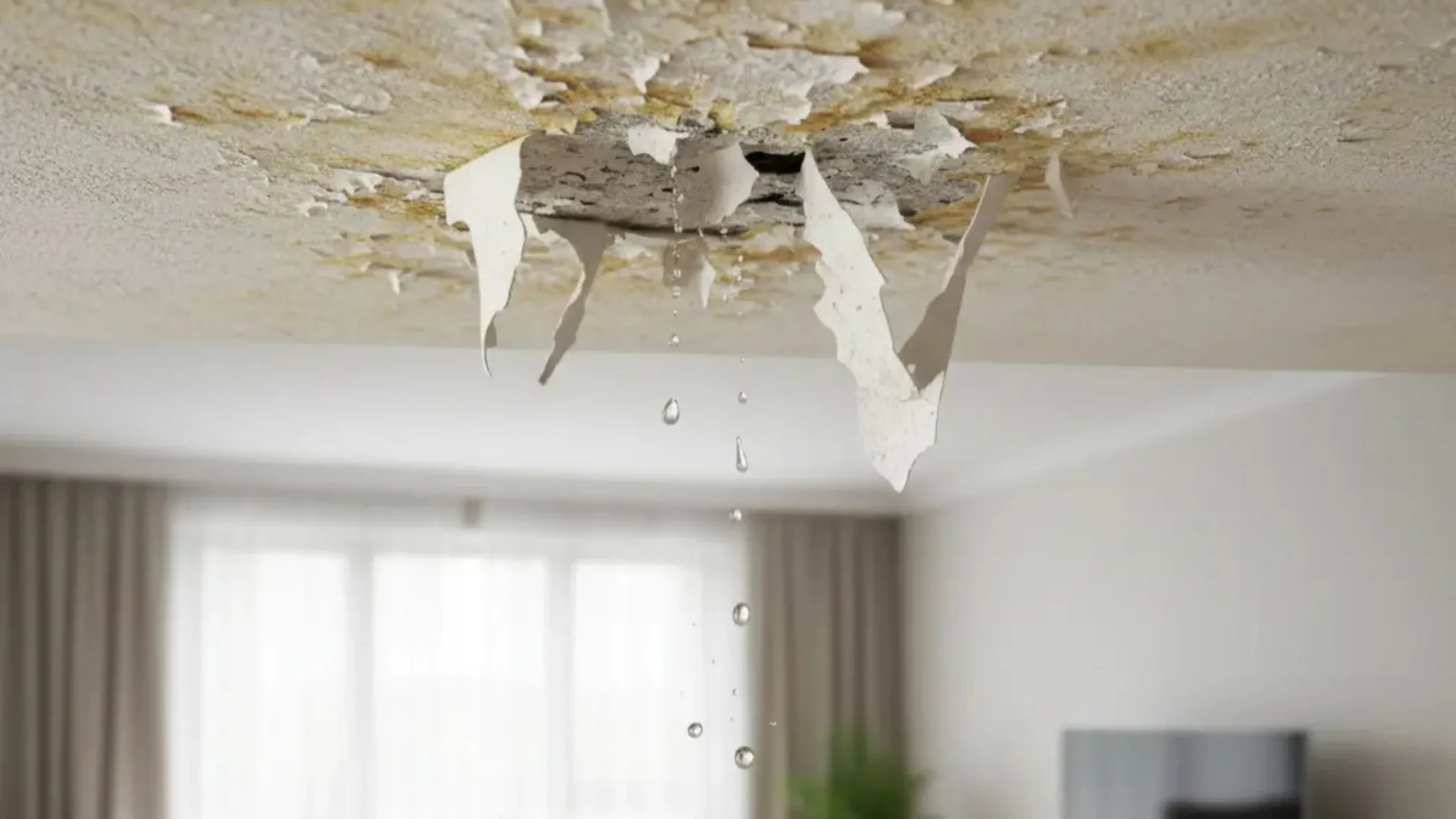

Have you ever wondered about the dark spots, spots and areas that stretch all over your roof covering following a heavy rain? First of all, it appears harmless, yet just a bit of a stain. However, over time, the paint will start falling off, a sour odour will start pervading the room, and the cracks will start to increase. That is why roofing infiltration quietly becomes architecture trouble or destruction.
In most households in Pakistan, intrusion of roofing systems is not triggered by extreme weather conditions only. Most of the time, it is a result of poor waterproofing, age-old concrete, or remains of poor construction techniques. It is not the apparent damages that are the real danger. It is what occurs in the slab, water destroys concrete and rusts steel reinforcements.
This guide explains the most prevalent roof infiltration issues found in homes, the reasons behind their existence and what the actual waterproofing solutions do work. In case you want to protect yourself long-term rather than just put bandages to cover holes, spend some more time and cash.
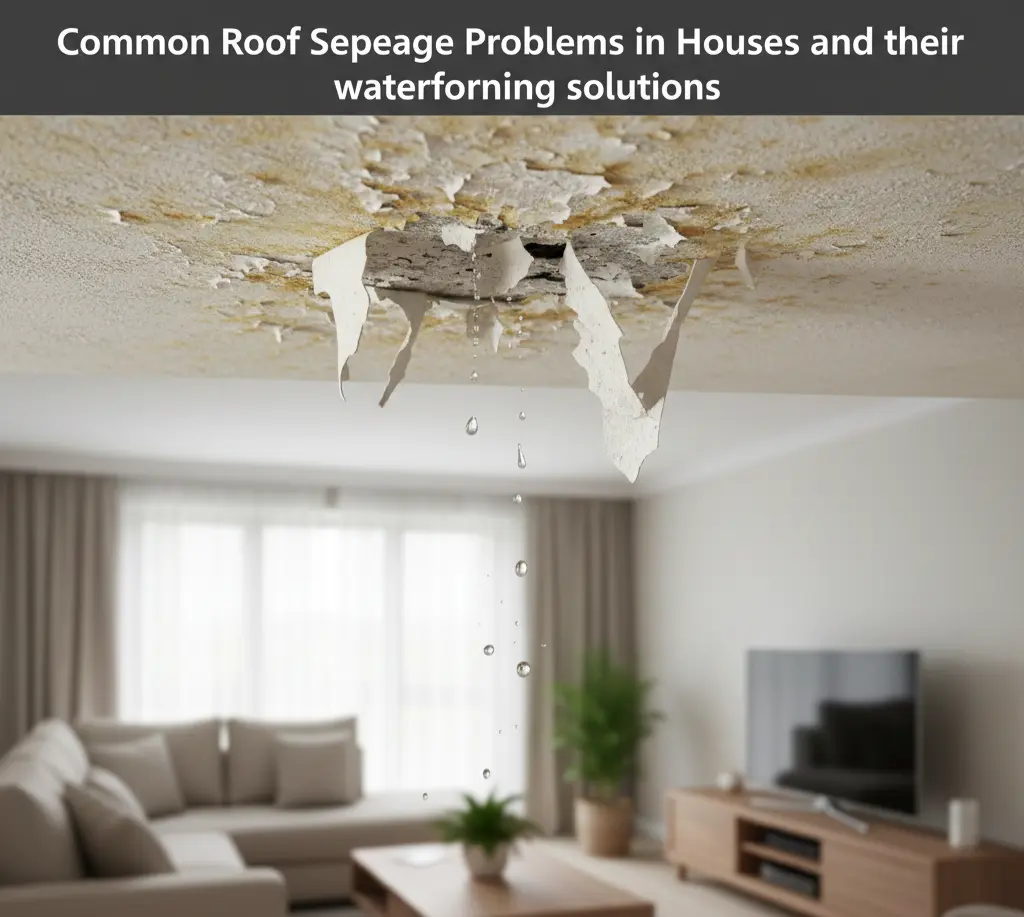
The seeping of the roof occurs when the water enters through the concrete roof slab and gradually finds its way within the structure. Seepage is not a fast process as opposed to observable roof leakage. It is propagated by pores, cracks and weak joints in the concrete.
In essence Concrete is not a waterproof substance. It has micro-pores in its structure which enable passage of moisture with time. This issue is hastened in such climates as in Pakistan where roofs are faced with excessive sunlight and humidity in addition to monsoon rains.
Repetitive wetting and drying processes, according to construction studies, lower the concrete durability and increase the danger of corrosion of steel used in slabs. When the steel begins to rust, the structural strength of the roof commences losing its strength.
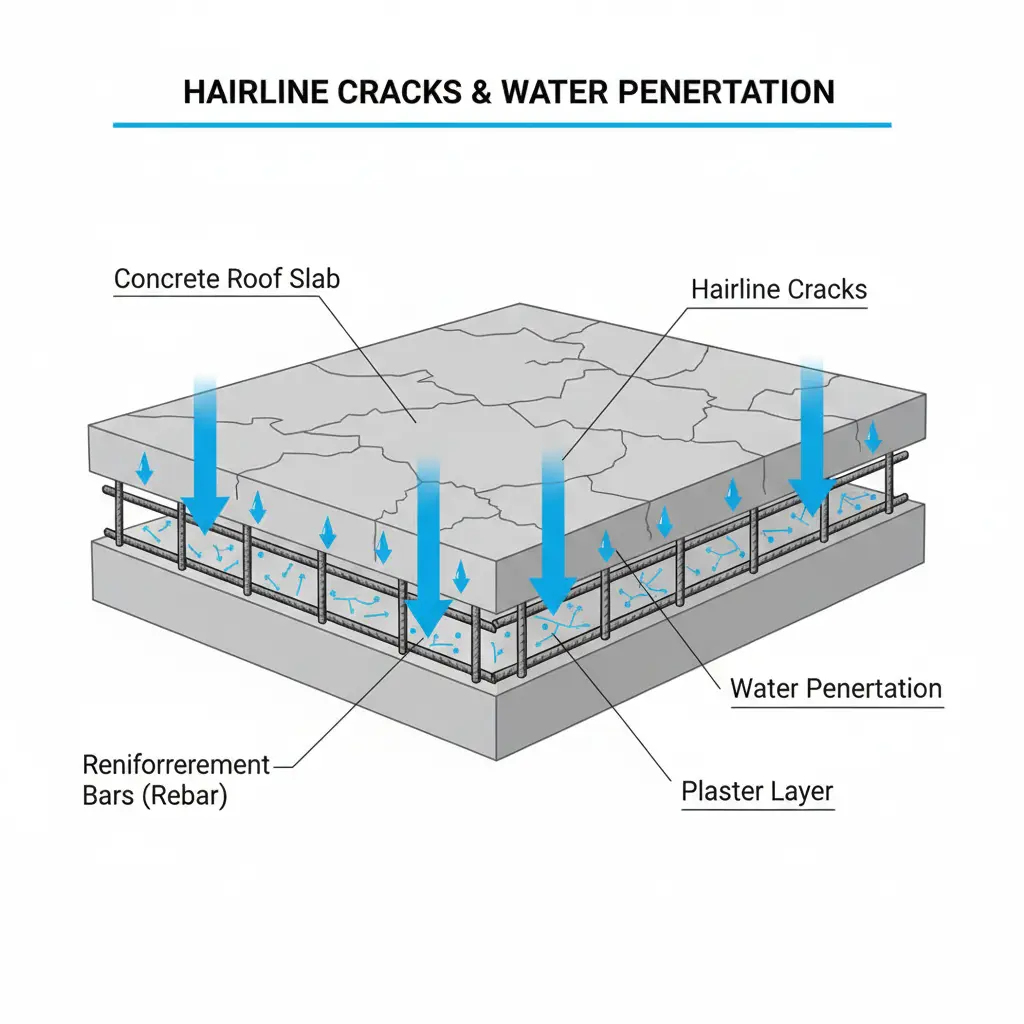
Hair line cracks, though they appear harmless, are one of the most frequent entry points of water. These fractures are created as a result of contraction, temperature change or inadequate drying in the construction process. Water gets through these small holes and drops within the slab.
With time, these cracks become wider and therefore more water flows through them and ruins the internal reinforcement.
Some of these houses experience seepage due to the fact that waterproofing has not been done or is done inadequately when constructing the house. In other instances, waterproofing membranes are not fitted at all. In other ones, poor-quality materials are cut down to keep the costs down.
After the roof slab has been done without proper waterproofing, it is harder and more costly to correct the seepage in later stages.
Flat-roofed buildings do not have an appropriate slope, and therefore, when it rains, standing water can accumulate. This ponding water puts pressure on the slab surface. In the long run, it seeps in the concrete and corrodes the roof structure.
The most effective waterproofing system cannot withstand a situation where water is left to rest on the roof, over long periods of time.
In Pakistan, the roofs are exposed directly to extreme summer heat. Stress is generated in the concrete due to daily expansion and contraction. This stress causes cracks, joint failures and deteriorated waterproofing layers.
Roofs lack heat resistant cover and therefore, they are more susceptible to seepage each year.
Due to the nature of material, old buildings also leak. The waterproof film becomes hard, the membranes are broken, and concrete becomes porous. Seepage cannot be avoided without proper maintenance in time.
The majority of the owners of the houses do not pay much attention to the fact that there might be some signs of early warning because these signs may be the signs of damage. These are indicators that can never be ignored.
When these signs are detected in time, waterproofing can be administered before damage to the structure starts.
Drippage of the roof is not an aesthetic issue. Water that gets in between the steel reinforcement within the concrete initiates corrosion. Corroded steel expands and it leads to cracks which lower the load-bearing capacity.
Healthwise, moisture promotes the growth of molds, which may cause allergies, asthma, and breathing problems, particularly among children and the aged inhabitants.
| Condition | Ignoring Seepage | Timely Waterproofing |
| Repair cost | Very high | Controlled |
| Structural damage | Severe | Minimal |
| Indoor air quality | Poor | Safe |
Roofs with cracks and damp roofs are usually treated with cementitious waterproofing. It forms a hard surface that has waterproof material which is preventing and completely preventing water penetration.
It is quite effective on small movement surfaces. Well, it can crack quite well in case the structure shrinks or swells out of proportion.
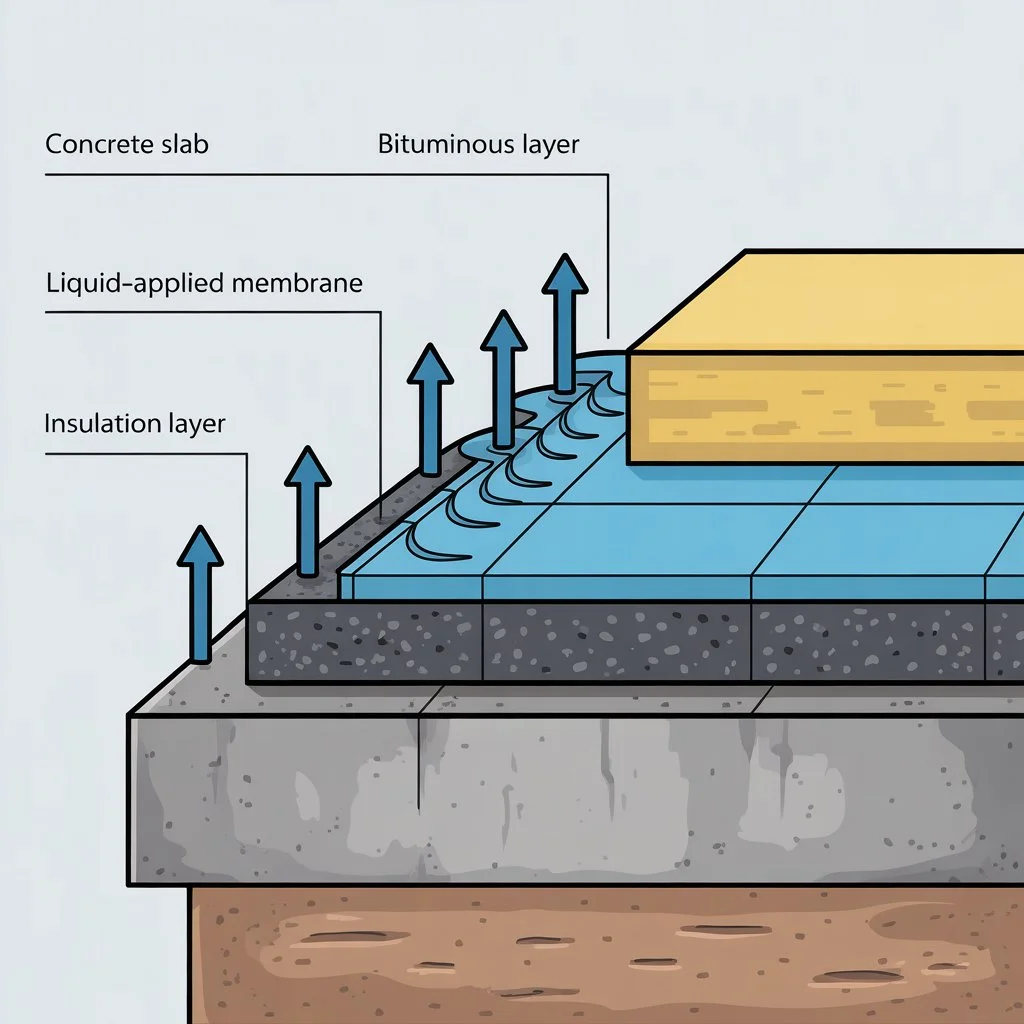
Waterproofing membranes form a protection that can be counted on constantly above the roof. These systems are prevalent because of their flexibility and durability.
Flat roofs can be covered with Bituminous membranes whereas the liquid-applied membranes form smooth coverings that suit irregular surfaces.
The problem of chemical waterproofing solutions in modern construction is based on long-term protection. These are crack sealants, protective coatings as well as admixtures that minimize concrete permeability.
Chemical solutions permeate deeply into the concrete and therefore it is effective in seepage and long-term moisture damages.
The appropriate waterproofing process is determined by a number of factors. The preventative systems are necessary in new constructions, whereas old roofs might need repair-related solutions to be performed initially. The choice is also affected by climate exposure, roof use and budget.
Protect Your Roof Before Damage Becomes Permanent
Professional evaluation makes sure that waterproofing is done properly and it will last several years rather than a few months.
Sika Chemical is internationally reputed in the production of high end waterproofing membrane and protection systems of the concrete. These are solutions that are of international standards and are made to withstand severe conditions of the environment.
Ultra Chemical isCompany pays a lot of attention to waterproofing and heat-proofing products, which are based on the Pakistani climate. Their products are extensively applied to residential roofs that are exposed to a lot of heat and monsoon rain.
Unicorn Chemical Company focuses heavily on waterproofing and heat-proofing solutions tailored for Pakistan’s climate. Their products are widely used for residential roofs exposed to intense heat and monsoon rains.
Gharhub works as a construction and solution partner, guiding homeowners toward the right waterproofing strategies. From waterproofing chemicals to structural protection solutions, Gharhub chemicals services focus on protecting buildings against water damage, heat, and corrosion.
Gharhub can also guide persons through the assistance of expertise to use reliable construction practices that can make roofs durable and withstand the test of time.
The prevention of roof seepage is always cheaper and less difficult than restoration of the structural damage in the future. These preventive steps can be taken to ensure your roof is not exposed to long-term water damage and leakages:
Regular roof maintenance can be used to detect early signs of problems in the form of hairline cracks, wear of the surface or blocked drainage outlets. Minor problems are normally overlooked until they start leaking interiors of the house. Checking roof at least once in six months, particularly before and after the monsoon season, makes it possible to take appropriate measures in time and avoid penetration of water into the slab.
The initial identification will go a long way in lowering the costs of repair and also increasing the life cycle of the roof structure.
One of the major causes of seepage of the roof is poor drainage. In the absence of drainage of rainwater, it accumulates on the roof surface and exerts pressure on concrete. This standing water eventually enters cracks and pores.
By maintaining drainage pipes clean and free, keeping roof slopes clear and ensuring that water outlets are never blocked, one can avoid the ponding of water and minimize chances of seepage.
Waterproofing products cannot be everlasting. Protective layers are weakened over time due to exposure to sunlight, heat and rain. The roof should be re-waterproof at the recommended time to make sure that the protective cover has been effective.
Waterproofing can be used to support the structure before evident damage affects the building to prevent expensive repairs attributed to long term exposure to water.
Overheat causes the concrete to expand and contract resulting in cracks which permit entry of water into the roof slab. The thermal stress on the roof surface is minimized with heat-reflective surfaces and weatherproof waterproofing systems.
Sealing the roof against bad weather increases the functionality of the waterproofing systems, and strengthens the stability of the whole construction.
Roof Repair is used to deal with the visible damages once seepage has taken place. It also makes sure that water does not get in the structure.
Waterproofing is a preventive approach that safeguards the building and the interior comfort whereas repairs are reactive and can be short-lived.
Quality waterproofing can last 7 to 15 years depending on materials and maintenance.
Yes, provided cracks are treated well prior to the usage of waterproofing systems.
In the majority of applications, in the present day the chemical waterproofing solutions permit their repair without significant demolition work.
The most appropriate alternative hinges on the type of roof, climate exposure as well as usage.