
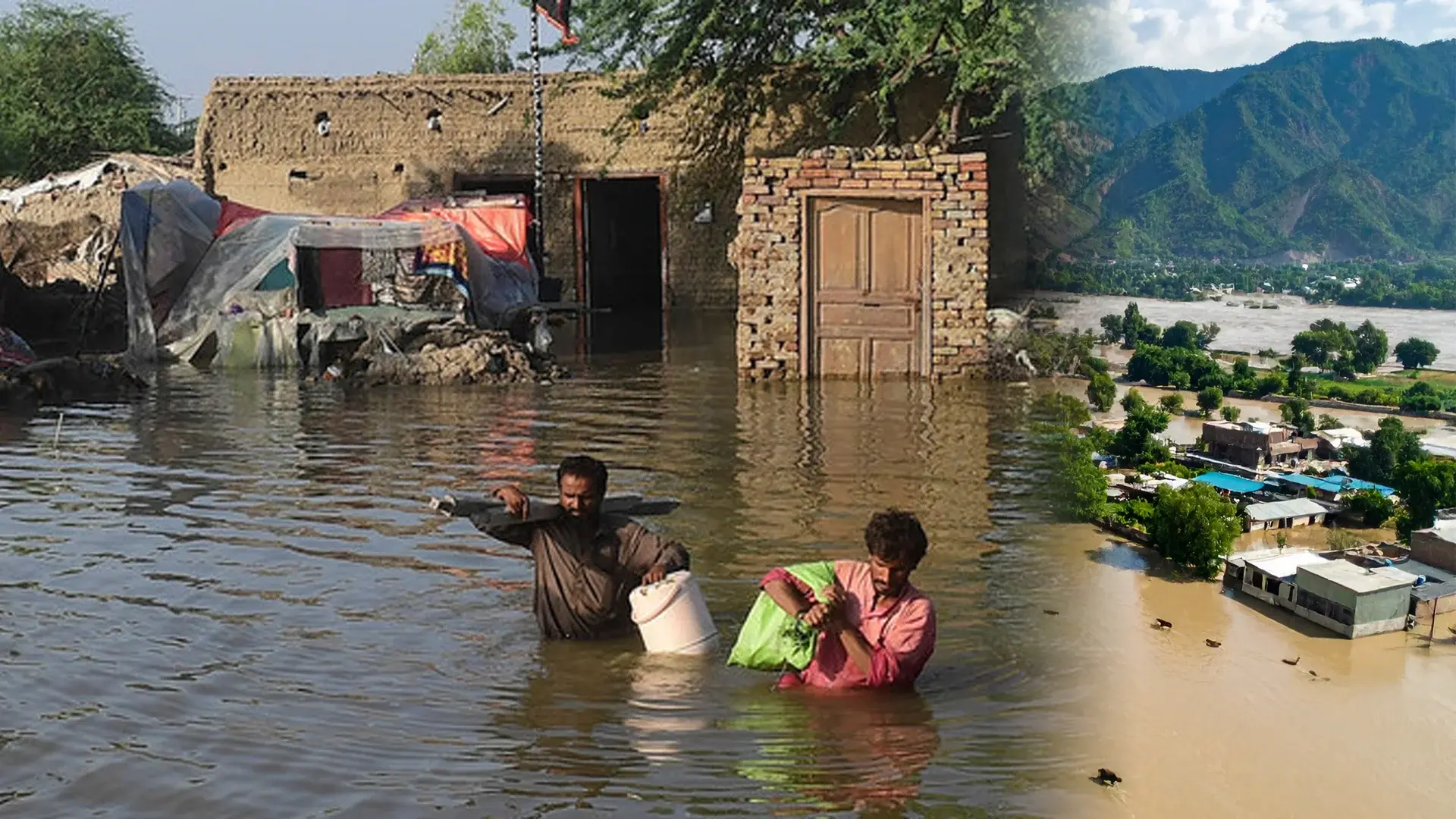

What would happen when the rain that sustains our life becomes a force of destruction?
Millions of Pakistanis are undergoing that. The 2025 Pakistan flood is not another headline. It is a disaster that has swept homes, farms, schools, and hope.
Fatal floods have occurred in Pakistan before, most recently in 2010 and 2022, but it does not feel the same this year. Why? The scale, speed, and spread are outrageous. Whole towns are swept away by rivers such as the Sutlej, Ravi, and Chenab in floods. We will dissect the scenario of floods in Pakistan, the reason why it continues to occur, and how it can be recovered from.
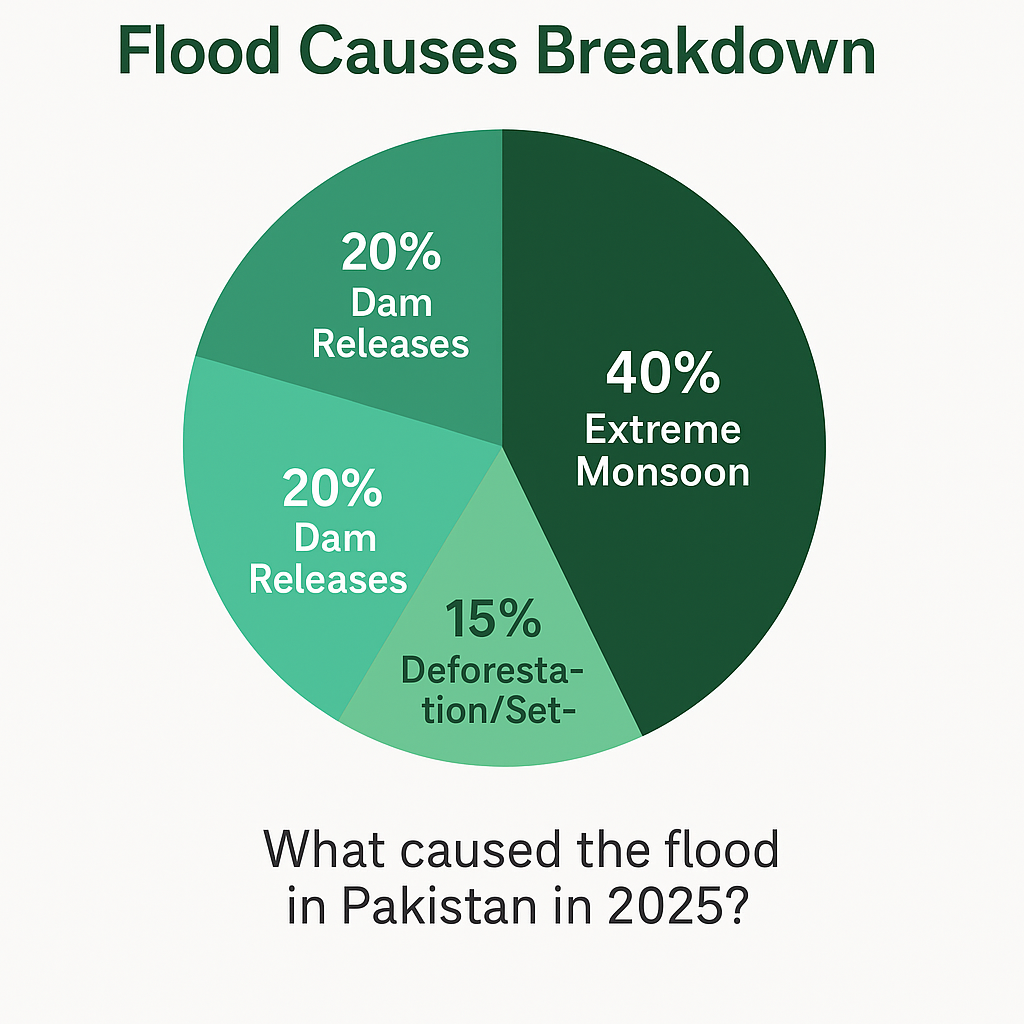
The 2025 floods in Pakistan didn’t happen by chance. These are the products of a lethal combination of nature and human decisions. Ranging from excessive rains and cross-border dam releases, there is a combination of several factors that contributed to this crisis.
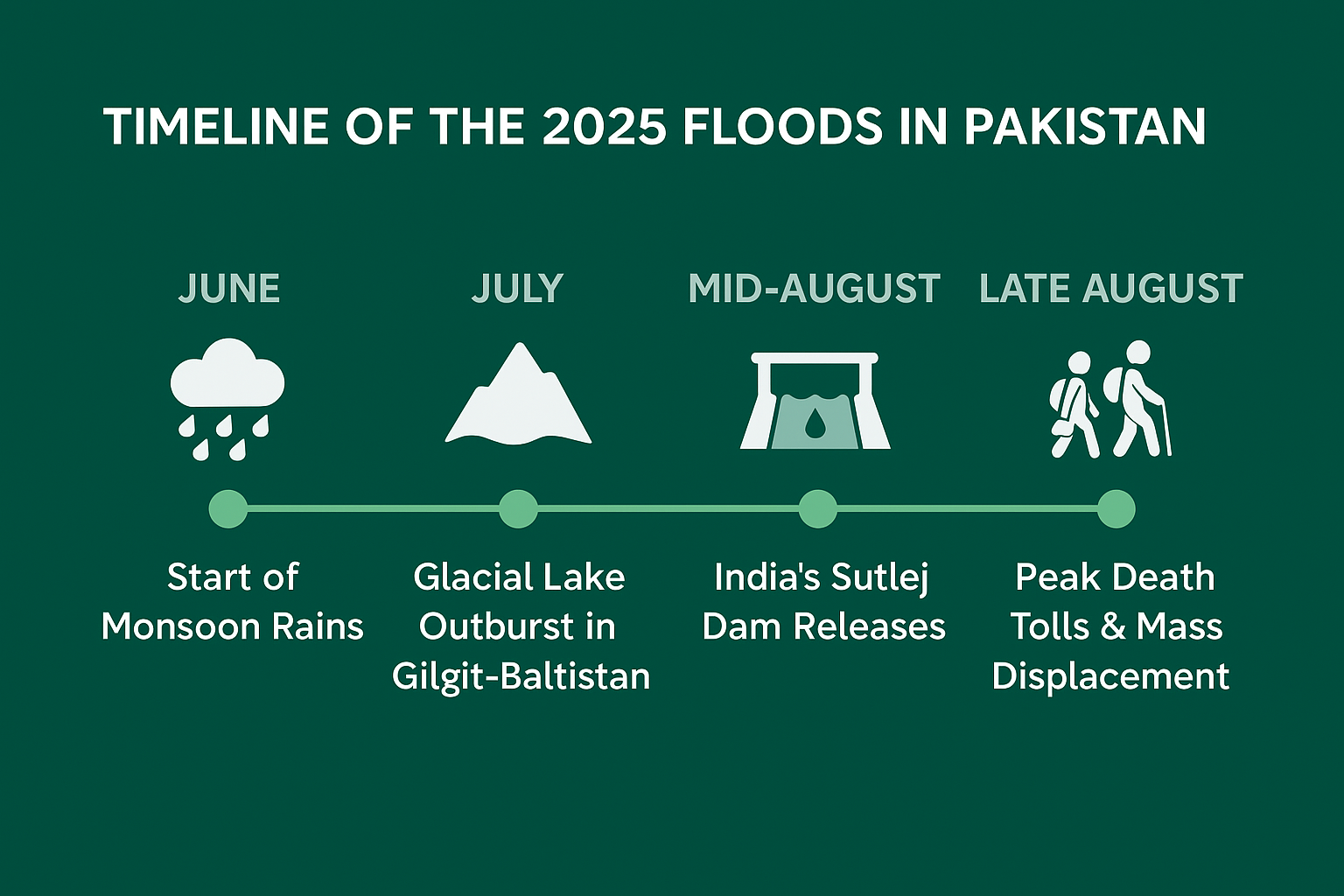
This monsoon season brought Pakistan much higher rainfall than it had ever received, and some areas received more than 700 percent of normal rain in the season. Unexpected showers generated heavy rains within a few minutes and overwhelmed rivers and drainage systems. Entire villages were swept away before anybody could be aware of the warnings.
A higher number of glaciers is found in the Pakistani mountains to the north of the country than in any other places that are not in the polar areas. These glaciers are melting away at scary speeds with the increase in temperatures. In August 2025, a glacial lake outburst flood (GLOF) swept homes in Gilgit-Baltistan, demonstrating how climate change is redefining the flow of rivers in Pakistan.
The Sutlej River map brings into focus the waters discharged in India and finds their way into Pakistan. When India had to open dams following record rains, the dams in Punjab overflowed. This created mass evacuations and swamped thousands of acres of agricultural land. Management of cross-border dams is a burning issue.
We can’t blame nature alone. Over the past twenty years, Pakistan has lost close to 8 percent of its forest cover. Floods can diffuse quickly without trees to soak up the rain. Meanwhile, millions of individuals reside in floodplains and riverbeds. These are the areas that have been struck most by the floods each year, as shown in the map of Pakistan flood zones.
The situation with the flood in Pakistan has passed beyond the rising waters; it has displaced families, broken houses, and plunged the economy into further crisis. We shall consider the impact of the disaster on individuals and their livelihoods and the country in general.
Over 900 individuals have been killed, thousands injured, and thousands missing by the end of August 2025. More than one million displaced persons, most of them living in temporary shelters. There is also a health hazard caused by floodwaters; the outbreak of dengue, cholera, and diarrhea is increasing due to the scarcity of clean water.
More than 4,700 houses, 661 km of roads, and 234 bridges have been damaged in the floods (UN OCHA). Crops and thousands of animals were lost to farmers. This has not only swept away sources of food but also the greatest source of livelihood among the rural people.
Punjab and Khyber Pakhtunkhwa have been hit hard by schools. A single flooded school held more than 200 children, which illustrated the dangers to the families. Thousands of children around the nation miss classes, and families are divided between shelters and camps.
In the 2022 map of flood zones in Pakistan, it was already evident which areas were most susceptible. However, three years later, a number of the same towns and villages have been flooded once again. The 2022 floods claimed 1,700 lives and displaced 8 million in human beings, and the lessons learned have not been put into practice.
Pakistan has already started emergency relief efforts in the confusion. The various agencies collaborating to save lives and provide support to the survivors include the National Disaster Management Authority (NDMA), local volunteers.
NDMA has established emergency shelters, given early warnings, and organized rescue operations in Punjab, Sindh, and Khyber Pakhtunkhwa. Nevertheless, most communities complain that warnings were late. A lack of resources and broken roads have slowed aid in the delivery to various districts.
Tents, mobile health units, and food are offered by international agencies, such as UN OCHA, ReliefWeb, and WHO. Local NGOs, particularly the Alkhidmat Foundation, have risen and offered more than 51,000 hot meals, 1,200 tents, and 38,000 water bottles to the flood victims. These activities highlight the greatness of global and country relationships.
Common citizens were made first responders in most of the villages. Mosque loudspeakers were put on warning of swelling water to the neighbours. Barrel boats, ropes, tractors, and boats that were prepared by volunteers rescued families. The community kitchens helped in feeding families as the official assistance was delayed. These resilience actions reveal the way individuals unite during the crisis.
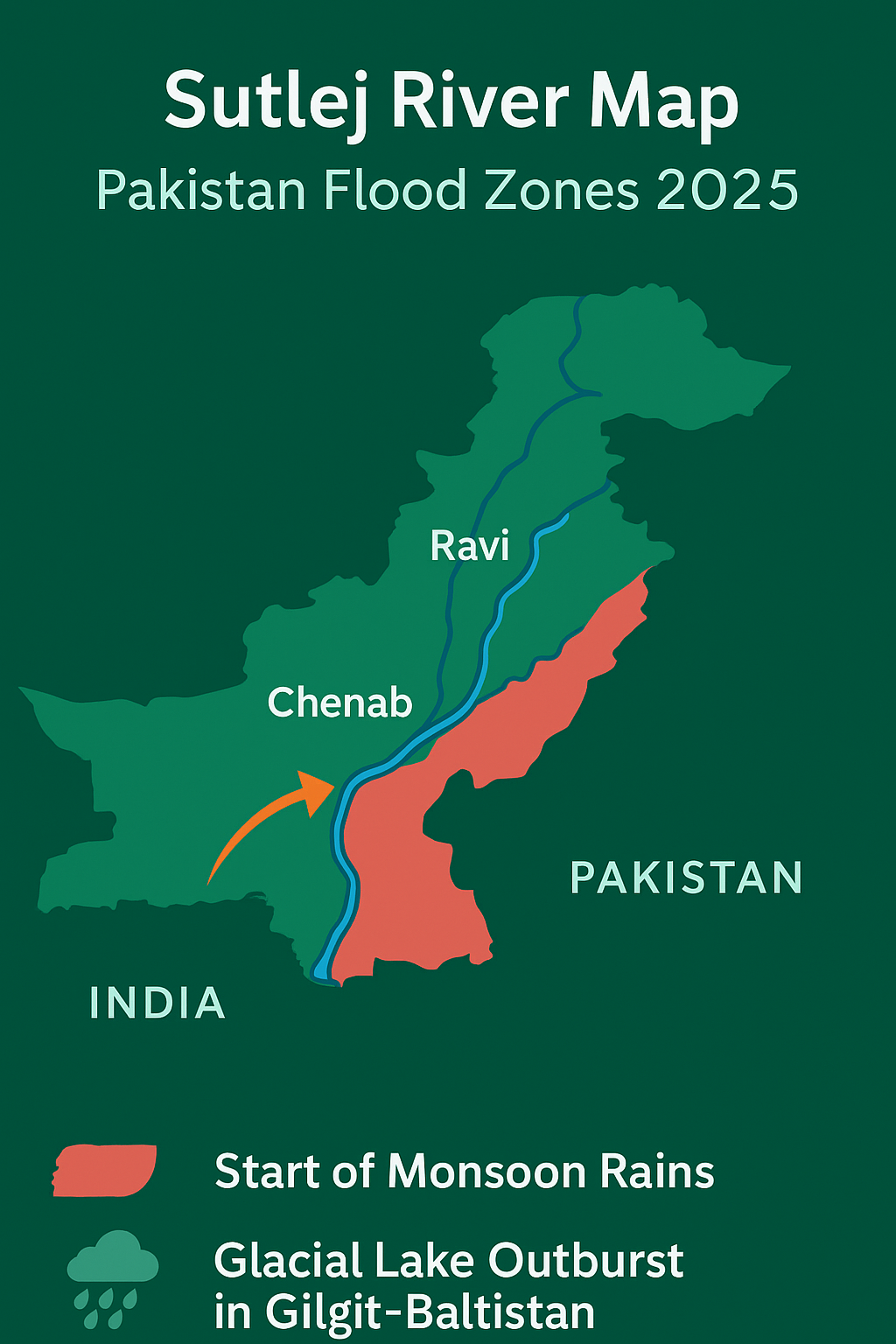
The flood of 2025 is not only about rain. It belongs to a larger narrative one where climate change, bad governance, and dangerous human settlements come into conflict. By viewing the Pakistan rivers map, it is easy to see why certain areas are time and again struck the most.
In contrast to other countries in the world, the contribution to global emissions of greenhouse gases is lower than 1% in Pakistan, but the country is listed in the top 10 countries most at risk of climate change (Global Climate Risk Index). Increasing heat is melting the glaciers, stoking rivers, and intensifying the monsoons. We are paying international sins as former climate minister Sherry Rehman claimed.
In spite of the repeated floods, the budget of the Pakistan climate was reduced to only $9.7 million in 2025, whereas the defense budget increased to 9 billion. Is it a big loss that experts are worried about? Unless major investments are made in early warning mechanisms and resilient infrastructure, the floods will continue to result in colossal losses. The preparedness for disaster remains way behind the risks.
Laws like the River Protection Act ban construction near rivers, yet thousands of homes still line floodplains. Most of these areas recur yearly on the map of Pakistan’s flood-prone zones. Other cities, such as Karachi, have a different problem: blocked drains and unauthorized building. Rather than collecting rainwater, congested drains transform streets and cities into rivers.
As the 2025 floods have destroyed more than 40 percent of construction sites in Punjab, GharHub is dedicated to delivering supply chains and beyond, making sure that the necessary building materials are delivered when one needs them the most.
Even though the rescue operation is taking place, it is turning into recovery as well as adaptability. To avoid future disasters, Pakistan needs to prepare in advance to alter the flow of rivers in Pakistan and establish long-term resilience.
At this moment, families require the essentials to live: shelter, clean water, food, and medical services. In humanitarian reports, more than 1,200 tents and 38,000 bottles of water have already been distributed. But there are over a million displaced, so the demand is even bigger.
Recovery does not only entail mending what is broken. It is all about re-establishing. By that, we mean climate-resilient homes, repairing eroded roads, and reopening schools to ensure that children do not miss months of school. History has revealed that in areas hit by flooding, unless there is robust reconstruction, people will continue to be susceptible every year.
Pakistan needs to adapt smartly to secure the future of its river flow. Lives can be saved by early warning systems, replenishing forests, and safe relocation outside the floodplains. Planting trees along rivers retard floods. Community education helps communities be more prepared for the next disaster by teaching them how to be safe in their housing and respond to emergencies.
Pakistan cannot revive alone. Global support is important since it is adding minimal contribution to climate change, but also experiencing some of the most adverse consequences.
In COP27, the Loss and Damage Fund was established to assist nations such as Pakistan to be compensated to recover after climate shocks. But analysts caution that money is not quick to flow. Climate justice in reality implies that richer countries should provide aid as fast as possible and equally, to enable Pakistan to recover and become more resilient and secure.
You do not need to be in government to change anything. The common people globally can contribute by giving donations to the local NGOs that are trustworthy, creating awareness, and pressuring leaders to keep their commitments on climate. Nothing is too small, such as posting confirmed donation links can help survivors go through their most difficult times.
The 2025 Pakistan flood is a bitter experience that shows nature and human decisions go hand in hand. Heavy monsoon rains and glacial melts contribute to disasters, but the damage is much more severe when it is caused by poor planning, underperforming governance, and inaction on climate.
Yet floods do not necessarily have to be this fatal. Pakistan can save millions of lives in the next few years with early warnings, safer homes, afforestation, and global climate support. The bet is large, but so is the opportunity to create a safer, more resilient future.
Extreme monsoon rains, glacial melting, sudden cloudbursts, and dam releases in India contributed to the 2025 floods in Pakistan, which increased the water level in Pakistan’s rivers.
According to reports, over 900 people have died, over one million displaced, and thousands of homes, roads, and bridges have been destroyed in several provinces.
The most affected were Khyber Pakhtunkhwa, Punjab, and Sindh. There was heavy loss of life and damage to property, and mass evacuation was reported in districts such as Buner, Rajanpur, and Karachi.
The Sutlej River drains out of India into Pakistan. This direct relationship between dam management in upstream and downstream through out-bound flooding was exhibited when India released dam water because of heavy rainfall and consequently flooded the downstream parts of Punjab.
Major rivers such as the Indus, Ravi, Chenab, and Sutlej are highlighted on the Pakistan rivers map. It demonstrates how communities residing along these floodplains are constantly under the most danger.
Recovery involves rescue, temporary shelters, food distribution, mobile health, and foreign aid. The long-term activities will be aimed at restoring homes, schools, and climate-resistant infrastructure.
Climate change accelerates the melting of glaciers, elevates rivers, and aggravates monsoons. This increases the unpredictability of the river flow in Pakistan and increases the chances of causing destructive floods.