
 Contact Us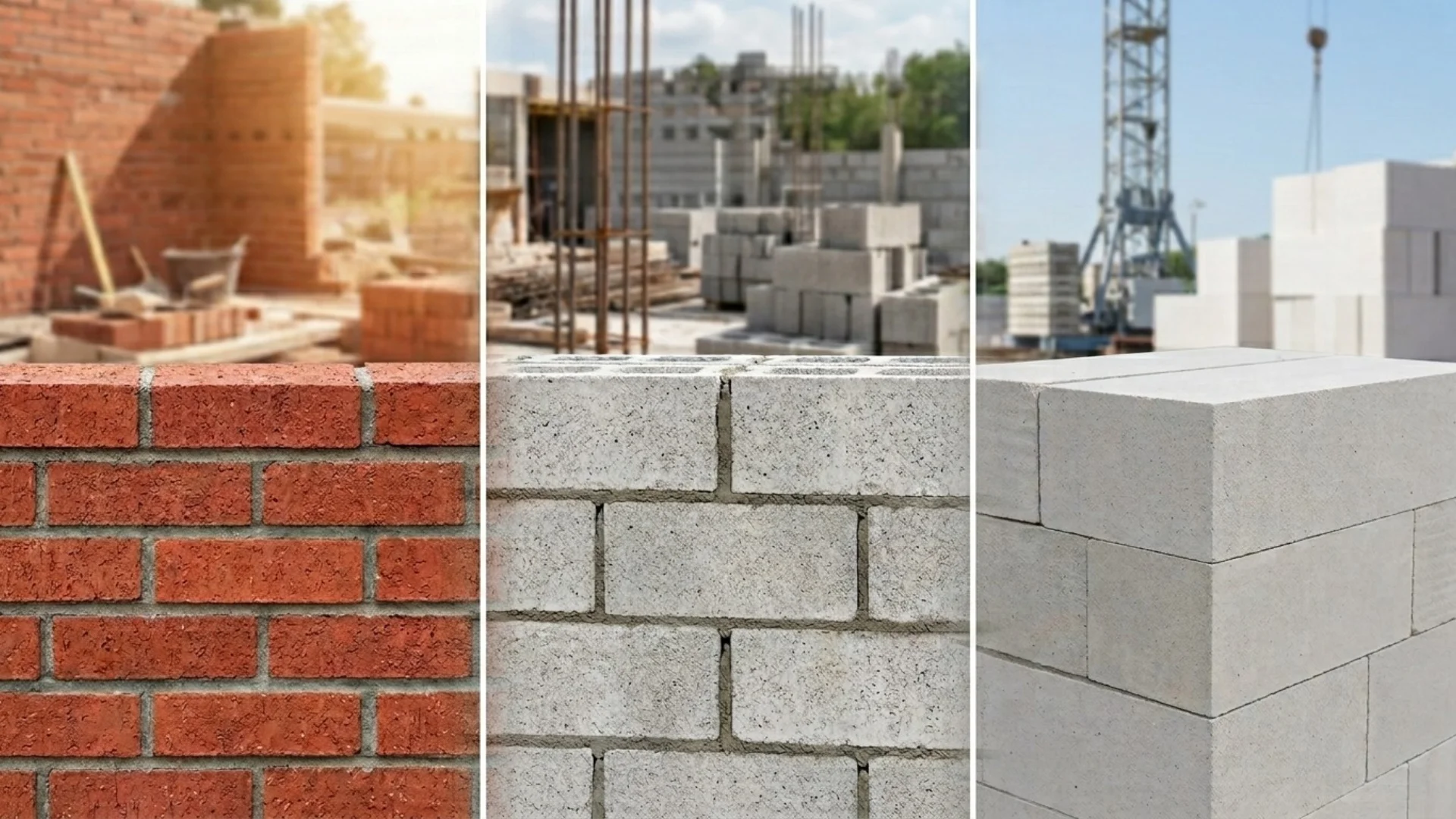
Building a house is a major investment. But one question often comes up before construction begins: Should you use traditional bricks, concrete blocks, or AAC blocks?
Bricks are easily available and easy for local masons to use. Wall construction becomes fast using concrete blocks since one concrete block covers more area than a normal brick. AAC blocks are lighter and have better thermal insulation.
Wrong selection may result in wastage of materials, additional labor cost, heavier walls, or future maintenance problems. Right selection may lead to faster construction, comfort, and economy.
For instance, the specification of the Pakistan Engineering Council mentions that bricks must be capable of meeting certain physical properties, such as compressive strength and water absorption. One of these physical properties is the compressive strength and water absorption of five bricks, which should not exceed 1,600 psi, with individual brick strength not less than 1,300 psi.
What Are Traditional Bricks?
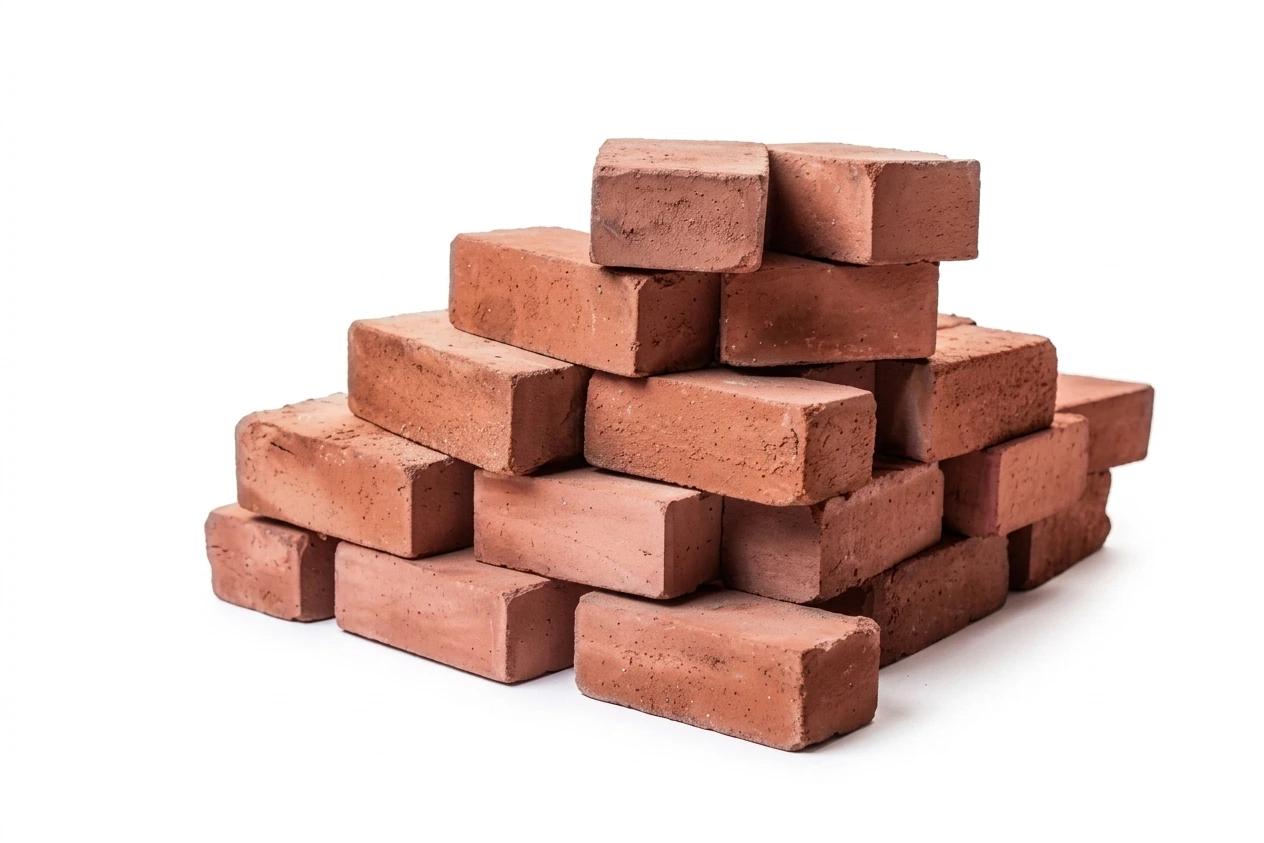
Burnt clay bricks are still one of the most widely used materials for constructing walls in Pakistan. These bricks are made of clay and burned in kilns. This technique of construction is widely practiced in Pakistan; therefore, the majority of masons are well-versed in bricklaying, cutting, alignment, and plastering.
Types of Bricks Commonly Used in Pakistan
You may come across several brick categories in the local market.
Awwal or first-class bricks are generally preferred for better quality construction.
Doem bricks are lower grade and can have more variation in shape and quality.
Khangar bricks are another category found in some local markets and are used for selected construction purposes.
Machine-made and fly ash bricks are also available in some markets.
Advantages | Disadvantages |
|
|
What Are Concrete Blocks?
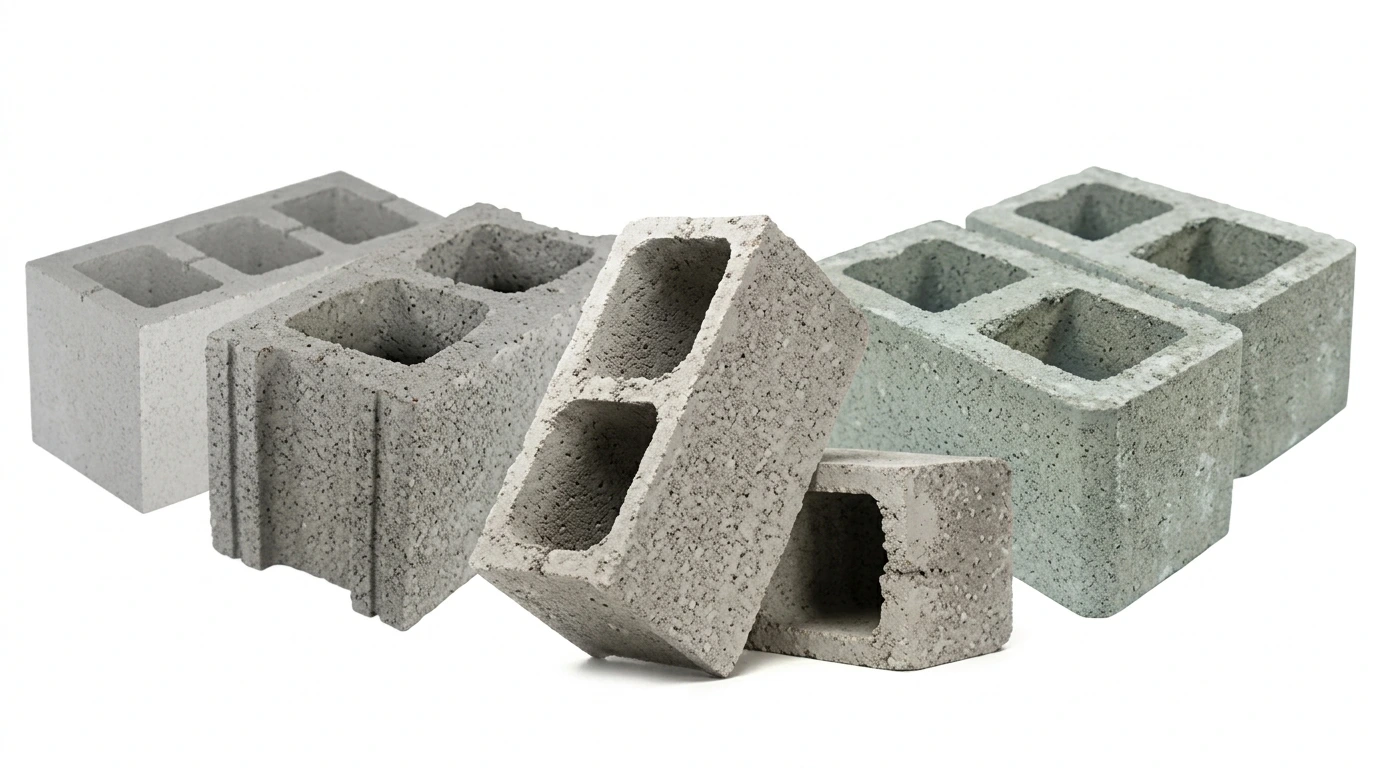
Concrete blocks are basically a kind of masonry block that is produced by using cement, aggregates, water, and other materials, depending on the manufacturing process. These blocks are significantly bigger in size than regular bricks. It is because of their large size that the mason can lay more surface of wall with one block.
Types of Concrete Blocks
Solid concrete blocks are dense masonry units commonly used where higher mass and strength are required.
Hollow concrete blocks contain internal cavities. Their lower weight can make them useful for selected walls and partitions.
Advantages | Disadvantages |
|
|
What Are AAC Blocks?
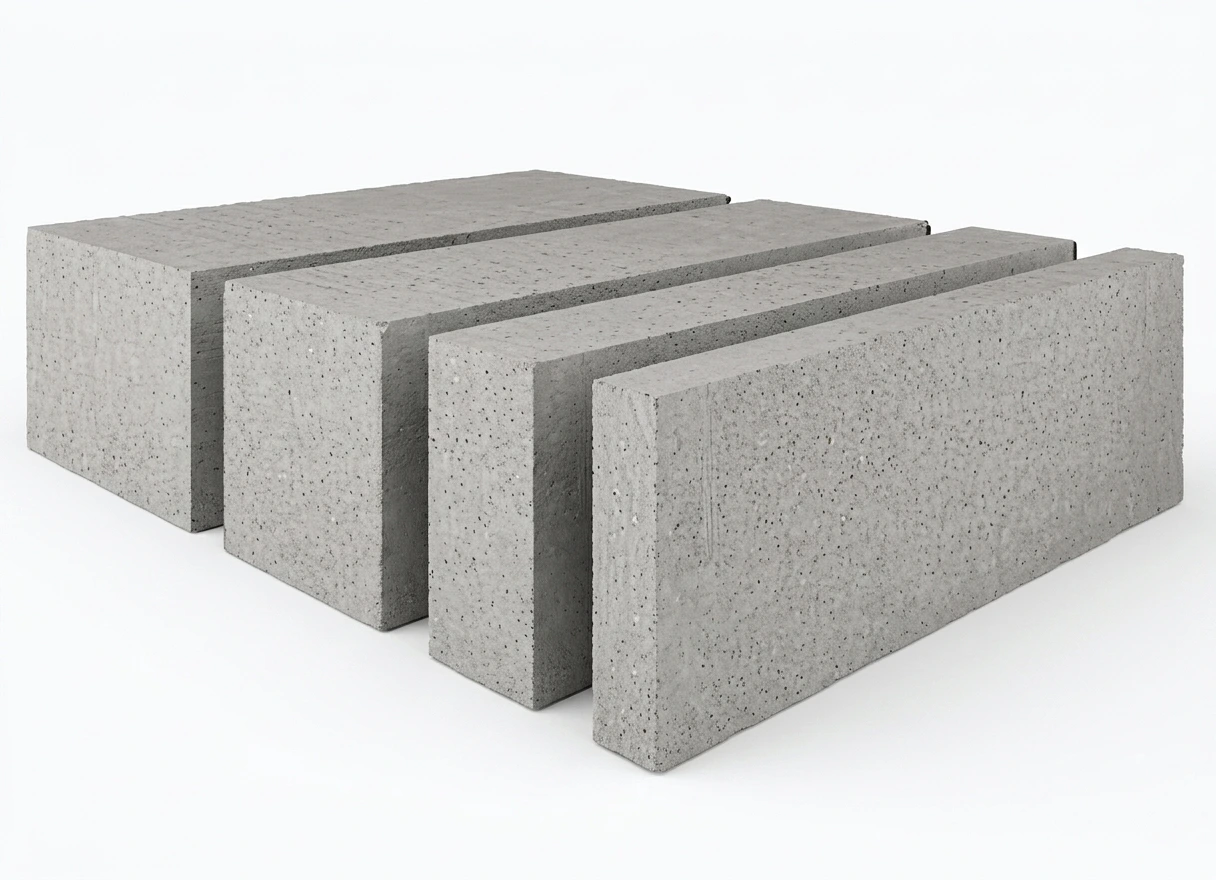
AAC means Autoclaved Aerated Concrete. AAC blocks are lightweight concrete masonry units made up of a number of air bubbles. These blocks have been manufactured through a well-controlled process and are also autoclaved.
AAC can also be used owing to its insulating capacity. Therefore, it becomes a good choice for those houses where comfort and efficiency are considered essential.
Research carried out on AAC masonry has shown that it has a porous structure. As per one experiment, the density and compressive strength of AAC were found to be 558 kg/m³ and 4 MPa, respectively.
Advantages | Disadvantages |
|
|
Bricks vs Concrete Blocks vs AAC Blocks: Cost in Pakistan
The cost of a wall is not determined by the price of each brick or block. The price of each individual brick will be the lowest, whereas concrete blocks and AAC blocks will have higher prices because their size is larger, and therefore, they cover larger areas of wall. While making comparisons, you should take into account materials, mortar, labor, transport, wastage, and finishing.
In 2026, Awwal bricks are commonly quoted at around Rs. 17,000 to Rs. 25,000 per 1,000 bricks, while concrete blocks can range from about Rs. 85 to Rs. 120 or more per block, depending on size and specification. AAC blocks can cost around Rs. 170 to Rs. 220 per block for some 4-inch products.
The main cost difference is in how much wall area each unit covers. You may need hundreds or thousands of bricks for a wall, while larger concrete or AAC blocks require fewer units. AAC blocks may have a higher purchase price, but their lower weight can reduce transportation and handling costs, while faster installation may reduce labor time. Concrete blocks can also reduce masonry time compared with traditional bricks.
Bricks vs Concrete Blocks vs AAC Blocks Comparison
Here is a quick comparison before we look at each material in detail.
Factor | Bricks | Concrete Blocks | AAC Blocks |
Weight | Heavy | Heavy to medium | Lightweight |
Strength | Good when properly manufactured | Good, depending on grade | Good for suitable wall applications |
Thermal insulation | Moderate | Moderate | Generally high |
Sound insulation | Good | Good | Good |
Water absorption | Can be high depending on quality | Depends on mix and type | Can be relatively high due to porous structure |
Fire resistance | Good | Good | Good |
Construction speed | Moderate | Fast | Fast |
Material cost | Usually lower per unit | Varies by size and grade | Usually higher per unit |
Labor requirement | Higher number of units | Lower number of units | Lower number of units |
Plaster requirement | Usually required | Usually required | May require thinner or suitable finishing system |
Best use | Traditional residential construction | Fast and strong masonry | Lightweight and thermally efficient walls |
Which Is Better for House Construction in Pakistan?
The answer depends on what matters most for your project.
Bricks: Best for Traditional Construction
Bricks are a practical option when you want a familiar construction system.
They are widely available. Local masons understand them well. Repairs are also simple.
Bricks can be a good choice when:
You have reliable access to quality Awwal bricks.
Skilled brick masons are easily available.
Your project follows traditional construction methods.
You want a widely tested local building material.
Your budget favors locally available materials.
Concrete Blocks: Best for Strong and Fast Masonry
Concrete blocks can be a useful option when construction speed and larger masonry units are priorities.
They may work well for:
Large residential projects
Commercial buildings
Boundary walls
Selected partition walls
Projects where consistent block dimensions are available.
AAC Blocks: Best for Lightweight and Energy-Efficient Walls
AAC blocks are especially attractive when low wall weight and thermal insulation are priorities.
They can be a good choice when:
You want lightweight walls.
Thermal comfort is important.
You want faster wall installation.
A reliable AAC supplier is available.
Your contractor has experience with AAC installation.
The structural engineer has approved the wall system.
Final Verdict
Bricks would be a very suitable construction material for conventional building. Bricks are easily accessible, and the local masons are already familiar with them. Concrete blocks could be considered a suitable material when the use of large-sized masonry units, durability, and quick wall construction are considered.
The best way to proceed is to evaluate the cost and efficiency of the entire wall rather than focusing on the price of one brick or block. Prior to making a decision, make comparisons of prices of suppliers locally, consider the product specifications, consult your contractor about the wall construction, and satisfy the requirements of your structural engineer.
Frequently Asked Questions
Which block is best for house construction?
There is no single best block for every house. Bricks, concrete blocks, and AAC blocks can all be suitable when their properties match the structural and architectural requirements.
Are AAC blocks suitable for Pakistan's climate?
Yes, AAC blocks can be suitable for Pakistan's climate because their porous structure provides good thermal insulation.
Which is better for load-bearing walls, bricks or concrete blocks?
Concrete blocks can have high strength grades, while properly manufactured bricks can also meet specified strength requirements.
Do AAC blocks require plaster?
AAC walls may require a suitable finishing system depending on the project. Some systems use thin plaster or specialized finishes instead of the same approach used for traditional brick walls.
What is the lifespan of AAC blocks?
AAC blocks can provide long service when correctly manufactured, installed, protected from moisture, and used in an appropriate wall system.