 Contact Us
Can you imagine if 1 out of 6 steel bars in your building were incapable of doing its task? A poor-quality steel bar is no different from a good-quality one once it has been embedded in concrete. The risks are significant. Following the 2005 earthquake in Pakistan, a study by the Pakistan Atomic Energy Commission revealed substandard steel as a leading cause of building collapses.
A study conducted in Pakistan in 2024 revealed that out of 4,782 reinforcing bars studied, 17.4 percent failed to meet the minimum specifications of ASTM A615, the standard for steel bars.
The problem here is that you will never know about this failure. Poor-quality sariya can usually be detected before it reaches your site if you know what to look for. These are the factors to consider in checking the quality of steel bars before purchase:
Verify brand and grade
Read the bar marking
Check diameter
Conduct a weight-per-meter test
Compare the mill test certificate with the delivered lot
Related: https://gharhub.com/shop/steel-price-in-pakistan-today
Why Is Steel Bar Quality Important in Construction?
Steel bars, also known as sariya or reinforcement steel, are the backbone of every concrete house and commercial building. Concrete is strong under compression but weak under tension. Steel resists tension. Hence, if steel is weak, the entire structure is weaker than designed.
Five issues usually trouble buyers in Pakistan:
Lightweight bars that do not have enough steel
Incorrect grades, for instance, Grade 40 being labeled as Grade 60
Inadequate manufacturing using scrap that is not melted properly
Counterfeit branding by copying the name of a reputable mill
Deceptive pricing that conceals lightweight or transportation costs
Engineers calculate the design of every beam, column, and slab based on steel’s specific strength and elongation. Once steel fails to meet the required standards, all the calculations become wrong.
How Poor Steel Quality Can Increase Construction Costs
Low-quality steel rarely breaks down on the first day. The breakdown occurs after the building undergoes pressure due to weight, an earthquake, or years of use. The beams made using Low-Quality bars can move from ductile failure to brittle failure, which involves bending and giving a warning.
Poor-quality steel tends to be costly most of the time. This is how:
You pay for steel that you never got because of underweight bars.
The rejection of some bars means that there will be delays, additional transport costs, and idle labor.
Additional bars may be required in case the engineer has to compensate for poor-quality steel.
Repairing broken beams or slabs is much more expensive than buying steel.
Demolition is the worst-case scenario if the structure turns out to be unsafe.
Why Steel Quality Matters for Foundations, Columns, Beams and Slabs
Each part of a building asks something different from its steel:
Structural part | What the steel does | Why quality matters |
Foundations | Spreads the building load into the ground | Bars sit in damp soil, so rust and section loss matter |
Columns | Carry the weight of every floor above | Strength and ductility protect against sudden collapse |
Beams | Resist bending between columns | Yield strength and elongation decide how they fail |
Slabs | Resist bending under floor loads | Correct bar size and spacing control cracking |
What Makes a Steel Bar Good Quality?
A good steel bar is not just shiny and straight. It meets a set of measurable properties that a standard defines and a lab can test. Once you know these properties, you know what to ask for and what to check.
Correct Grade and Required Strength: The grade tells you the minimum strength of the bar. Under ASTM A615, Grade 40 bars need a minimum yield strength of 40 ksi (about 280 MPa), and Grade 60 bars need 60 ksi (about 420 MPa).
Related: https://www.gharhub.com/popular-grades-of-steel-in-pakistan
Consistent Diameter and Weight: A 12 mm bar should really be a 12 mm bar. Because steel has a fixed density, weight per metre is the easiest way to check how much steel you have.
Uniform Ribs for Bonding With Concrete: Ribs are the raised lines on the bar surface. They lock the steel into the concrete so the two act together.
Ductility and Resistance to Cracking: Ductility means the bar can stretch and bend a lot before it breaks. This gives a building time to show warning signs like cracks before it fails.
Proper Manufacturing and Quality Control: Bars should be made by melting, refining, and rolling under full temperature control. The scrap ship plates must not be directly re-rolled into steel bars.
How to Check Steel Bar Quality Before Buying
You need only your eyes, a caliper, a measuring tape, a scale, and lab tests to check steel bar quality before buying.
1. Verify the Steel Manufacturer and Brand
Check the manufacturer's website for its product range, sizes, and grades. Ask the supplier whether they are an authorised dealer for that brand, and confirm with the mill if you can.
2. Check the Grade and Steel Specifications
Your structural drawings or engineer will name a grade, such as Grade 40 or Grade 60, and often a standard. Buy exactly that. Changing the grade to save money changes the strength the design depends on.
3. Measure the Steel Bar Diameter
Bar size is given as a nominal diameter, such as 12 mm or #4. The nominal diameter describes a plain round bar with the same weight. A ribbed bar measured across its ribs will read larger than its nominal size.
4. Check Steel Bar Weight per Metre
Weight is the best simple test of how much steel you are getting. Steel has a fixed density of about 7,850 kg per cubic metre, so a bar's weight per metre depends only on its diameter.
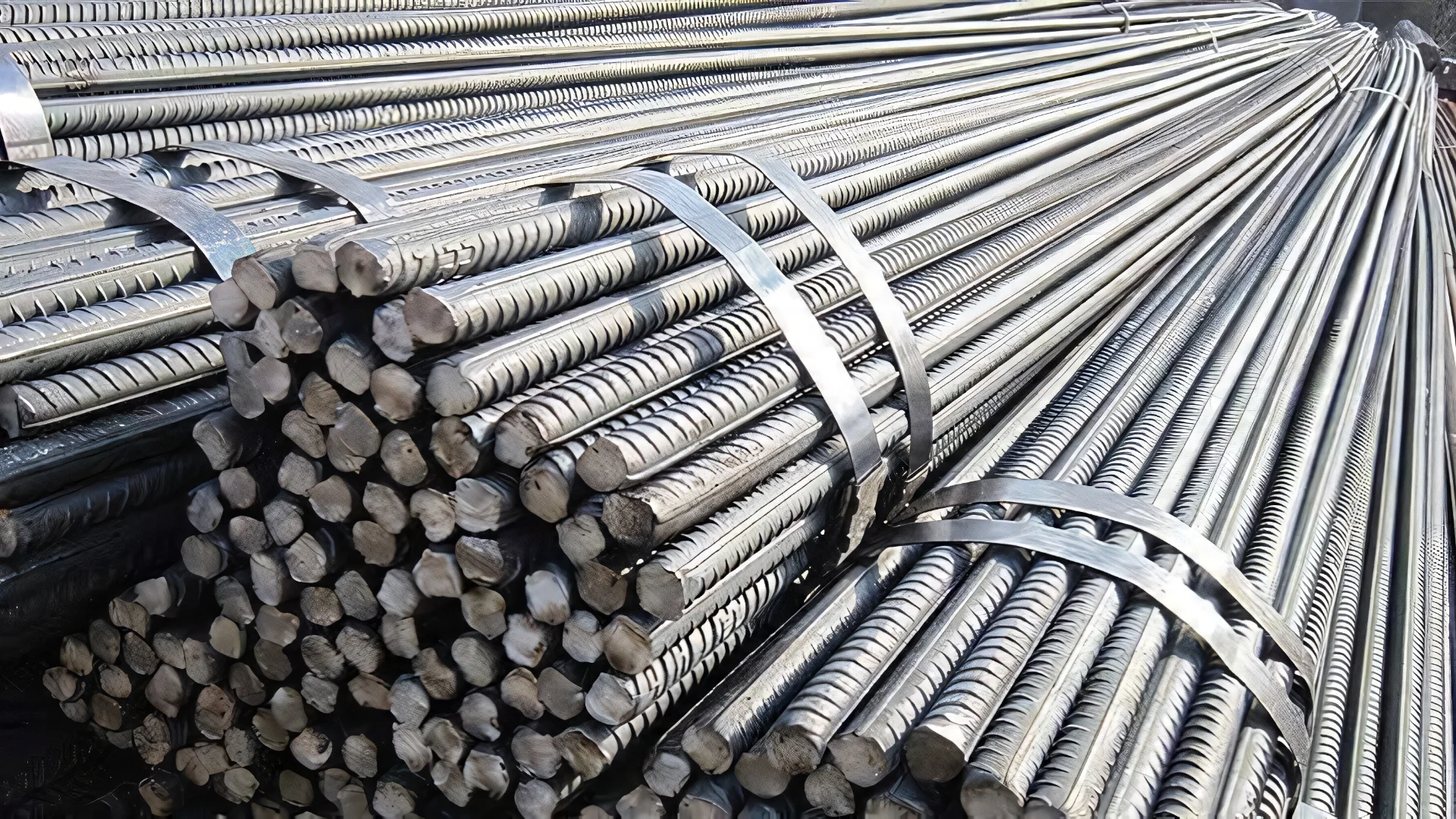
5. Examine the Ribs and Surface Texture
Run your eyes and hand along a few bars. Good bars show:
The same rib pattern and spacing along the whole length
Ribs of even height that are not flattened or worn
A surface free of cracks, seams, laps and flakes
6. Inspect Rust, Corrosion and Surface Damage
A little rust is normal for steel stored in the open. The question is how deep it goes. Poor storage is the main cause of heavy rust. Bars left on wet ground or uncovered through the monsoon rust much faster. Store steel off the ground on wooden supports and cover it.
7. Check Straightness and Overall Bar Condition
Look along each bundle, not just one rod. Watch for bars that are badly bent, twisted, or kinked. Handling damage, such as a bend from careless unloading, usually affects only a few bars at the ends. A pattern of twisting or uneven bars across the bundle can point to a manufacturing problem.
8. Arrange Laboratory Testing When Necessary
Send samples to a lab when the batch is for columns, beams, or a large project, when markings or certificates do not match, or when anything about the delivery seems wrong.
Common lab tests include:
Tensile test: measures yield strength, tensile strength, and elongation
Bend test: bends the bar around a pin to check that it does not crack
Unit weight test: confirms weight per length
Chemical analysis: checks the steel's composition
How Underweight Steel Bars Can Increase Your Construction Costs
Underweight bars will affect you in two ways. First, you will end up paying for steel that will not be delivered to you. Second, an underweight bar will have less steel in the cross-section; hence, it will hold less weight than expected in the design.
An example will help illustrate this. Let’s take a standard 12-meter length of 12 mm bar. The nominal weight is 0.888 kg per meter, and the total weight should be around 10.66 kg. A 6 percent underweight bar will weigh 10.02 kg, meaning 0.64 kg less steel per bar.
Now let’s convert that to rupees. According to GharHub, Grade 60 bars are priced between Rs 244 and Rs 258 per kg. If Rs 250 per kg:
People also Search For: https://gharhub.com/steel-price-in-pakistan
If you buy | And bars are 6% light. | What happens |
By number of bars or by length, 1 ton expected | You receive about 940 kg of steel | About Rs 15,000 of steel missing per ton |
By weight, 1 ton | You get 1 ton, but each bar holds less steel | You need extra bars to reach the steel area your engineer specified |
Grade 40 vs Grade 60 Steel Bars: What Should Buyers Check?
Grade 40 and Grade 60 are the two grades Pakistani buyers hear about most. The number is not a quality label. It is a strength label, and the right grade is the one your engineer has designed for.
What Does Steel Grade Mean?
The grade number is the minimum yield strength in thousands of pounds per square inch (ksi). Grade 40 means at least 40 ksi. Grade 60 means at least 60 ksi. A higher grade carries more load before it starts to stretch permanently.
Key Differences Between Grade 40 and Grade 60 Steel
Feature | Grade 40 | Grade 60 |
Minimum yield strength | 40 ksi (about 280 MPa) | 60 ksi (about 420 MPa) |
Minimum tensile strength | 60 ksi (about 420 MPa) | 90 ksi (about 620 MPa) |
Minimum elongation, bar sizes #4 to #6 | 12% | 9% |
Bend test pin, bar sizes #3 to #5 | 3.5 times bar diameter | 3.5 times bar diameter |
Grade marking | Check the mill's marking for this grade | Number 60 or one line |
Key buying check | Make sure it is not sold as Grade 60 | Check the 60 mark and the certificate |
Which Steel Grade Is Suitable for House Construction?
There will be no one right answer for every home. The right grade is that which is indicated on your structural plans. Your engineer selects the right grade depending on the loads applied and the bar size using the design code.
What must never be done is the replacement of grades on site to reduce costs. Substituting Grade 40 with Grade 60 makes the steel one-third less strong than what was designed. Substituting Grade 60 with Grade 40 does not make things any better, considering that Grade 60 is less ductile compared to Grade 40 and requires special bending and detailing. You must consult with your engineer. Grade 60 is stronger. The right grade is that indicated on your structural plans.
How to Identify Fake, Counterfeit, or Substandard Steel Bars
Fake steel resembles the look of an established brand. Substandard steel can have an established brand but does not meet the standard. In Pakistan, the major issue is the manufacture of bars from ship plates and scrap without undergoing the melting and refining process. The standard PS 1879:2018 of PSQCA states that re-rollable scrap and scrap ship plates shall not be directly re-rolled to produce steel bars.
Be wary of the following indications of fake steel:
Faint, inconsistent, or absent markings, or the brand name is slightly different from the original one
Markings that vary from bar to bar in the same bundle
Inconsistent ribs or a flaky surface with seams and laps
Weight per meter noticeably less than the nominal weight
Bars that retain their bent shape in the spring-back test
Unusually low prices compared to the market price of the same brand and grade
No mill certificate or certificate without batch number
Selling party does not give mill name or any authorization
Common Steel Buying Scams and Mistakes to Avoid
Steel troubles arise during the sales process or delivery, and not in the mills. Knowing these tricks will help you identify them before you make the payment.
Paying for a Higher Grade and Getting a Lower Grade
Buying Underweight or Smaller Bars
Accepting Unverifiable Brand Name or Inconsistent Markings
Relying on Certificates that Do Not Relate to the Batches
Making Payment in Advance without Order Conditions
Neglecting Transportation Expenses and Short Deliveries
Accepting Steel without Inspection
The industry itself has raised the alarm. The Pakistan Association of Large Steel Producers told the government in 2022 that almost half of the steel bars sold in markets across the country were substandard and did not meet PSQCA standards (Dawn). That is an industry claim rather than an official survey, but it shows why checking matters.
Related: https://gharhub.com/delivery-options-for-steel
Conclusion
The quality of steel bars is neither dependent on branding nor the friendly face of the vendor but rather on comparing the requirements of the drawings with what you get at the site and getting evidence. In Pakistan, where a study reveals that up to one out of six samples of tested bars failed the ASTM standards, a small checklist can save your entire structure.
The following checklist must be performed on each batch:
Grade & diameter as per the drawing requirement confirmed
Manufacturer's name and markings verified on several bars
Surface, ribs, and visible condition checked
Dimension & weight per metre
Standard & documents verified
Quantity, rate & delivery charges in writing
Delivery inspection and discrepancy check procedure agreed upon with the vendor
Laboratory test arranged wherever required
Frequently Asked Questions About Steel Bar Quality
What is the method to verify the quality of steel bars before purchase?
Look for the brand name, grade stamp, and manufacturer's name rolled on the steel bars. Measure diameter, weight of sample for weight per metre, check ribs and rust, and correlate mill test certificate with the batch number. In case of structural application, perform laboratory tensile and bend tests.
How to recognize authentic steel bars in Pakistan?
Check for manufacturer's name rolled along the length of the steel bar, and match with markings available on website of the manufacturer. Buy from an authorized distributor, get a batch-wise mill test certificate, and ensure compliance with the specified standard, like ASTM A615 or PS 1879.
How do I verify the weight of a steel bar at a construction site?
The process involves the following steps:
Cut a 1-meter straight steel bar, or measure the total weight and length of the steel bar.
Weigh it on a calibrated weighing scale.
Calculate weight per meter.
Compare with d² ÷ 162. For example, a 12mm steel bar should have 0.888kg per meter weight.
Is light rust on steel bars acceptable?
Light rust that comes off easily when brushed is okay. However, if there is deep pitting, rust flaking, and visible reduction of steel, then it is not okay. In any case of doubt, you may need to wire brush a sample and ensure that it is still okay in weight per meter.
What is a mill test certificate and why is it important?
A mill test certificate is a record of tests done on one particular batch of steel. It includes grade, standard, batch/heat number, strength, elongation, and chemistry.
Can I tell if the steel bar is strong just by seeing its color and surface?
No, since the surface gives an indication of rust and rib quality but nothing about the strength of the steel bar. Even two similar-looking bars may have very different strength.
Is a bend test sufficient evidence for determining the quality of steel?
Not entirely; a bend test ensures the flexibility of the metal and shows its ductility but does not check its tensile or yield strength. Conduct this test along with a tensile test and a weighing test.
What should I do if the received steel bars are lightweight?
Do not unload or use them; record the weights and take photos. Specify the discrepancy in the weight of the delivered material on the receipt and notify the supplier about that in writing.
Under what circumstances do you need to conduct steel tests in the laboratory?
Laboratory tests should be conducted when steel bars are to be used for columns and beams, in case of a mismatch between the marks/certificate and the supplied product, if the brand is unfamiliar, or if the material is light or suspicious in some way.