
 Contact Us
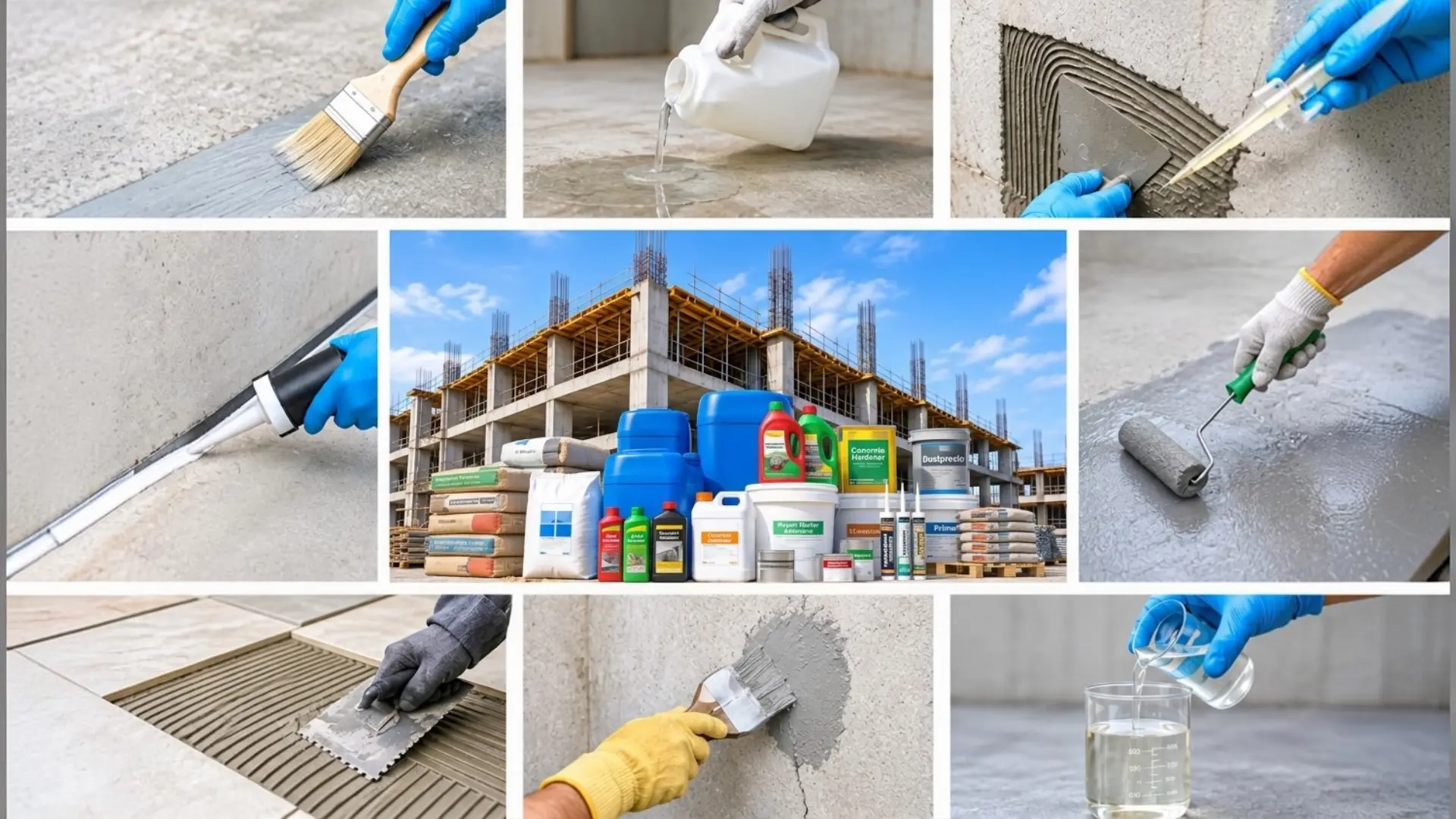
Water is one of the most expensive problems a building can have. Be it a leaky roof or a damp basement, both problems begin with water penetrating where it should not be. First of all, it leaves stains. Then the paint starts peeling off. After that come weak plaster and rusty steel. The repair usually costs much less than the damage. However, the key is to understand what you need and how much it will cost.
Construction chemicals are special products added to concrete or applied to surfaces for additional strength, waterproofing, durability, etc. The price of construction chemicals in Pakistan varies between Rs 300 and Rs 7,000 per item at GharHub, depending on the manufacturer, type, and pack size. The actual price of the service will depend on the area covered and the number of coats.
The main types of construction chemicals are:
Admixtures that affect the mixing, setting, and performance of concrete
Bonding agents for making the new concrete and plaster adhere to the existing surfaces
Waterproofing materials to prevent water penetration
Sealants for filling joints and cracks
Curing compounds to prevent premature drying of the concrete
Anti-termite agents to protect the structure from termites.
Why Do Construction Chemicals Matter?
Concrete, bricks, and plasters are durable materials, but they have certain flaws as well. They have small pores that allow water to seep through. They contract when drying. Sometimes new layers of construction materials cannot bind with older layers. Construction chemicals take care of these problems, allowing buildings to last longer and be less prone to repairs.
Construction chemicals help to increase the durability of concrete and its waterproofing, and protect surfaces from moisture, cracking, and weather.
When applied properly, they can save you a lot of money in the future, preventing issues such as:
Roof leakage during monsoons
Dampness in basements and moisture rising in walls
Plaster falling off because of improper bonding.
Termites damaging wood and foundations
Related: https://gharhub.com/common-roof-seepage-problems-waterproofing-solutions
Construction chemicals are the equivalent of a raincoat and vitamins for your building. Waterproofing protects from weather. Admixtures and bonding agents make your building healthy from the inside.
Construction Chemical Prices in Pakistan 2026
Here are the construction chemical prices currently listed on GharHub. They come straight from GharHub's product pages. Prices can change, so confirm the rate when you order.
Product | GharHub listed price | Brand |
Rs 4,000 to 6,000 per litre | - | |
Rs 300 to 7,000 | Sika | |
Rs 250 to 7,000 | Ultra |
Gharhub lists delivery in 1 to 2 days, with delivery charges based on location.
Why One Product Shows a Price Range
Each of Sika and Ultra produces several dozen products. A tiny tin of one product and a huge drum of another product can be found within the same brand. That is the reason the price list contains a range of prices rather than just one price.
Price depends on the following factors:
Chemical category: admixture, bonding agent, waterproofing, sealant, or curing agent
Brand and grade
Size of packaging
Wholesale or retail price
Distance to deliver
Surface where the product is applied, its consumption speed, and number of layers
Product concentration
Types of Construction Chemicals and Their Uses
Each type of chemical solves a different problem, and each belongs to a different stage of construction. Picking the right group is the first step to not wasting money.
Concrete Admixtures
Admixtures are liquids or powders added to concrete or mortar while mixing. They change how the mix behaves.
The common types are:
Water reducers that let you use less water for the same workability
Super-plasticisers that make concrete flow easily, which helps in heavily reinforced sections
Accelerators that speed up setting, useful in cold weather
Retarders that slow down setting, useful in hot weather or long pours
Waterproofing Chemicals
Waterproofing chemicals stop water from passing through concrete, brick, and plaster. They are used on roofs, basements, bathrooms, and water tanks. Some are mixed into concrete. Others are brushed or troweled onto the surface as a coating.
Bonding Agents
New concrete or plaster does not always stick well to an old, hard surface. A bonding agent forms a sticky bridge between the two. It is used for repairs, new plaster on old walls, and new concrete over old slabs.
Sealants and Joint Fillers
Buildings move a little as they heat up and cool down. Joints between slabs, around windows, and at expansion gaps let them move without cracking. Sealants fill these joints so water and dust cannot get in, while still allowing movement.
Curing Compounds
Fresh concrete needs water to gain strength. In Pakistan's heat, it can dry out too fast. A curing compound is sprayed on fresh concrete to form a thin film that holds moisture in, which helps where regular water curing is hard to keep up.
Anti-Termite Treatment
Termites can enter a building through the soil, foundations, wall joints, and hidden gaps. Treatment is best planned at the early construction stage, when the soil under floors, along foundation trenches, and around the perimeter can still be reached. In existing homes, targeted treatment can be applied around affected walls, floors and woodwork.
Treatment should be done by trained people wearing proper protective equipment.
Construction Chemicals at a Glance
Chemical type | Usage | Construction stage |
Admixtures | Concrete and mortar | During mixing |
Waterproofing chemicals | Roofs, basements, bathrooms, tanks | Mixing or after hardening |
Bonding agents | Repairs, plaster, overlays | Before the new layer |
Sealants | Expansion joints, windows, slabs | Finishing |
Curing compounds | Slabs, roads, large surfaces | Right after placing concrete |
Anti-termite treatment | Soil, foundations, perimeter | Before flooring, or targeted later |
Which Chemical Do You Need? A Problem-to-Product Guide
Most people do not shop for a "bonding agent". They shop because something is going wrong: a leak, a crack, or a pest. So let us start from the problem and work back to the product.
Leaking roof: Use a waterproofing coating on the roof slab. For flat roofs with heavy rain, a membrane may be the stronger choice.
Damp basement or water tank: Use a cement-based waterproofing slurry on the inside or outside face, or a waterproofing admixture when you pour new concrete.
Cracked or falling plaster: Remove the loose plaster, then apply a bonding agent before the new coat.
New concrete on old concrete: Clean and wet the old surface, then apply a bonding coat and place the new concrete while it is still wet.
Termites: Get a site inspection, then treat the soil, foundations, and entry points.
Heat on the top floor: This is a heat problem, not a water problem. Insulation sheets work better here than chemicals.
How to Estimate Construction Chemical Cost for Your Project
Once you know which chemical you need, the next question is how much to buy. Buy too little and the job stops halfway. Buy too much and money sits in unopened tins. A simple formula solves both problems. GharHub recommends this calculation:
Quantity needed = total area × consumption rate per sq. ft × number of coats
Then multiply the quantity by the price your supplier quotes for that product and pack size. You will find the consumption rate in the product's technical data sheet.
A Worked Example
Let us waterproof a 1,000 square foot roof with Sika Top Seal 107, using the figures in its Pakistan data sheet.
Step | Working | Result |
Convert area to square metres | 1,000 sq. ft ÷ 10.764 | About 93 m² |
Consumption per coat | 1 kg per m² per coat (from TDS) | 93 kg per coat |
Number of coats | 2 coats recommended (from TDS) | About 186 kg in total |
Pack size | 25 kg set (from TDS) | 186 ÷ 25 = 7.4, so buy 8 sets |
Now ask your supplier for the current price of one 25 kg set and multiply by 8. That is your material cost. The same idea works for admixtures.
People Also Search For: https://gharhub.com/construction-cost-per-square-foot-pakistan.
Additional Costs:
But this is just one part of the invoice; here is what alters the invoice's true costs:
Surface preparation: cleaning, removal of loose materials, and patching cracks
Primer: some require primer to be applied first
Labor: expert application is important; otherwise, the chemicals are applied poorly and will not work properly
Application method: brush, roller, spray, or injection
Delivery: depends on location
Waterproofing Chemicals vs Membranes vs Insulation Sheets
These three products can easily be confused due to the fact that they are all used on roofs, but each one solves a unique problem. While the coating or membrane solves the problem of moisture, the insulation solves the problem of heat. Getting the correct product will save you from spending money where it isn't necessary.
The Waterproofing coating will be sufficient for most roofs, bathrooms, and tanks in good condition.
The Membrane would be the better option for flat roofs exposed to excessive rainfall or standing water. According to GharHub, 3 mm and 4 mm bitumen membranes and self-adhesive membranes are common in Pakistan.
XPS insulation sheets are meant to insulate from heat, particularly on top-floor roofs. The XPS sheets prevent heat transmission from the roof, but they do not substitute for waterproofing.
GharHub also highlights the importance of location differences. In Karachi, the high humidity and flat roofs increase the use of membranes, while the heat waves in Lahore lead to increased use of XPS and EPS insulation.
How to Buy Construction Chemicals Safely: A Buyer Checklist
Even a good chemical purchased improperly could go to waste. Poor-quality materials, improper grade, or no data sheets could cause you to waste your resources. Consider this checklist before every purchase:
Select the proper grade depending on the purpose, whether it be roofing, basement, or repair work
Note down the batch date since old chemicals reduce adhesion and performance.
Make sure that you order the proper pack size
Ask for a technical data sheet (TDS), including how to mix and apply it.
Check the concentration of the chemical since sometimes weak concentration products could deceive buyers
Document every quote according to its brand, packaging, batch date, and concentration.
Get proper applicators since poor mixing leads to failure.
Safety and Protective Equipment
However, construction chemicals are safe if handled correctly:
Read the Safety Data Sheet (SDS). According to Sika, its data sheets will refer you to them for handling, storing, and disposing of chemicals.
Put on gloves and eye protection when preparing and applying the chemicals.
Keep chemicals out of reach of children and food.
Leave the anti-termite treatment to professionals who have the right protective gear.
Do not mix two chemicals unless it is recommended in the TDS.
Common Mistakes When Using Construction Chemicals
A good product may fail if it is not used properly. These are the four most typical errors, and all are easily avoided.
Comparison based on price per litre rather than cost per coat. An expensive tin that covers a smaller area will actually cost more.
Failure to prepare the surface before use. Chemicals adhere only to clean and sound surfaces. Dirt, oil, loose plaster, and flaking paint prevent proper adhesion.
Improper mixing. Excess water and an improper ratio affect the effectiveness of the product.
Use of a wet or dry surface without consulting the TDS. Some chemicals require a wet surface while others need a dry surface.
Conclusion
Construction chemicals have one function each. Admixtures enhance the quality of concrete during its mixing process. Waterproofing chemicals prevent water from reaching roofs, basements, and tanks. Bonding chemicals are used to make new layers bond with the existing layer. Sealants seal the joints, while curing chemicals and anti-termite treatments prevent termites. On GharHub, these chemicals range from Rs 250 to Rs 7000 where the anti-termite treatment is between Rs 4,00andto Rs 6,000 per litre.
The best way of budgeting is based on cost per coat rather than price per pack. This can be determined through the formula: area X consumption rate X number of coats, where the consumption rate is obtained from the technical data sheet of the particular chemical, and by adding surface preparation, labour, and transportation costs. When buying, look for batch dates and ask for TDS.
Frequently Asked Questions
What is the price of construction chemicals in Pakistan?
On GharHub, construction chemicals are listed from about Rs 250 to Rs 7,000, depending on brand, type, and pack size.
Product | GharHub price |
Sika Construction Chemicals | Rs 250 to 7,000 |
Ultra Construction Chemicals | Rs 250 to 7,000 |
Anti-termite Treatment | Rs 4,000 to 6,000 per litre |
How much would anti-termite treatment cost?
As per Gharhub, anti-termite treatment can cost you Rs 4,000 to Rs 6,000 per litre. The cost ultimately will depend upon the size of your property and whether you are getting the treatment before construction or doing it afterward.
Which chemical is recommended for roof waterproofing?
For the majority of roofs, a waterproofing coating made of cement that can be applied in a minimum of two coats is good enough. For flat roofs with heavy rainwater, use a membrane. Also, for roofs that get extremely hot, use XPS insulation.
What is the difference between waterproofing and damp proofing?
Waterproofing | Damp proofing | |
What it stops | Water under pressure, such as rain or standing water | Moisture rising or seeping slowly |
Typical places | Roofs, basements, water tanks, bathrooms | Lower walls and floors near the ground |
Strength of protection | Higher | Lower |
What is the chemical that strengthens concrete?
The admixtures make concrete better. Water reducers and super-plasticisers will help you reduce the amount of water used without changing the workability, giving the concrete strength. Refer to the TDS regarding the dosages.
Are construction chemicals suitable for application on wet surfaces?
This depends on the product type. Some cementitious coatings require wet surface pre-moistening, while others require absolutely dry surfaces. Always refer to the TDS before application.
How are construction chemicals stored?
Construction chemicals should be kept in the original sealed packaging at temperatures between +5°C and +35°C, away from direct sunlight and frost.