 Contact Us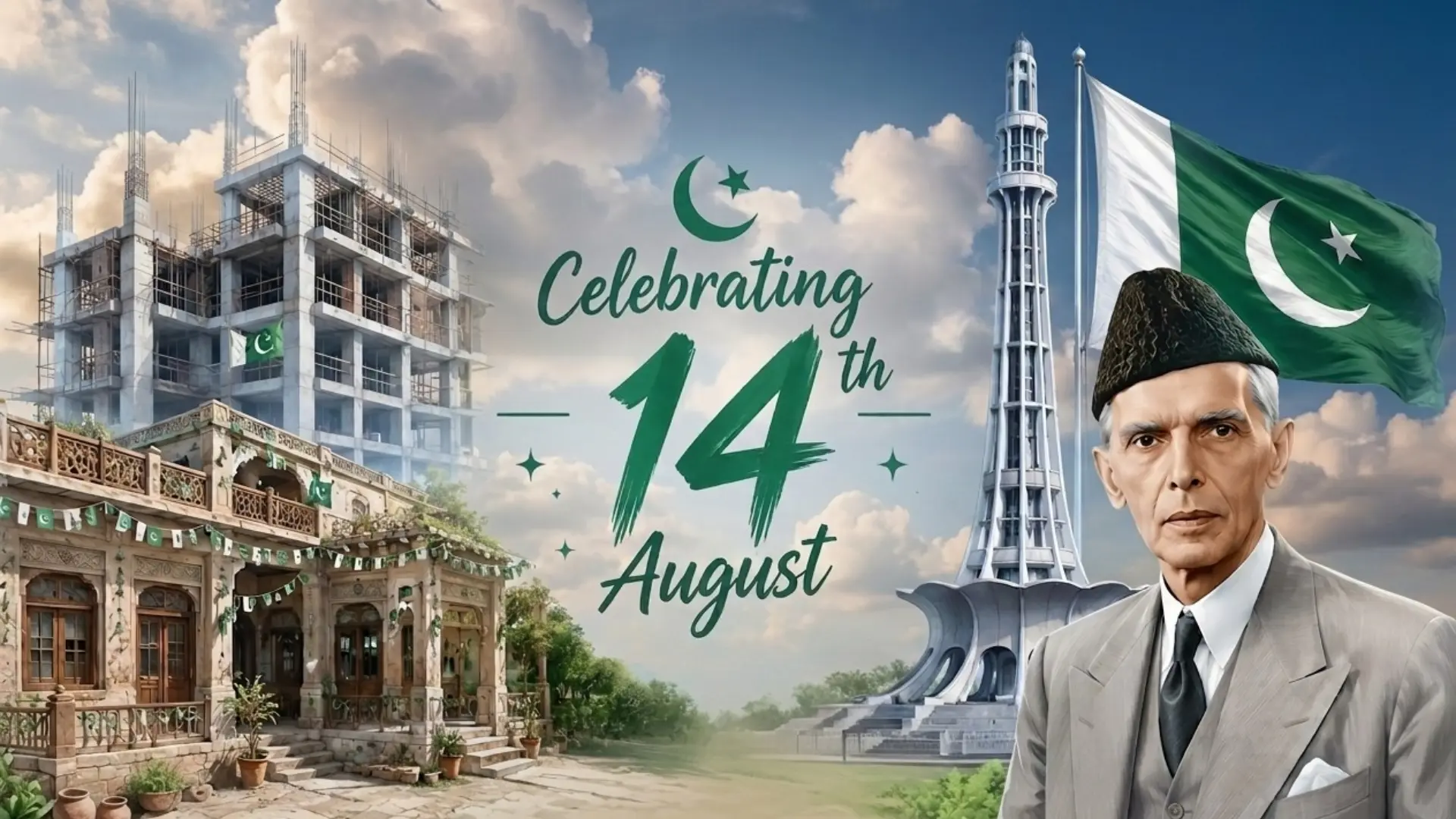
In Pakistan, the 14th of August is a day when we see many flags and lights. People also get together with their families to celebrate. When Pakistan became independent, people got the chance to build communities and cities in their own country. They could also build homes.
Since 1947, the way homes and buildings are made in Pakistan has changed a lot. Pakistani homes are not like they used to be. Now people do not live in courtyard houses and big homes like havelis. Instead Pakistan homes are houses made of concrete, homes in gated communities, and smart homes. This is a time to think about what we want our homes to be like in the future. On Pakistan's Independence Day, we can think about WHAT we want.
Want to see where Pakistan's home and construction design is heading? Explore GharHub's guide to discover the latest trends in sustainable materials, smart homes, energy efficiency, and modern residential design.
How Construction Evolved Before Pakistan's Independence
The architectural history of Pakistan does not start in 1947. Pakistan originated from an area that is characterized by a history of construction. Traditional designs of Pakistani houses were usually determined by the family needs and climatic conditions of the area.
The courtyard was an integral element in old Pakistani houses. Some of the most popular traditional designs include haveli design, mud and brick houses, and colonial houses. Elements of verandahs, high ceilings, huge windows, and vast sites were also popular.
From Traditional Materials to Modern Construction
The construction journey can be understood as a shift in materials and technology:
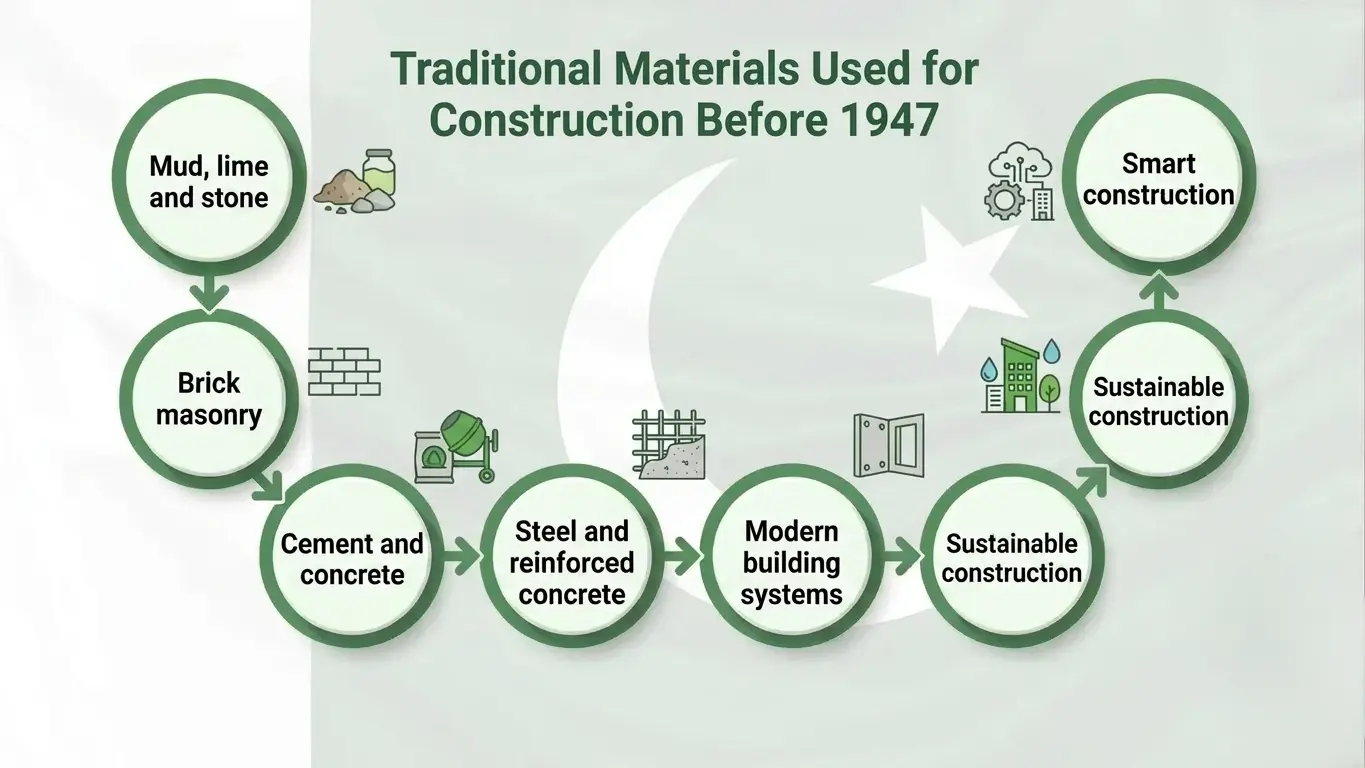
How Construction Practices Changed After Independence
After gaining freedom, there was an increase in construction that relied on engineering products and modern building technologies. Reinforced cement concrete, which is also referred to as RCC, formed an integral part of modern housing construction technology, where steel provides tensile strength and concrete provides compressive strength, making it possible to construct bigger structures.
The new construction era has brought with it improved foundations, waterproofing, plumbing, electrical works, and building services.
1947 and the Beginning of Pakistan's Housing Journey
Pakistan became a country in 1947, and this changed its cities very quickly. The partition of India and Pakistan led to a lot of people moving from one place to another. Millions of people did not have homes, and the new government of Pakistan had to find ways to help them with houses, roads, and other public facilities.
This was a problem, and it happened very fast. It is documented that 600,000 people came to Karachi, and they needed a place to live after the partition of India and Pakistan. In Punjab, the government also had to deal with a lot of people who came from other places and needed help. The same thing happened in cities of Pakistan. The issue of helping all the people who came to Pakistan was a challenge for the government of Pakistan.
Timeline of Pakistan's Construction and Housing Industry
Pakistan's construction industry has changed alongside its population, economy, cities, and technology.
Period | Major Housing and Construction Change |
Before 1947 | Courtyard houses, havelis, brick buildings, and climate-responsive designs |
1947 to 1960s | Large-scale refugee settlement and urgent housing development |
1980s to 1990s | Greater use of reinforced concrete, steel and modern building services |
2000s | Growth of private housing schemes and contemporary house designs |
2010s | Expansion of gated communities, modern materials and technology-driven construction |
2020s | Greater interest in solar power, energy efficiency, smart homes and climate resilience |
Today | A growing focus on sustainable, affordable, efficient, and climate-responsive housing |
Celebrate Independence Day by Building a More Sustainable Pakistan
Independence Day is celebrated by flying flags, putting up decorations in green and white, singing songs, and having family parties. There is nothing wrong with celebrating the day in this way. However, this year you can do something different from the usual that will go beyond 14th August. You can initiate the change from your own home.
The following are 7 Home Improvements that you can do for Independence Day for a better future:
LED Lighting Installation
Natural Ventilation Improvement
Installation of Solar Panels When Feasible
Water Wastage Reduction
Home Insulation Improvement
Locally Available Materials Usage
Planting of Trees and Sustainable Landscaping
Sustainable Building Materials
Sustainability in construction is really important. It is also about choosing the materials. Sustainability in construction includes things like:
Materials that you can find near the construction site
Materials that have been used before and can be used again
Materials that will last for a long time
Materials that do not need a lot of work to maintain
Materials that help keep the building warm in the winter and cool in the summer
Wood and other natural materials that are obtained in a way that does not harm the environment.
From Building a Nation to Building Sustainable Homes
The history of housing in Pakistan is really connected to the people. In communities, people built homes using the things they knew and the materials they had. After 1947, a lot of people needed homes, so cities started growing fast. New ways of building and new materials changed how homes were constructed.
Now Pakistan is dealing with a problem. Pakistan needs houses that are safe for people to live in, not too expensive, comfortable, and good for the environment. That is why building homes for the environment is not just something popular right now; it could be the next big part of Pakistan's history of housing.
This Independence Day, celebrating Pakistan can mean more than remembering how the country was built. It can also mean thinking about how we build its future.
Join Gharhub to take part in this future
FAQs
How do traditional houses of Pakistan relate to sustainability?
Traditional houses of Pakistan utilized passive cooling techniques like the use of courtyards and shading, high roofs, and natural ventilation to stay cool.
What are the current trends in housing construction in Pakistan?
Current trends in housing construction in Pakistan include things like power and smart houses and minimalistic design. People in Pakistan are also using space in a smart way and using sustainable construction materials to build climate-proof houses.
How can I contribute to a home on the day of Independence in Pakistan?
On the day of Independence in Pakistan, you can start making your home more sustainable by using LEDs, ventilation, insulation, and water-efficient plumbing and plants. You can also use energy-efficient appliances and solar power to make your home more sustainable.