
 Contact Us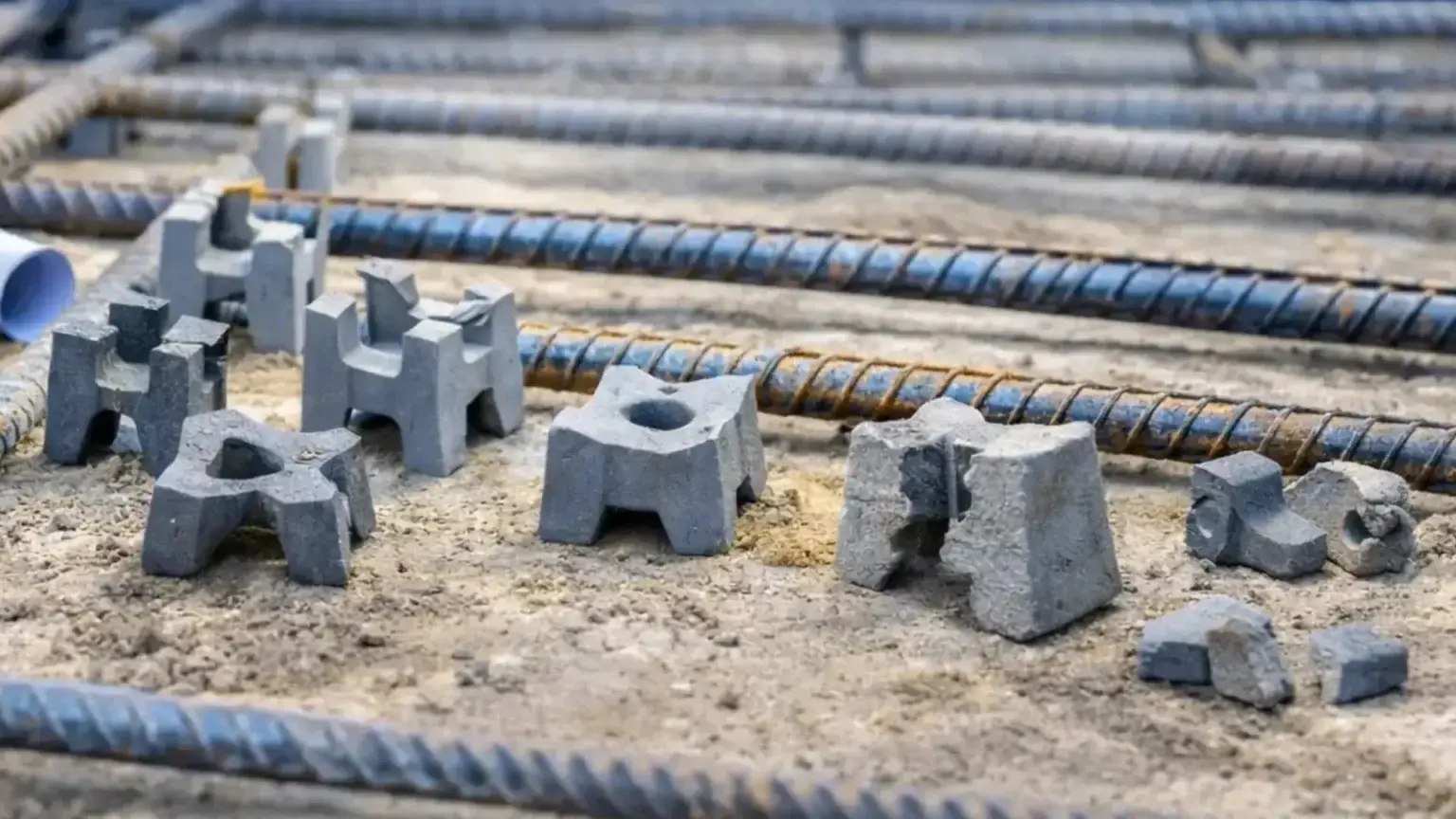
Imagine standing at a construction site, seeing fresh concrete being poured into a slab. Everything looks solid, but hidden within that concrete is a small device doing a big job and that is the concrete spacer.
They are commonly neglected but these tiny spacers determine how strong, resilient, and long-lasting your RCC structure will be. Without correct spacing, steel reinforcement can corrode, concrete cover may be uneven, and the whole framework’s integrity can be compromised.
Smaller Item with bigger impacts
Whether you’re an architect, engineer, contractor, builder, designer, or homeowner in Pakistan, you should have the knowledge of what exactly concrete spacers are, their categories, and how to use them accurately. Platforms like GharHub provide authentic, high-quality spacers which makes the construction process more efficient and reliable.
What is a Concrete Spacer?
A concrete spacer is a device used to maintain a uniform distance between steel reinforcement (rebar) and the concrete surface. This ensures:
- Steel remains protected from corrosion
- Concrete cover is consistent for structural integrity
- Compliance with building codes and safety standards
Common Materials:
- Plastic: Lightweight and cost-effective
- Steel: High strength, used in heavy-duty construction
- Fiber-Reinforced: Durable, specialized applications
Watch why concrete spacers are necessary through short real-time on-site demonstration. These spacers are small but crucial for the long-term durability of your RCC structures.
Types of Concrete Spacers
Concrete spacers come in several types, each suited for specific construction needs:
| Type | Material | Application | Advantages | Price Range (PKR) |
| Plastic Spacer | High-strength plastic | Slabs, beams, columns | Lightweight, easy to place | 12–15/piece |
| Steel Spacer | Mild steel or stainless steel | Industrial projects, heavy slabs | High load-bearing, durable | 20–30/piece |
| Fiber-Reinforced | Glass fiber reinforced | Slabs with high durability requirement | Corrosion-resistant, long-lasting | 18–25/piece |
GharHub offers spacers that fit different RCC elements, ensuring versatility and quality in one purchase.
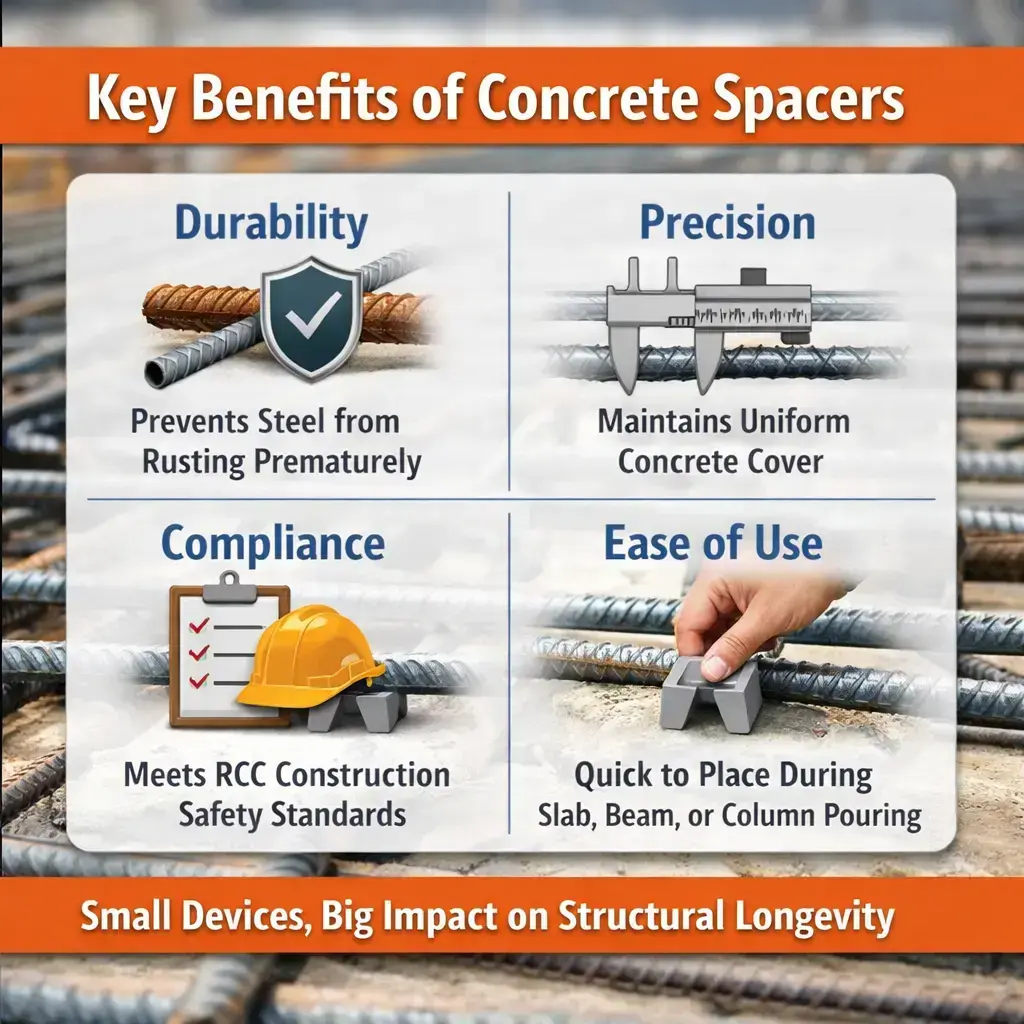
Key Benefits of Concrete Spacers
Using quality concrete spacers provides multiple advantages:
- Durability: Prevents steel from rusting prematurely
- Precision: Maintains uniform concrete cover for stronger structures
- Compliance: Meets RCC construction safety standards
- Ease of Use: Quick to place during slab, beam, or column pouring
Even though small, their contribution to structural longevity is significant.
 Concrete spacer: why it’s essential in rcc construction 3
Applications of Concrete Spacers in RCC
Concrete spacers are essential for RCC slabs, beams, columns, and footings. Properly placed spacers:
- Keep rebar at the correct height and alignment
- Prevent uneven concrete cover, reducing structural risks
- Facilitate smoother concrete pouring
How Concrete Spacers are Made and Used
Manufacturing:
- High-strength plastic, steel, or fiber-reinforced materials
- Designed to withstand pressure during concrete pouring
Usage Guide:
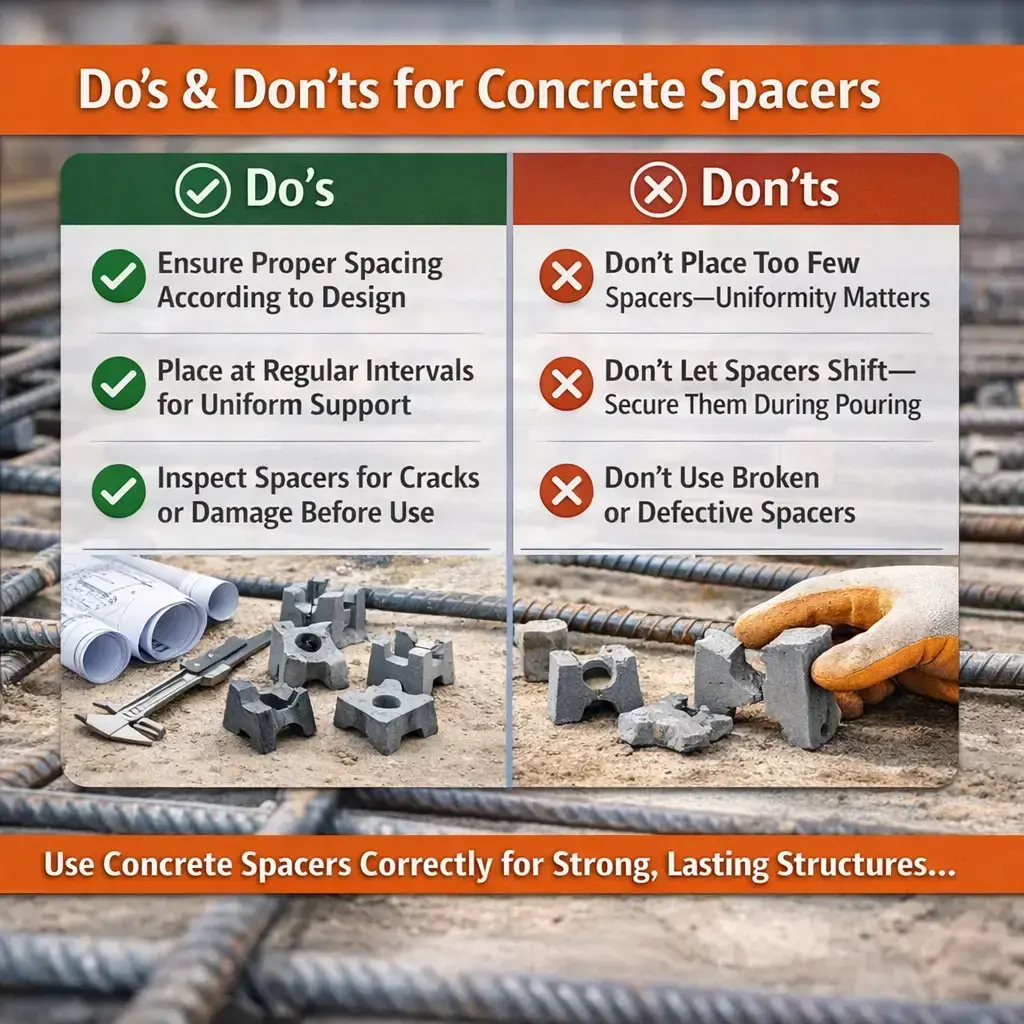
- Place spacers at regular intervals as per structural drawings
- Secure them to avoid movement during pouring
- Inspect spacers for cracks or defects before use
Do’s and Dont’s:
- Do ensure proper spacing according to design
- Don’t place too few spacers, they uniformity matters
- Do combine with the correct concrete mix for maximum strength
 Concrete spacer: why it’s essential in rcc construction 4
Concrete Mix and Spacer Integration
Even the best spacers cannot replace a proper concrete mix. Standard RCC mix ratio: 1:2:4 (cement:sand:coarse aggregate).
Benefits of Correct Mix Quality Spacer:
- Appropriate strength for slabs, beams, and columns
- Smooth workability for easy pouring
- Long-term durability and structural stability
Mini Table: Mix Ratios vs Applications
| Mix Ratio | Application | Notes |
| 1:2:4 | General RCC | Standard slab, beams, columns |
| 1:1.5:3 | High Strength elements | Columns, industrial projects |
| 1:3:6 | Non-structural | Foundations, leveling works |
Price & Buying Guide for Concrete Spacers in Pakistan
Quality spacers vary in price depending on material and size:
- Plastic Spacers: 12–15 PKR per piece
- Steel Spacers: 20–30 PKR per piece
- Fiber-Reinforced Spacers: 18–25 PKR per piece
Tips for Using Concrete Spacers Effectively
- Follow structural drawings closely for placement
- Secure spacers to prevent movement during pouring
- Inspect for cracks or damage before use
- Use multi-size spacers for different RCC components
Conclusion
Though small, concrete spacers are essential in RCC construction. By using verified spacers from GharHub, combined with the correct concrete mix and best practices, your structures in Pakistan can be safer, stronger, and longer-lasting.
CTA: Instantly connect yourself with GharHub
Frequently Asked Questions
What types are available?
Plastic, steel, and fiber-reinforced spacers for different RCC applications.
How are they used?
Placed under or around steel before pouring concrete to maintain uniform cover.
Where to buy in Pakistan?
Trusted sources: GharHub Marketplace, Ace Hardware Pakistan, and verified regional suppliers.
What is the recommended concrete mix with spacers?
The recommended standard ratio is 1:2:4 (cement:sand:aggregate) for most of the RCC structures.
Tips for correct placement?
Follow structural drawings, secure spacers, and check for defects.