 Contact Us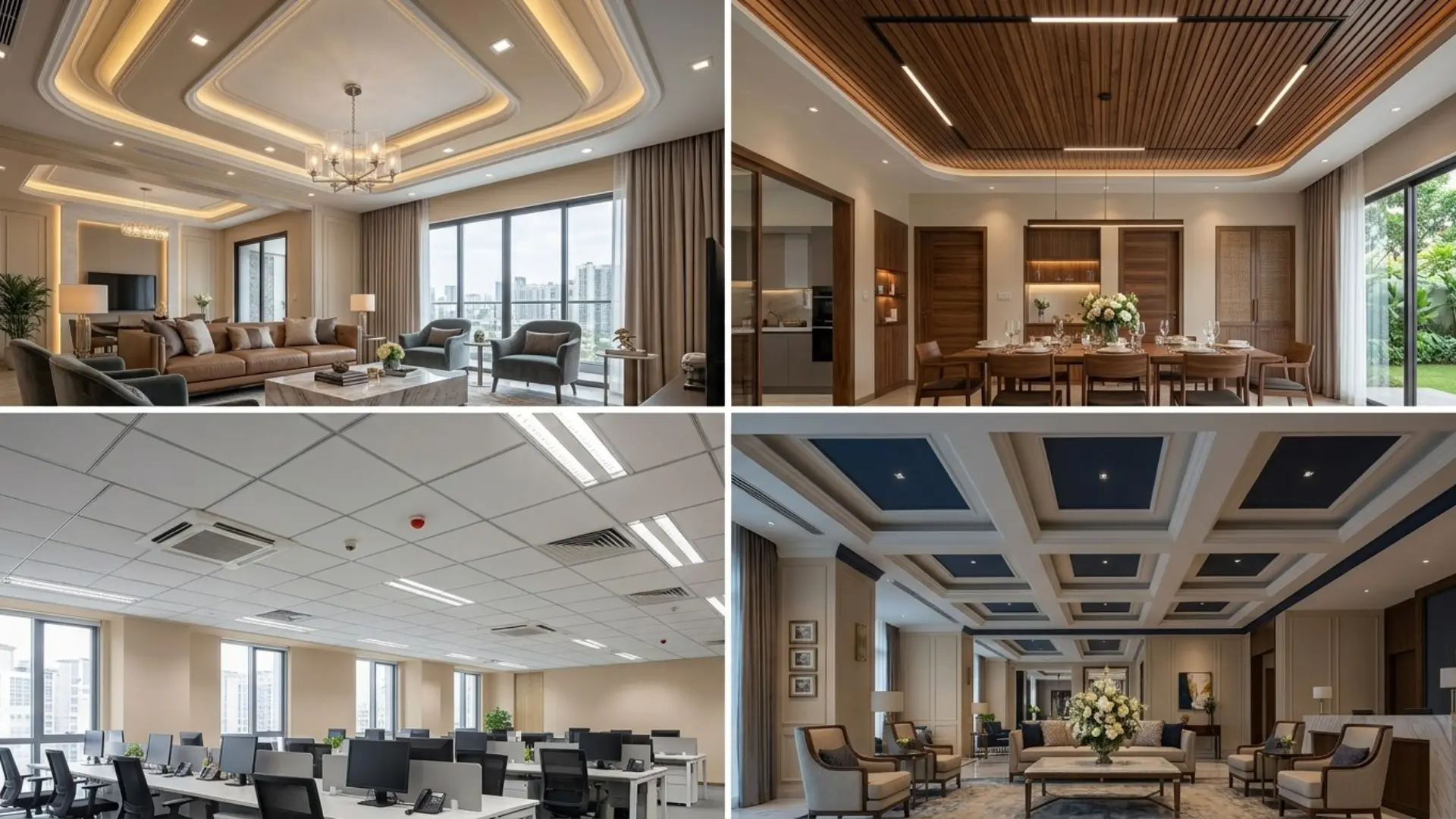
Ceilings have the ability to completely alter the appearance of a room. A boring ceiling can leave an unattractive impression, but an intelligently designed false ceiling can give depth, better illumination, and a clean look.
The difficulty lies in selecting the correct type of ceiling. A bulky ceiling may make a small room look congested, and incorrect materials can lead to additional problems in bathrooms and kitchens. Costs would also vary based on materials, design, lighting, and installation costs.
In this blog, we shall discuss various false ceiling designs used in modern Pakistani houses, types of ceilings, designs expected in 2026, materials used, cost, and prerequisites before installation.
What is a False Ceiling for Homes?
A false ceiling is an additional ceiling built below the structural slab ceiling. This ceiling not only allows hiding cables and ducts but also provides space for lighting fixtures like recessed lights and LED strips.
Contemporary houses make use of clean lines, basic shapes, and layering in lighting. However, the most suitable design varies based on room dimensions, height of the ceiling, and the purpose of the room.
Common Materials Used in False Ceiling Designs
Different materials provide different results.
Gypsum
PVC Panels
Metal
Mineral Fibre
Glass
Related: https://gharhub.com/blog/top-roof-ceiling-designs-in-pakistan/
Types of False Ceiling Designs
There are many ceiling profiles. Some are simple and practical. Others are mainly decorative.
Conventional Ceilings
A conventional ceiling is a simple, flat ceiling with little or no decorative layering. It works well in bedrooms, offices, corridors, and smaller rooms. It is also easier to maintain than a highly detailed ceiling.
Suspended Ceilings
A suspended ceiling is installed below the structural ceiling using a supporting framework.
It is useful when you need to conceal wiring, ducts, and pipes.
Coffered Ceilings
A coffered ceiling uses a grid of recessed panels. It gives a room a structured and because the design has several sections, it needs careful planning.
Shed Ceilings
A shed ceiling slopes in one direction. It can work well in contemporary houses where the architecture already includes different roof heights.
Beam Ceilings
Beam ceilings expose or recreate the appearance of structural beams. Modern versions can use wooden or metal elements.
Dome Ceilings
A dome ceiling has a curved or rounded central feature. It can create a dramatic focal point in a drawing room, entrance, mosque, or large formal space.
Top False Ceiling Design Trends of 2026
The 2026 trend is moving toward designs that combine decoration with useful lighting.
Instead of adding many shapes, homeowners are increasingly using simple geometry, layered levels, concealed LEDs, and feature sections.
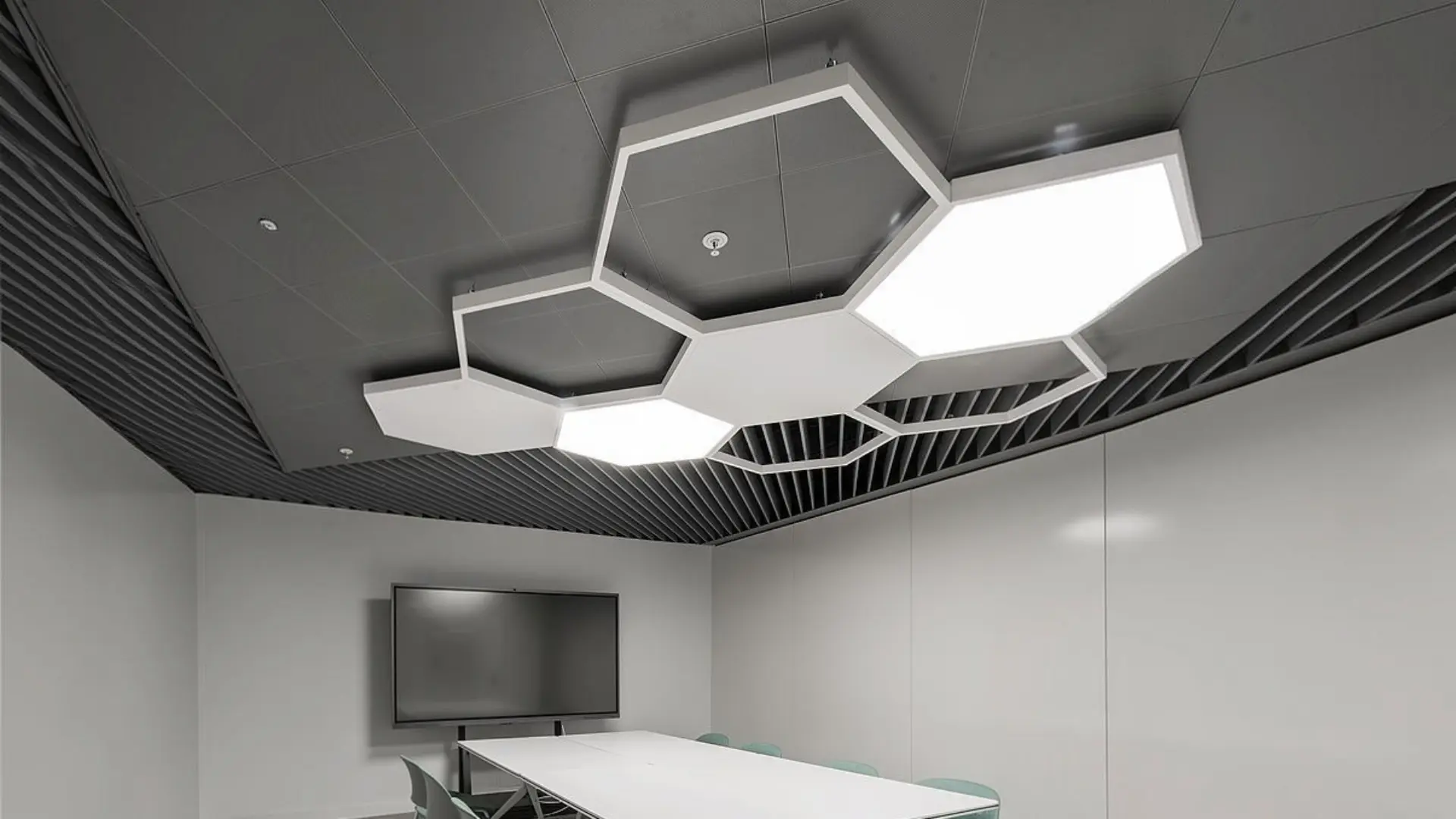
Stylish Hexagon False Ceiling Design
Hexagon patterns create a strong geometric look. A large hexagonal feature can be placed above a dining table, bed, or seating area. LED strips can outline the shape.
LED Ceiling with Linear Groove Design
Linear grooves create long, clean lines across the ceiling. They can be paired with LED strips to guide the eye through the room. This design works particularly well with modern furniture and minimalist interiors.
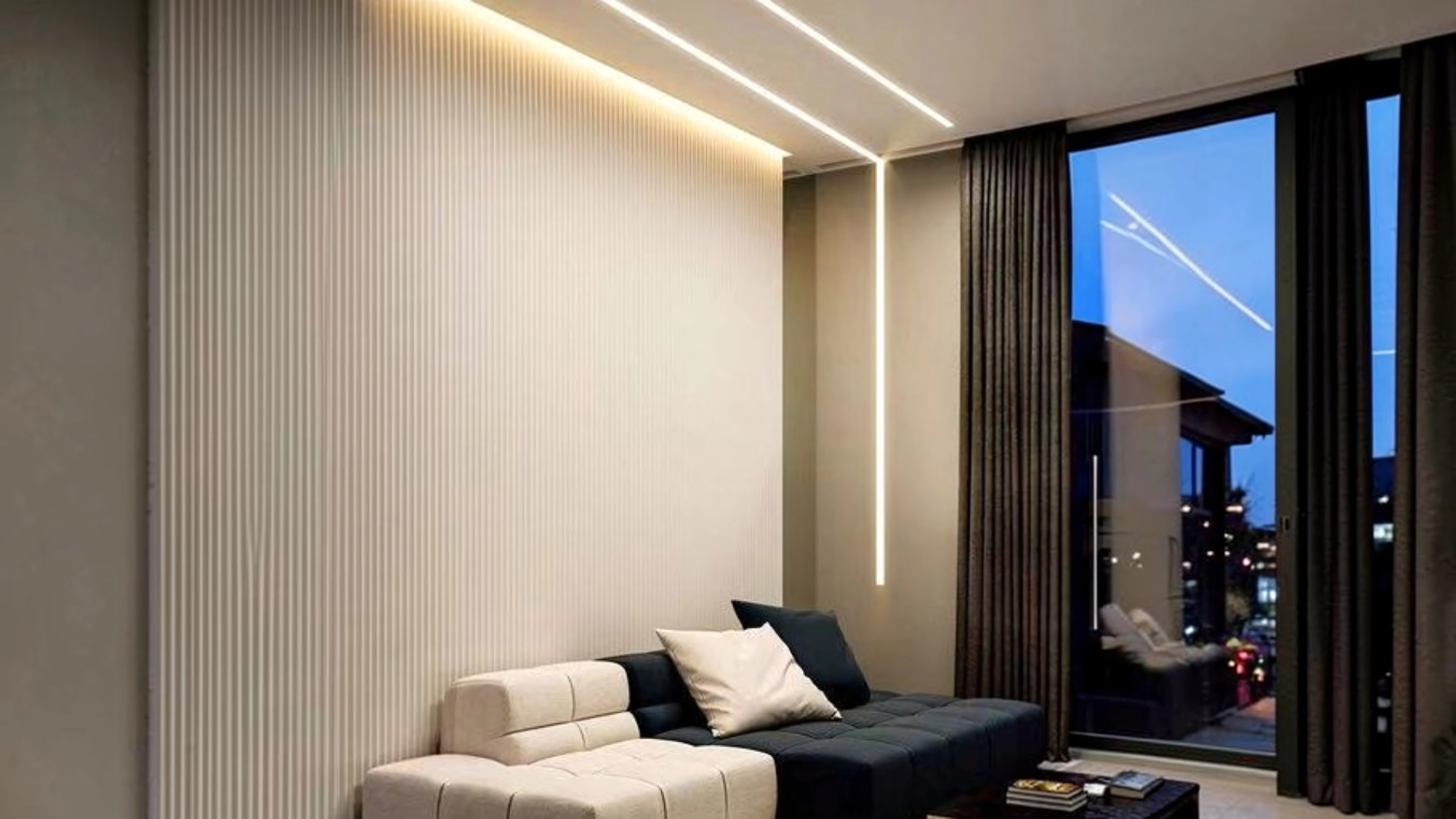
Classic False Ceiling Design
Classic designs use borders, mouldings, curves, and decorative centrepieces. They are a good fit for homes with traditional furniture or formal drawing rooms.
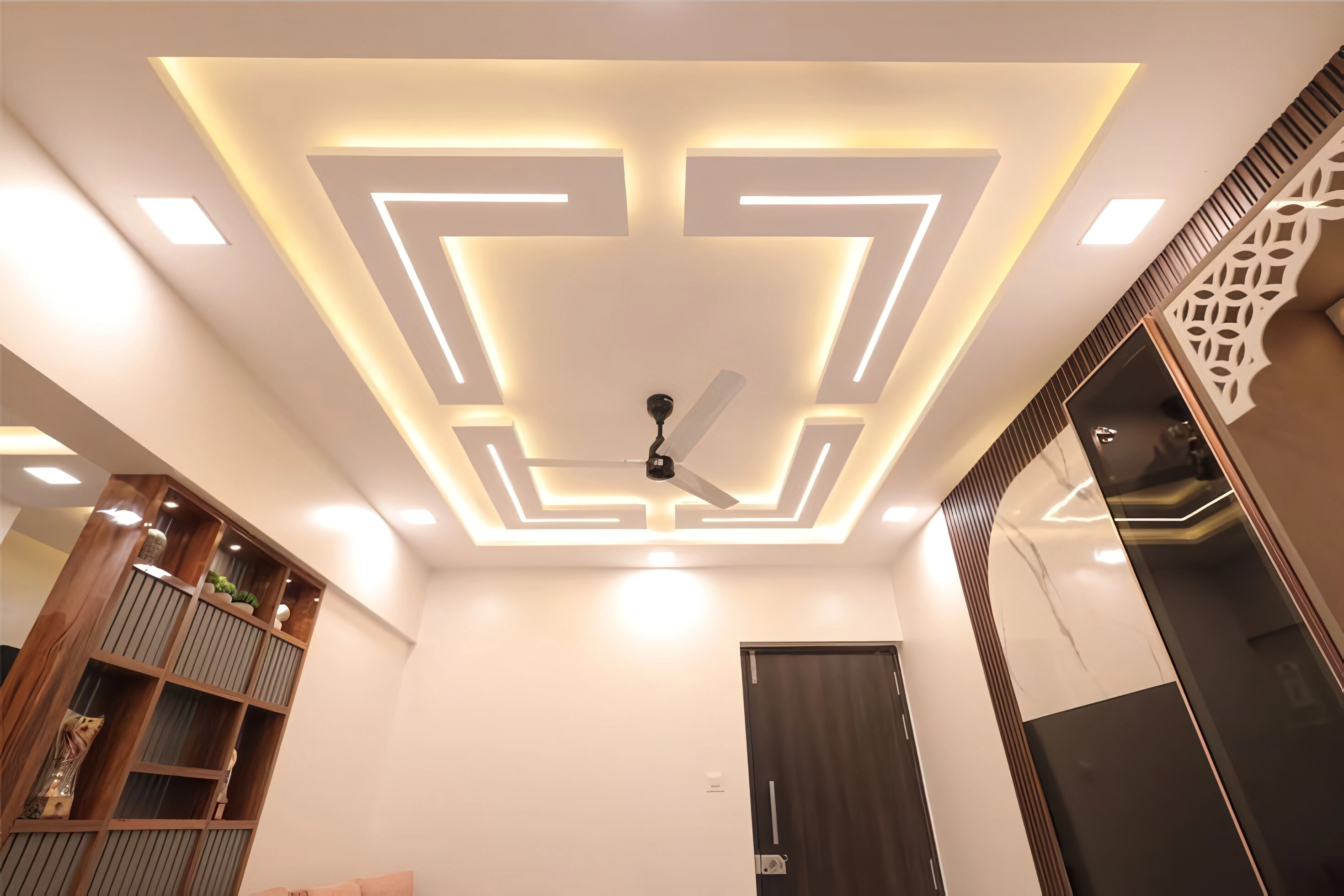
Geometric False Ceiling Design
Geometric designs use rectangles, squares, circles, hexagons, and intersecting lines. A good geometric ceiling normally has one main visual focus. The rest of the ceiling should remain simple.
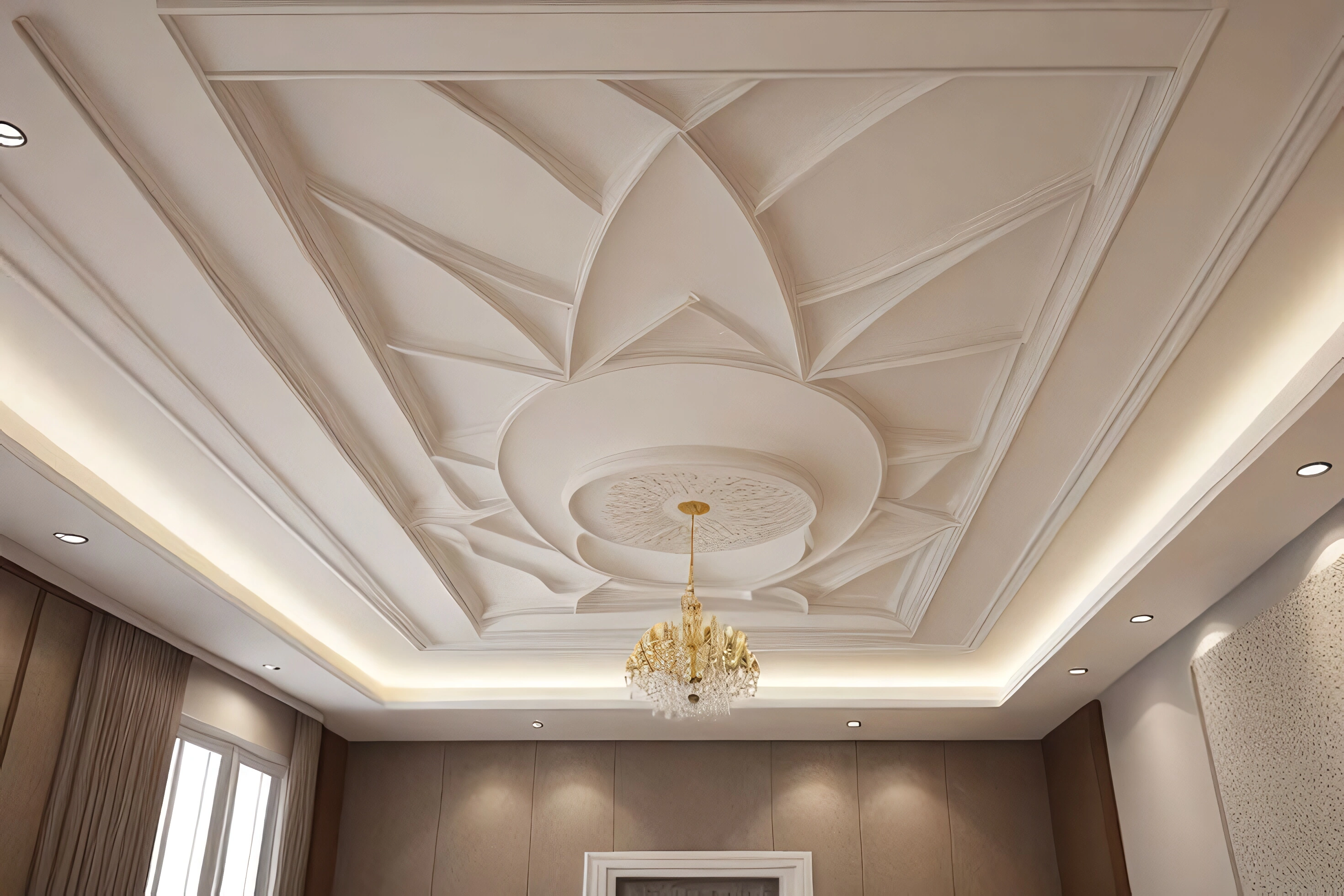
Inverted Tray Ceiling Design
A tray ceiling has a central section that is raised or recessed compared with the surrounding border. It creates depth without covering the entire ceiling with heavy decoration.
An inverted tray ceiling creates a recessed or stepped central feature. It can be combined with lighting and spotlights. This design is especially effective in large rooms where the ceiling has enough height for multiple levels.
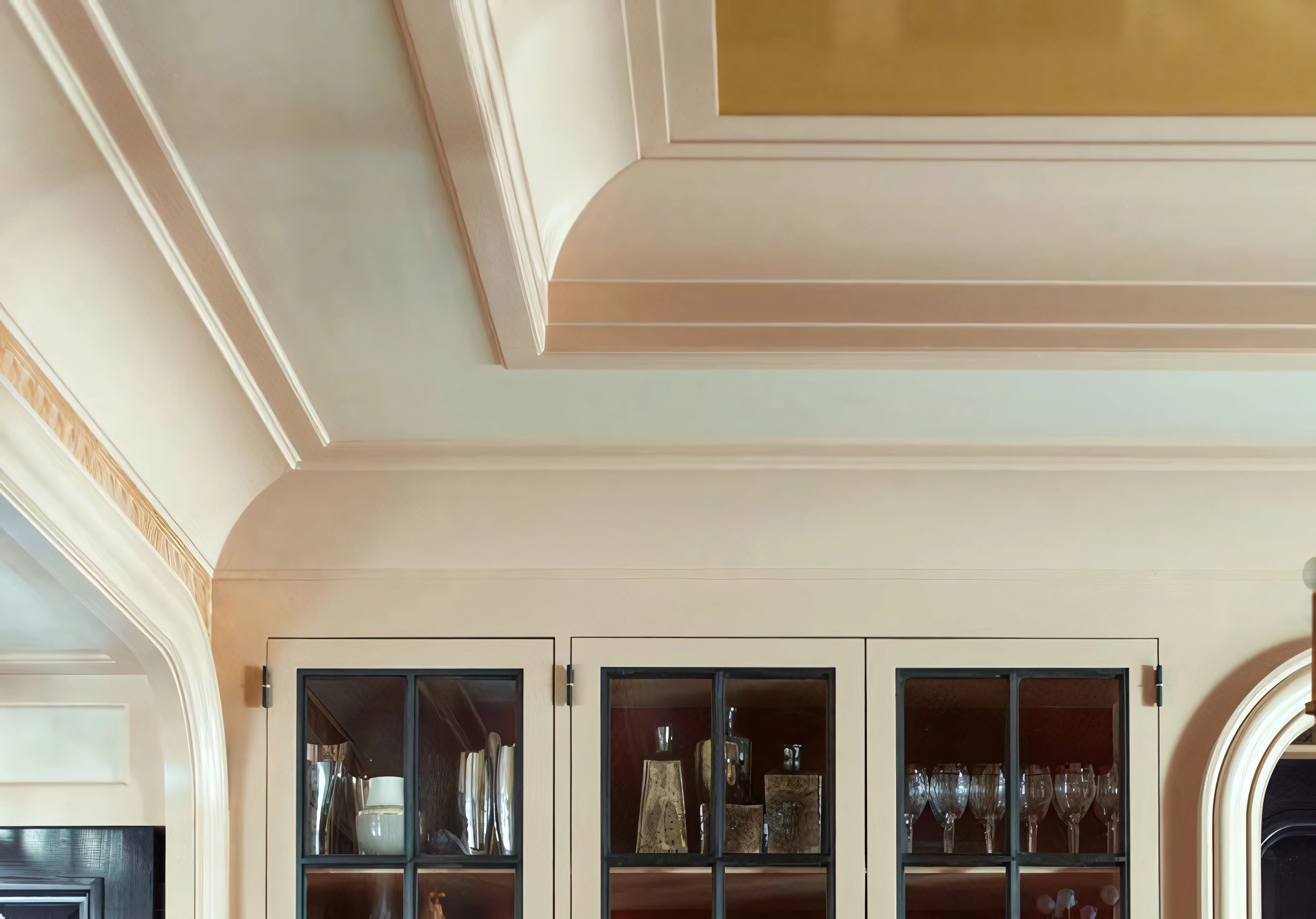
What Drives False Ceiling Cost?
False ceiling cost does not depend only on the material.
The final price can change based on the design, ceiling area, number of levels, framework, lighting, labour, and finishing requirements.
False Ceiling Prices 2026
Pakistani market sources currently report wide price ranges because projects differ considerably in material and design complexity. For example, published 2026 Lahore estimates range from basic PVC systems to considerably more expensive designer ceilings.
Type | Price (per sqft) |
PVC Ceiling Panels | PKR 65 – 120 |
Plain Gypsum False Ceiling | PKR 85 – 130 |
Gypsum Cove Ceiling + LED | PKR 130 – 200 |
POP False Ceiling (plain) | PKR 80 – 130 |
POP with Custom Design | PKR 130 – 220 |
Tray / Coffered Ceiling | PKR 150 – 280 |
Wood Slat Ceiling | PKR 180 – 350 |
Key Advantages of Installing a False Ceiling
A false ceiling is not only a decorative feature. It can also solve practical interior problems.
1. Hides Wiring and Services
2. Improves Lighting Options
3. Creates a Finished Interior
4. Can Improve Acoustic Performance
5. Makes Maintenance Easier in Some Systems
Related: https://medium.com/@gharhubpk/tv-lounge-ceiling-designs-modern-stylish-and-functional-ideas-64b38cd639bf
What You Should Know About False Ceiling Designs Before Installing
Beauty alone is not sufficient. A false ceiling must also complement the room.
Budget
A basic ceiling will help you save money. Multiple layers, special forms, high-quality finishes, and LED lights may raise the overall cost.
Height of the Room
A deep false ceiling will make a low room look smaller. A heavy multi-layered ceiling may also make the room look confined.
Lighting
Lighting should be planned before the installation of the ceiling. LED lights are especially good since they can be used with recessed lights, linear profiles, and coves.
When choosing lighting, you shouldn't concentrate only on wattage. Consider the light output, colour temperature, beam angle, and quality. The U.S. Department of Energy points out that LED lighting quality can differ greatly; therefore, it is necessary to know their performance.
Materials
The choice of material depends on the room. Gypsum is frequently used for modern smooth ceiling design. The PVC ceiling is effective in cases when moisture resistance and easy maintenance are required. POP provides more possibilities for decorative design.
Room Layout and Design
The ceiling must correspond to the room. The best choice is the ceiling that is well combined with the furniture and room layout.
Conclusion
A good choice of false ceiling can bring brightness, cleanliness, and completeness into your house. However, this does not mean that the most costly option would be the best one.
Begin by evaluating the room itself and consider its height, size, furniture, lighting needs, and moisture conditions. Only then decide what material and type of ceiling to choose.
For most modern rooms, the choice should go to simple gypsum ceilings along with proper LED or cove lighting.
If needed, PVC can prove itself in areas with increased moisture conditions, while POP will be a great choice for decorative curved ceilings. Always compare different quotations on the basis of the entire project, rather than per square foot cost of the job.
Frequently Asked Questions
How much does a 100 sqft false ceiling cost?
The cost of a 100 sq ft false ceiling is approximately PKR 65 to PKR 120 per sq ft for PVC, PKR 85 to PKR 130 for plain gypsum, and around PKR 130 to PKR 200 for gypsum cove ceilings with LED.
Which is better, PVC or POP ceiling?
PVC is generally better for moisture-prone areas, while POP is better for decorative and customised designs.
Is a false ceiling strong for residential use?
Yes, a properly designed and installed false ceiling can be strong enough for normal residential use.
What is the life of a false ceiling?
A well-installed ceiling can last for many years when suitable materials are used, and moisture problems are controlled.
Which colour is good for a false ceiling?
White and light neutral colours are usually the safest choices. They reflect more light and can make a room feel more open.
What is the formula for ceiling price?
A basic way to estimate the ceiling cost is Total Ceiling Cost = Ceiling Area × Rate Per Sq Ft.