 Contact Us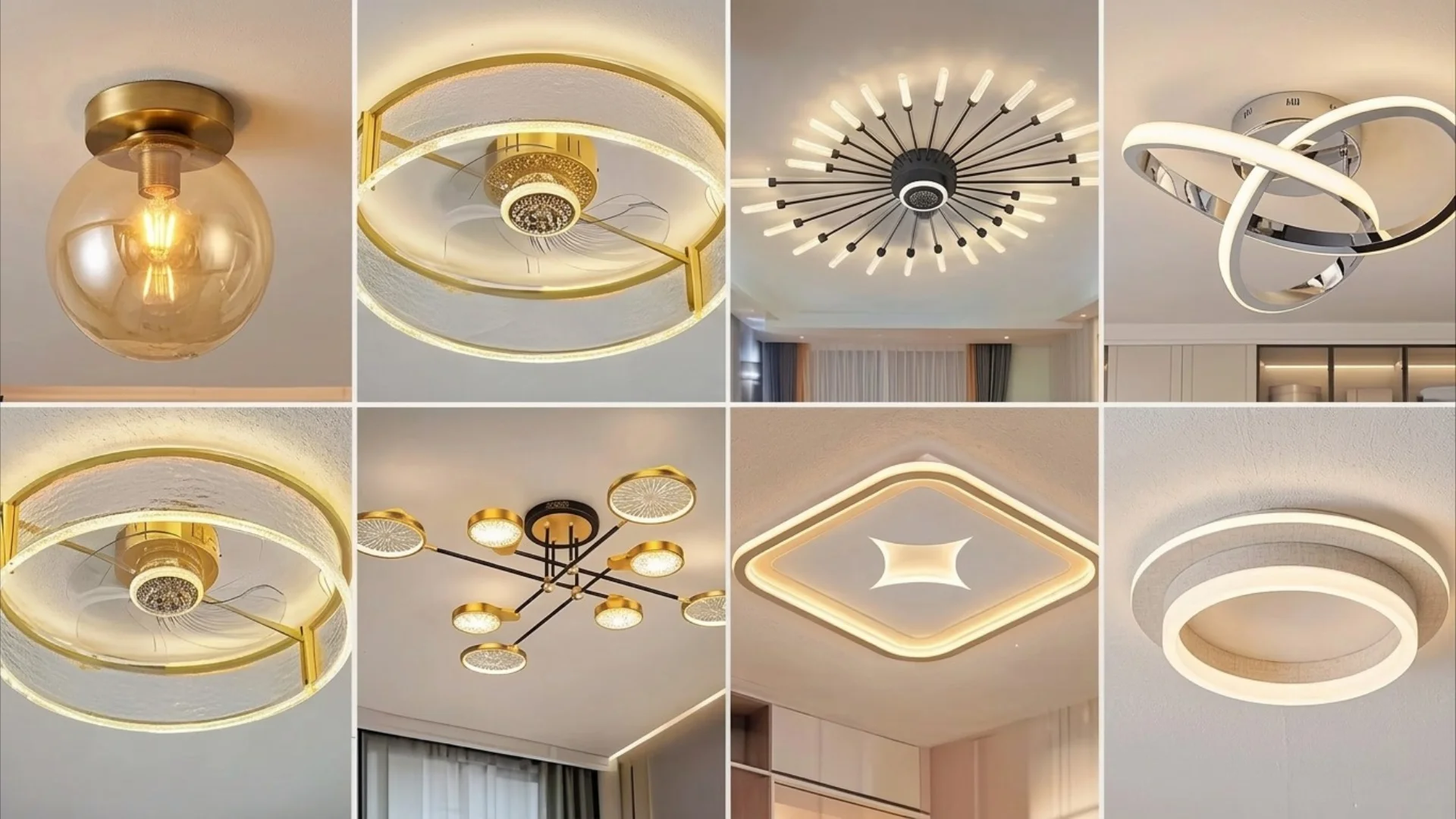
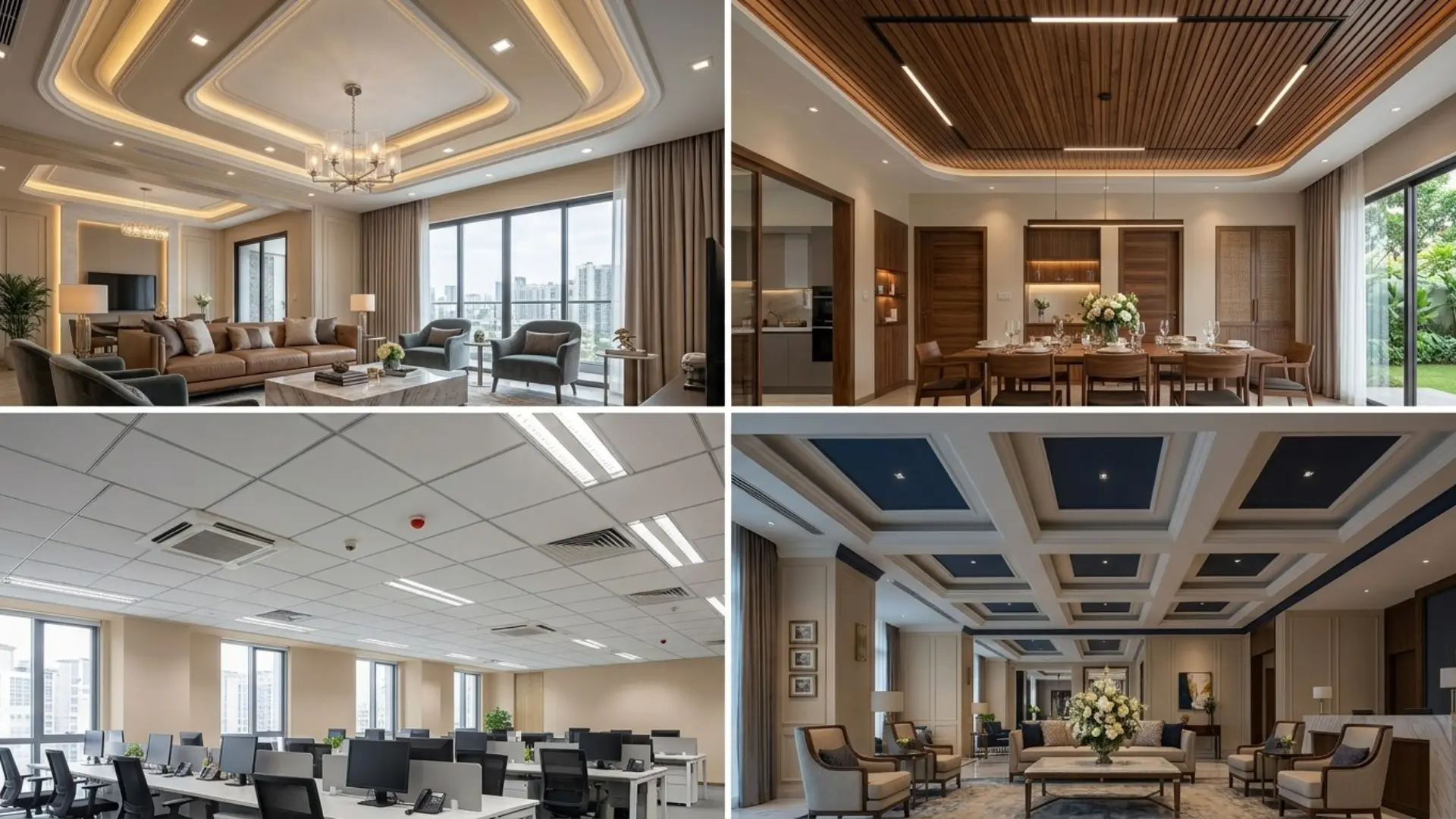
Have you ever walked into a room and felt instantly calm? Or walked into another and felt tired for no clear reason? The answer is often above your head.
Here is the problem. Many homes rely on one bright bulb in the middle of the ceiling. It throws harsh light in the center and leaves the corners dark. Your eyes work harder. The room looks flat and smaller than it is.
That hurts more than your mood. Poor lighting can mean you pay more and still see less. The fix is a well-planned false ceiling with the right lights.
Related: https://gharhub.com/false-ceiling-design-pakistan
What Are False Ceiling Light Designs?
A false ceiling is a second ceiling hung a few inches below the main one. It is also called a drop ceiling or suspended ceiling. It is usually made of gypsum board, POP (plaster of Paris), wood, or PVC panels.
False ceiling light designs are the lighting plans built into that gap. The space between the two ceilings hides wires, drivers, and fixtures. So you see the glow, not the mess.
Quick facts about false ceilings:
Feature | Typical value |
Gap below main ceiling | 4 to 8 inches (about 100 to 200 mm) |
Common materials | Gypsum, POP, PVC, wood, metal |
Minimum room height after installation | About 8 feet (2.4 m) is ideal |
Space needed for recessed LED | 3 to 6 inches, depending on the fixture |
What Lights Are Used For False Ceiling? Advantages of Incorporating False Ceiling Lighting
Lighting uses around 15% of an average home's electricity, according to the U.S. Department of Energy. Poor lighting can mean you pay more and still see less.
LED lights are the most common choice for false ceilings. They come as cove strips, recessed downlights, panels, spotlights, and track lights. Chandeliers and pendants are also hung from false ceilings for style.
Why LED?
Because they run cool and save power. Old incandescent bulbs waste about 90% of their energy as heat. That heat is a real risk inside a closed ceiling. LEDs stay cool to the touch, so they are safer in tight spaces.
Advantages of false ceiling lighting
Cleaner look. Wires and fixtures are hidden above the ceiling board.
Better light spread. Light comes from many points, not one bulb. Fewer dark corners.
Lower bills. Built-in LEDs use far less power than old bulbs.
Room feels bigger. Cove light bouncing off the ceiling makes it look taller.
Mood control. You can switch between bright work light and soft evening glow.
Easy upgrades. Adding smart dimmers or sensors is simple when wires sit in the ceiling gap.
Better acoustics and insulation. The air gap and boards help block some noise and heat.
Why does one type of light never work on its own?
One light type cannot do every job. A room needs general light to see, focused light to work, and soft light to relax. Designers call this layered lighting.
The three layers are:
Ambient light. The base layer. It fills the whole room so you can move safely. Example: cove lights and panel lights.
Task light. Bright, focused light for jobs like cooking, reading, or makeup. Example: recessed downlights over a counter.
Accent light. Light that shows off art, walls, or shelves. Example: track lights and gimbal spots.
If you use only downlights, you get bright spots and shadows on faces. If you use only cove lights, the room looks nice but is too dim to read. Mix them, and each one covers the other's weak spot.
Each layer should sit on its own switch or dimmer. That way, you can turn on only what you need.
What are different types of false ceiling lights?
The main types of false ceiling lights are cove lights, recessed LEDs, backlit panels, chandeliers, pendants, track lights, flush lights, island lights, and gimbal lights. Each one fits a different layer and a different room.
Related: https://gharhub.com/top-roof-ceiling-designs-in-pakistan
1: Cove/Strip Lights for False Ceiling
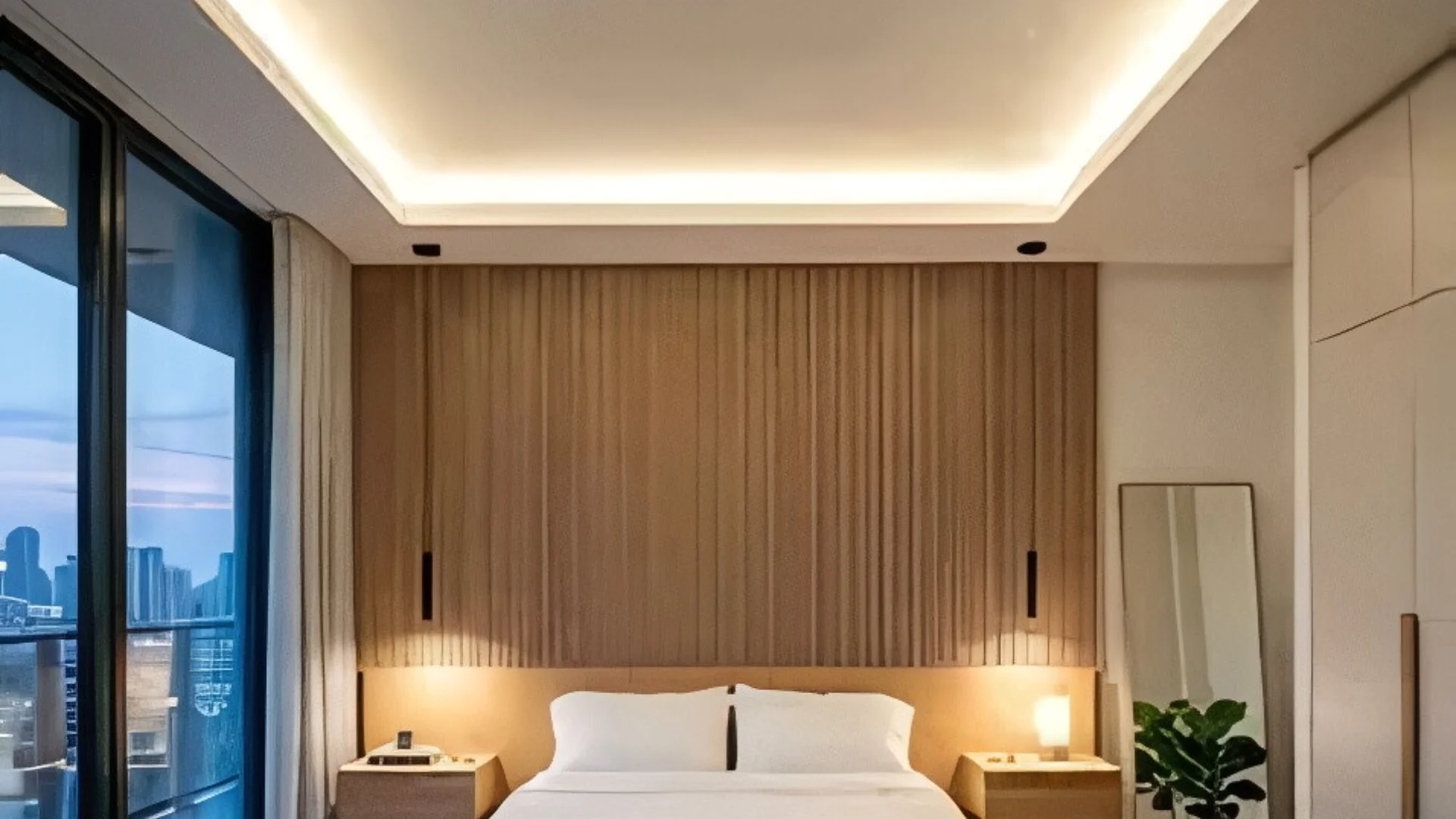
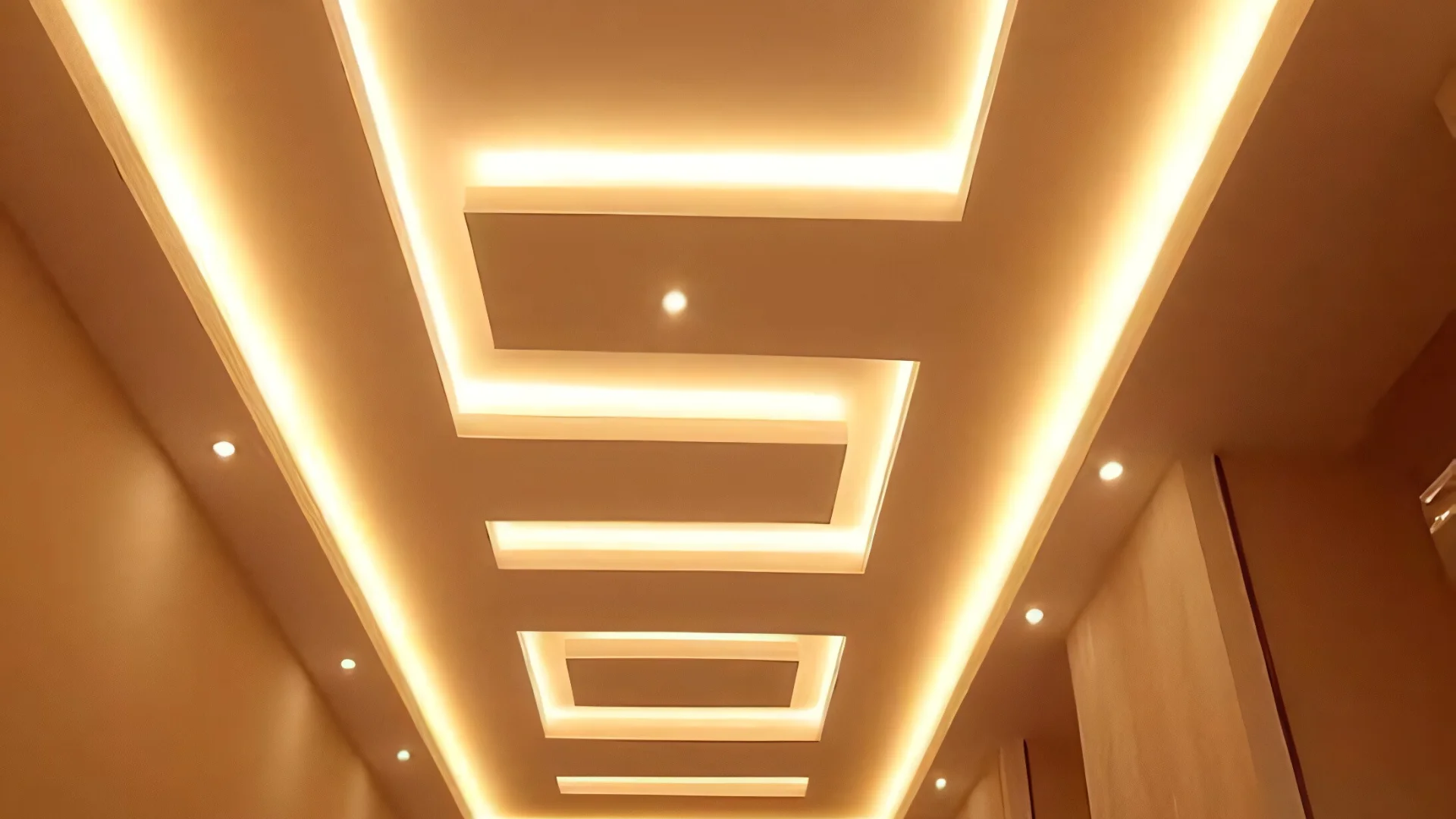
Cove lights are LED strips hidden in a ledge along the edge of the false ceiling. The light shines up and bounces off the main ceiling. You see a soft glow, not the strip itself.
This bounce makes the ceiling look higher. It also removes glare, so it is kind on the eyes. Keep a cove gap of about 4 to 6 inches so the glow spreads evenly.
2: LEDs/Recessed Lights for False Ceiling
Recessed lights, also called downlights or pot lights, sit inside the ceiling. Only a flat or slightly sunken ring shows. They point light straight down.
They are the workhorse of false ceiling design. They give clean light with no bulky fixture.
3: Backlit False Ceiling Panels
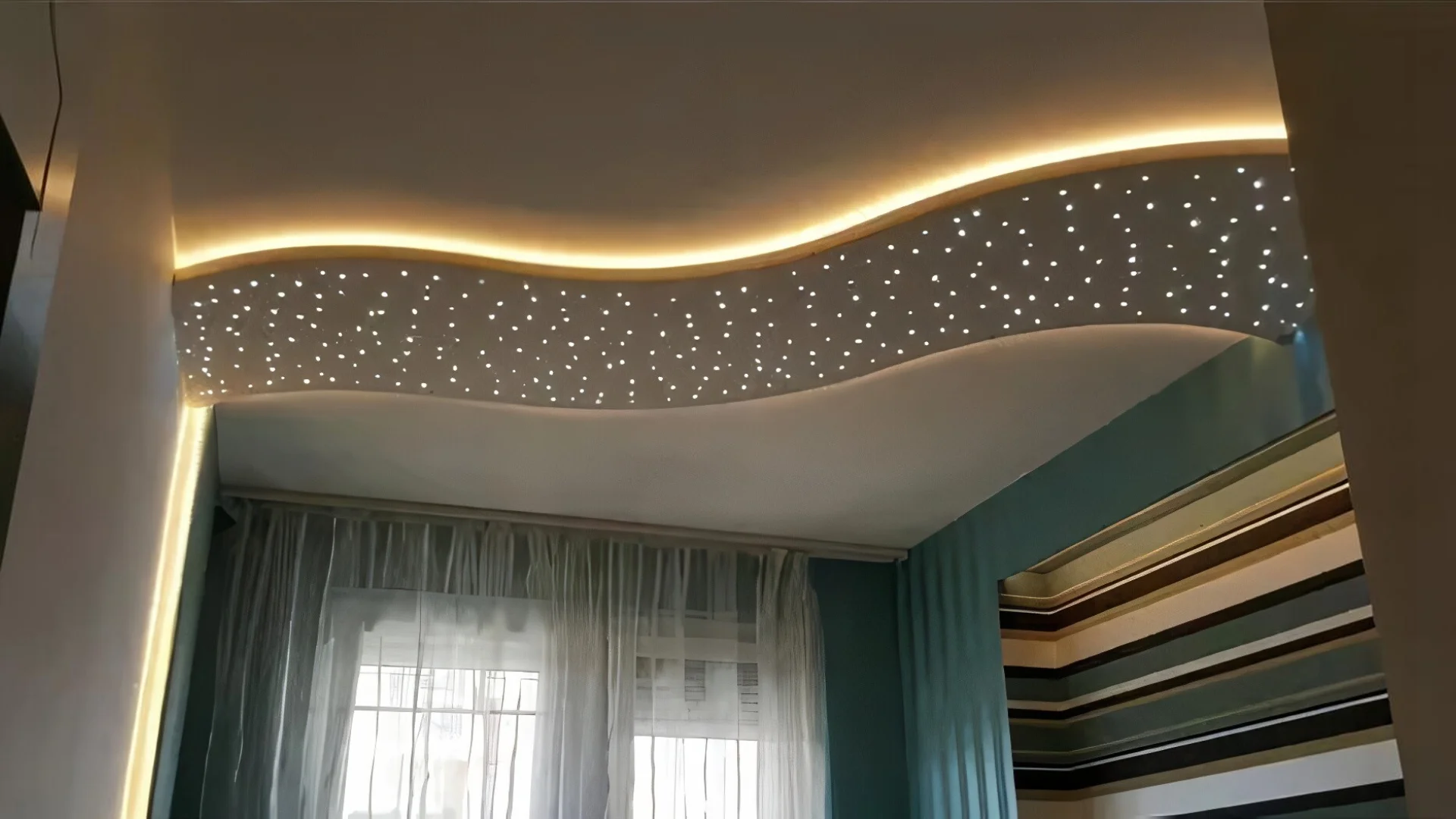
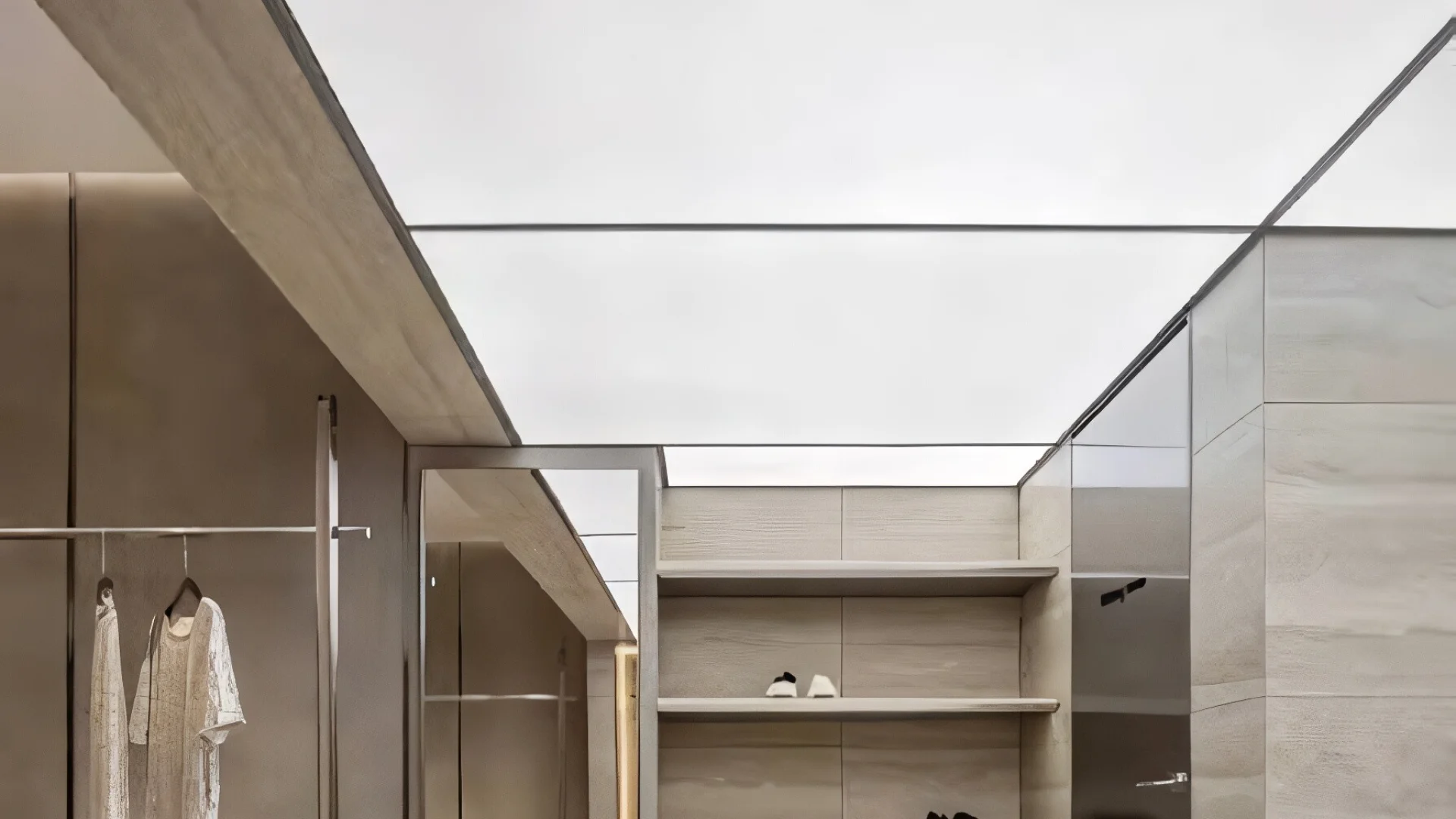
Backlit panels are sheets of frosted acrylic or stretch fabric with LEDs behind them. The whole panel glows like a skylight. They are great for rooms with little daylight. They make a basement or inner room feel open and bright.
4: Chandeliers for False Ceiling Light Designs
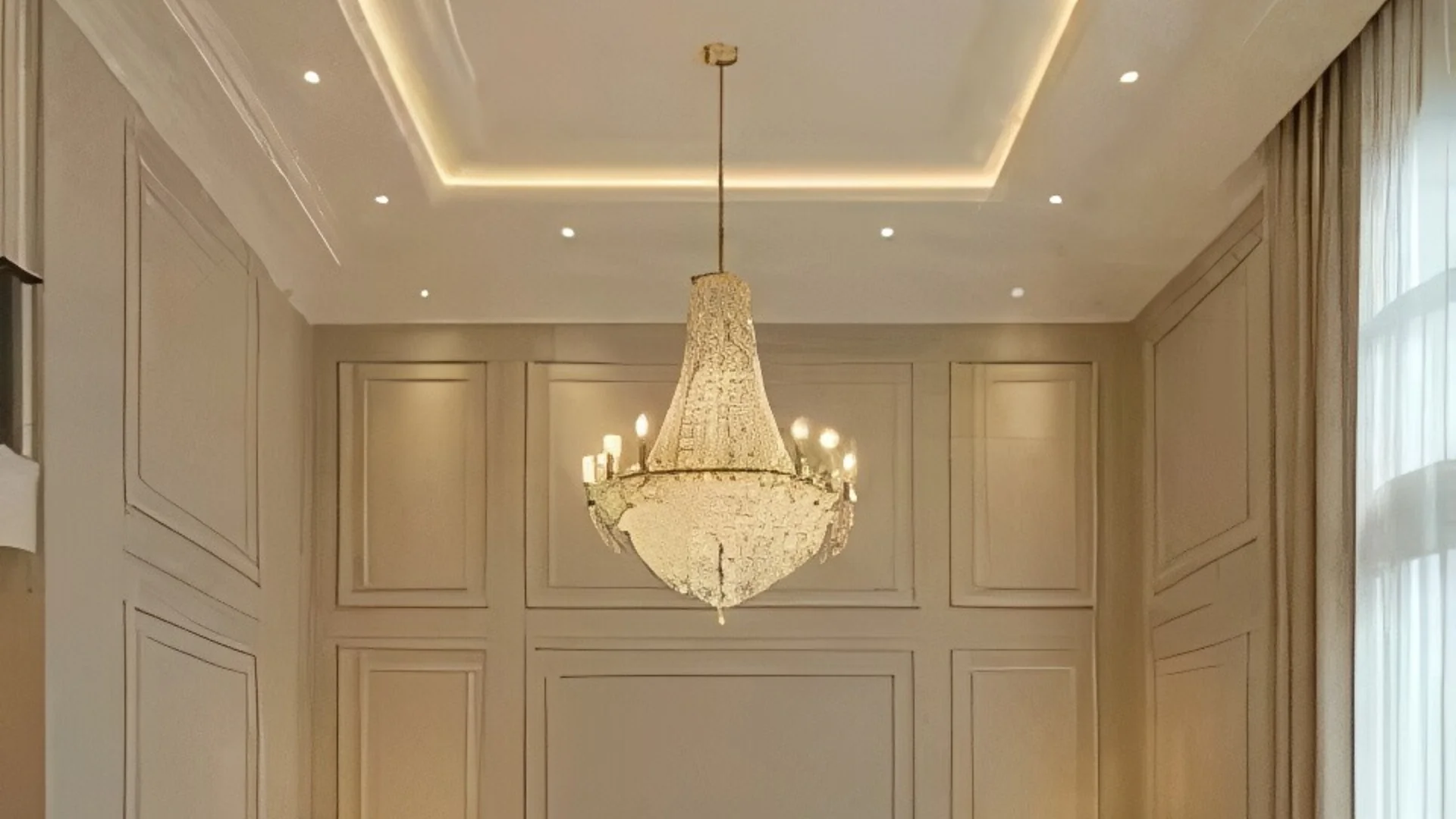
A chandelier is a hanging fixture with many arms or lights. It is the jewelry of a room. It draws the eye and sets the style.
A false ceiling makes chandeliers look even better. You can place one inside a raised center panel with cove lighting around it. Always fix a chandelier to the main slab or a strong frame, not the gypsum board alone. Boards are not made to carry heavy weight.
5: Pendant False Ceiling Light Designs
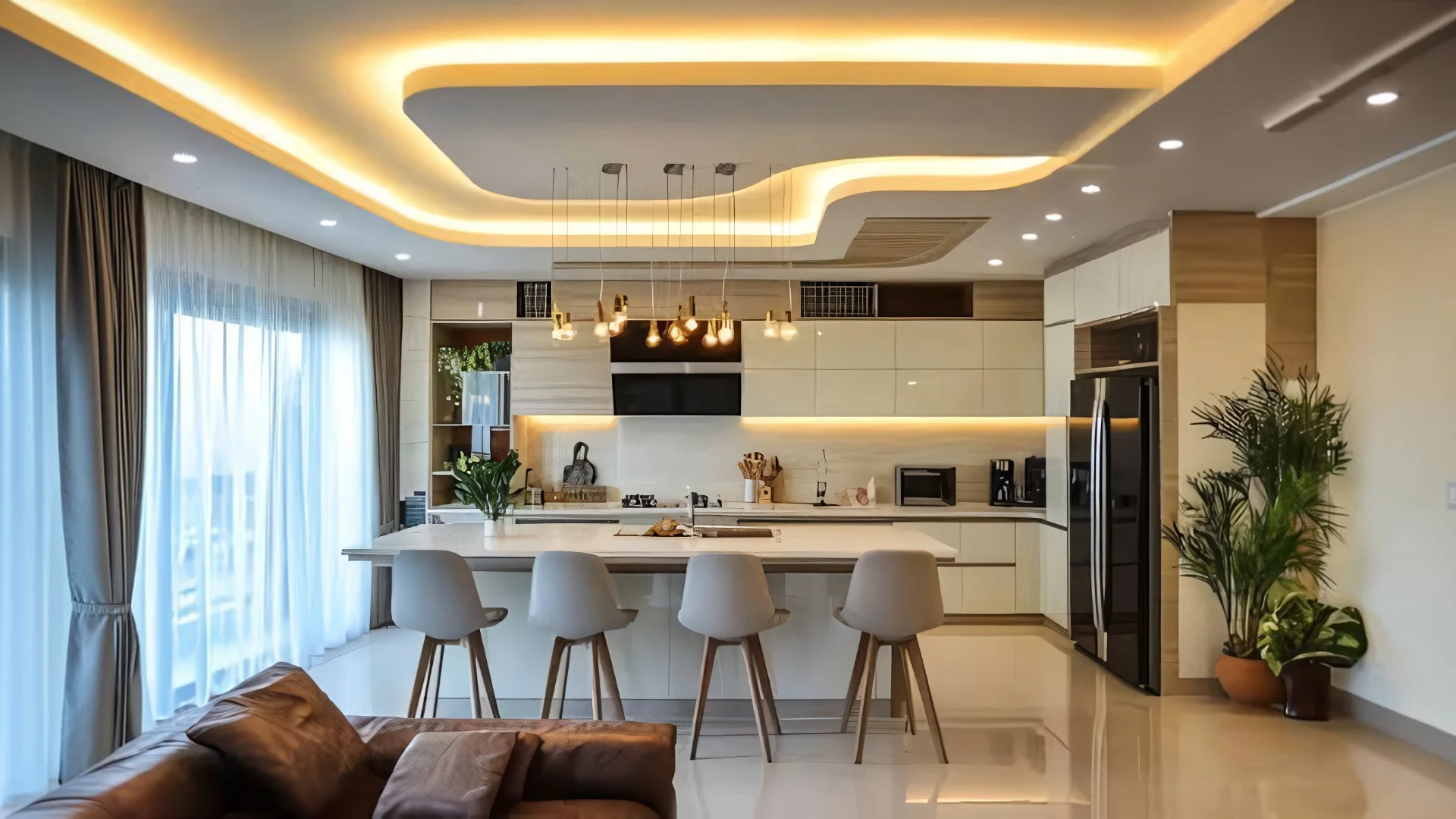
Pendants are single lights hanging from a cord, chain, or rod. They are smaller than chandeliers and work well in groups.
Use them over a dining table, beside a bed, or in a reading corner. They bring light closer to where you need it. Hang them about 30 to 36 inches above a dining table.
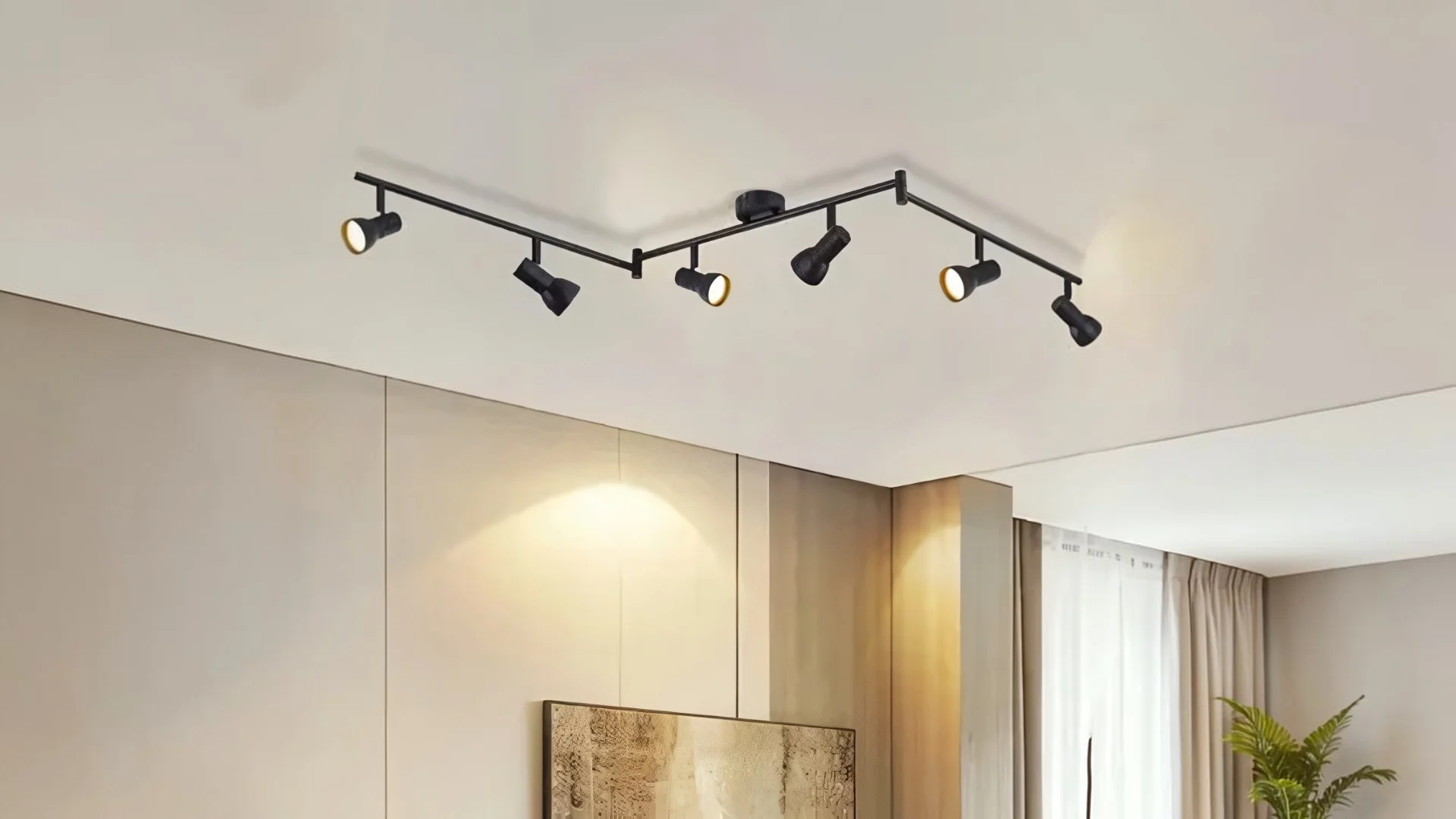
6: Track Lights for False Ceiling
Track lights are small spotlights mounted on a rail. You can slide and turn each head. That makes them the most flexible accent light.
They are perfect for art walls, bookshelves, and open kitchens. Magnetic track systems are a popular modern choice. They sit flush inside the false ceiling, and the heads snap on or off.
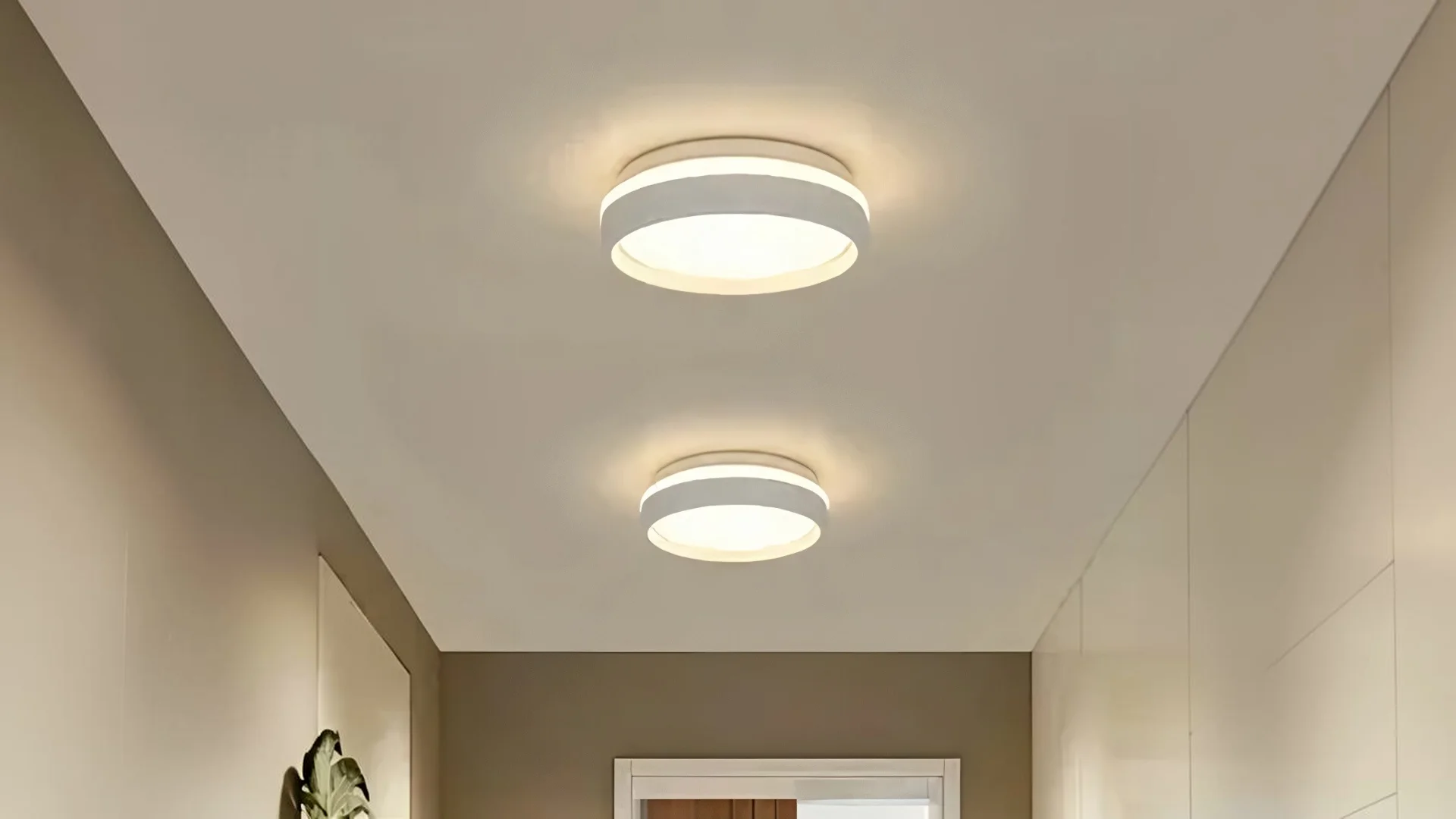
7: Flush Lights for False Ceiling
Flush lights sit tight against the ceiling with no gap. They have a round or square shade that spreads light widely.
They suit hallways, closets, and rooms with low ceilings. Because they do not hang, nobody bumps into them. They are also easy to clean.
8: Island False Ceiling Light Designs
Island lighting is a design where the false ceiling has a raised or lowered block right above a kitchen island or dining table. Lights are fitted into that block.
This frames the space and puts strong task lighting where you chop and cook.
9: Gimbal False Ceiling Light Designs
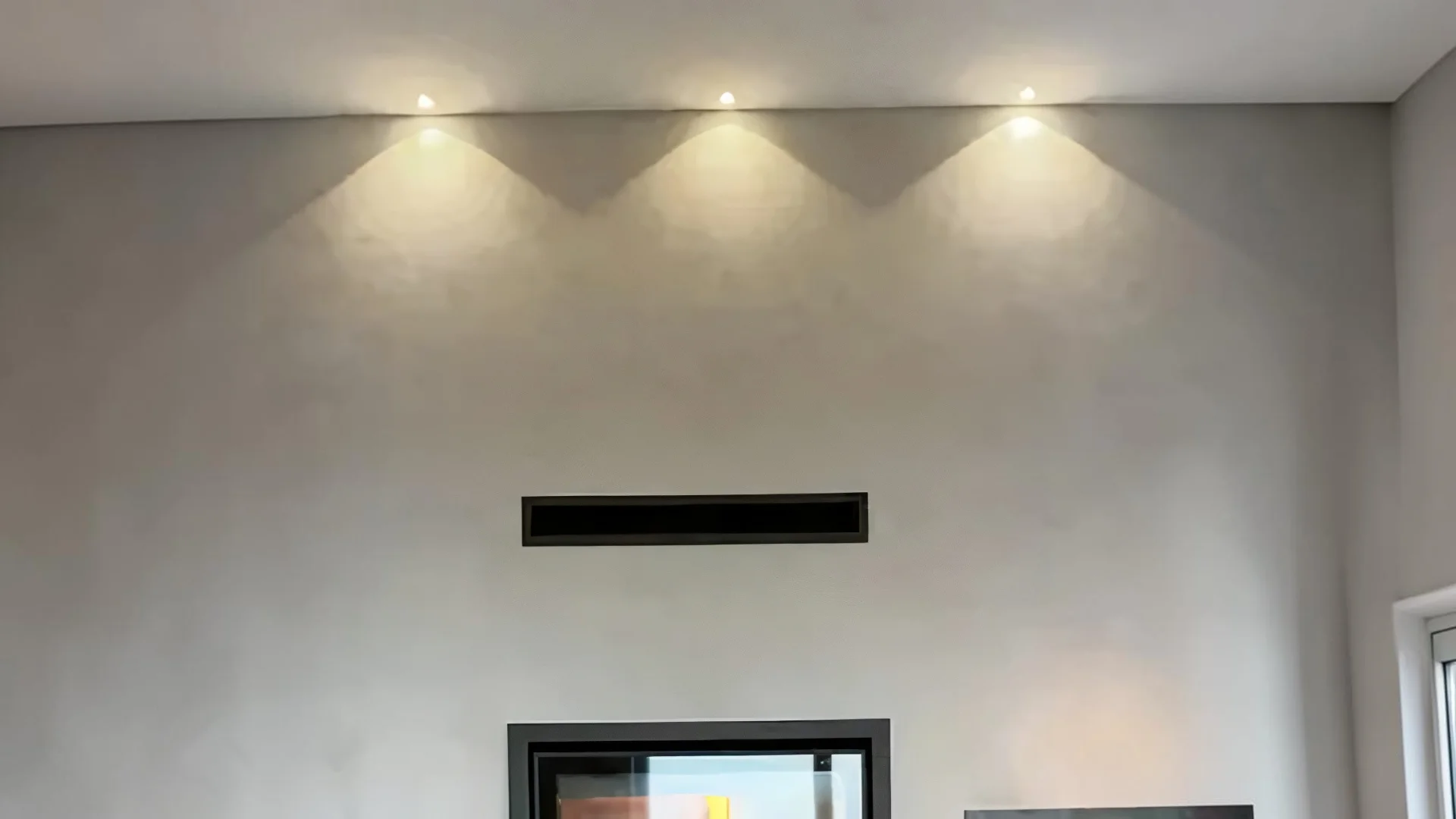
Gimbal lights look like recessed lights, but the inner part can tilt and turn. Most tilt around 30 to 45 degrees.
That tilt lets you aim light at a painting, a textured wall, or a TV unit. They are also handy on sloped ceilings, where normal downlights would shine at an odd angle.
How To Choose False Ceiling Lights
To choose false ceiling lights, match brightness, color, and fixture type to what each room is used for. Follow these six steps, and you will avoid the most common mistakes.
Know the room's job. A kitchen needs bright task light. A bedroom needs soft, warm light.
Work out the brightness you need. Brightness is measured in lumens, not watts. Multiply the room's area in square feet by the lumens needed per square foot.
Pick the right color temperature. This is measured in Kelvin (K). Lower numbers look warm and yellow. Higher numbers look cool and white.
Check the color quality. Look for a CRI (Color Rendering Index) of 80 or more. Choose 90 or more for kitchens, dressing areas, and art.
Plan your layers and switches. Put ambient, task, and accent lights on separate switches or dimmers.
Buy quality and certified. Look for trusted brands, a clear warranty, and ENERGY STAR or similar marks. For bathrooms, pick lights rated IP44 or higher to handle moisture.
Keeping It Real With False Ceilings
False ceilings are great, but they are not perfect. They lower your ceiling. Expect to lose 4 to 8 inches of height. In a room under 9 feet, keep the design slim and near the edges. Poor wiring or weak frames can cause sagging, flicker, or cracks. Hire a licensed electrician and an experienced ceiling installer.
Use LED drivers and fixtures made for enclosed ceilings. Leave access points for repairs. Cove ledges collect dust. Plan a simple cleaning routine every few months. Board, framing, labor, paint, and dimmers add up. Get at least two written quotes.
Done right, a false ceiling with layered LED bulbs can serve your home well for decades. Done in a rush, it can become a costly fix. Spacing, sizing, lumen, and Kelvin ranges are common industry rules of thumb. Always confirm final plans with your electrician or lighting designer.
FAQs
Can We Install Ceiling Lights Without a False Ceiling?
Yes, you can install ceiling lights without a false ceiling. Surface-mounted lights, flush lights, pendants, chandeliers, and surface track lights all fix straight onto the main ceiling. Slim surface LED panels are another good option.
Which light is best for a false ceiling?
LED is the best choice for a false ceiling. It uses at least 75% less energy than incandescent bulbs.
How many lights do I need in a false ceiling?
Multiply the room area in square feet by the lumens needed per square foot. Then divide by the lumens of one fixture.
Are false ceiling lights safe?
Yes, when installed well. Use LED fixtures rated for enclosed spaces, a licensed electrician, and good-quality wires.