 Contact Us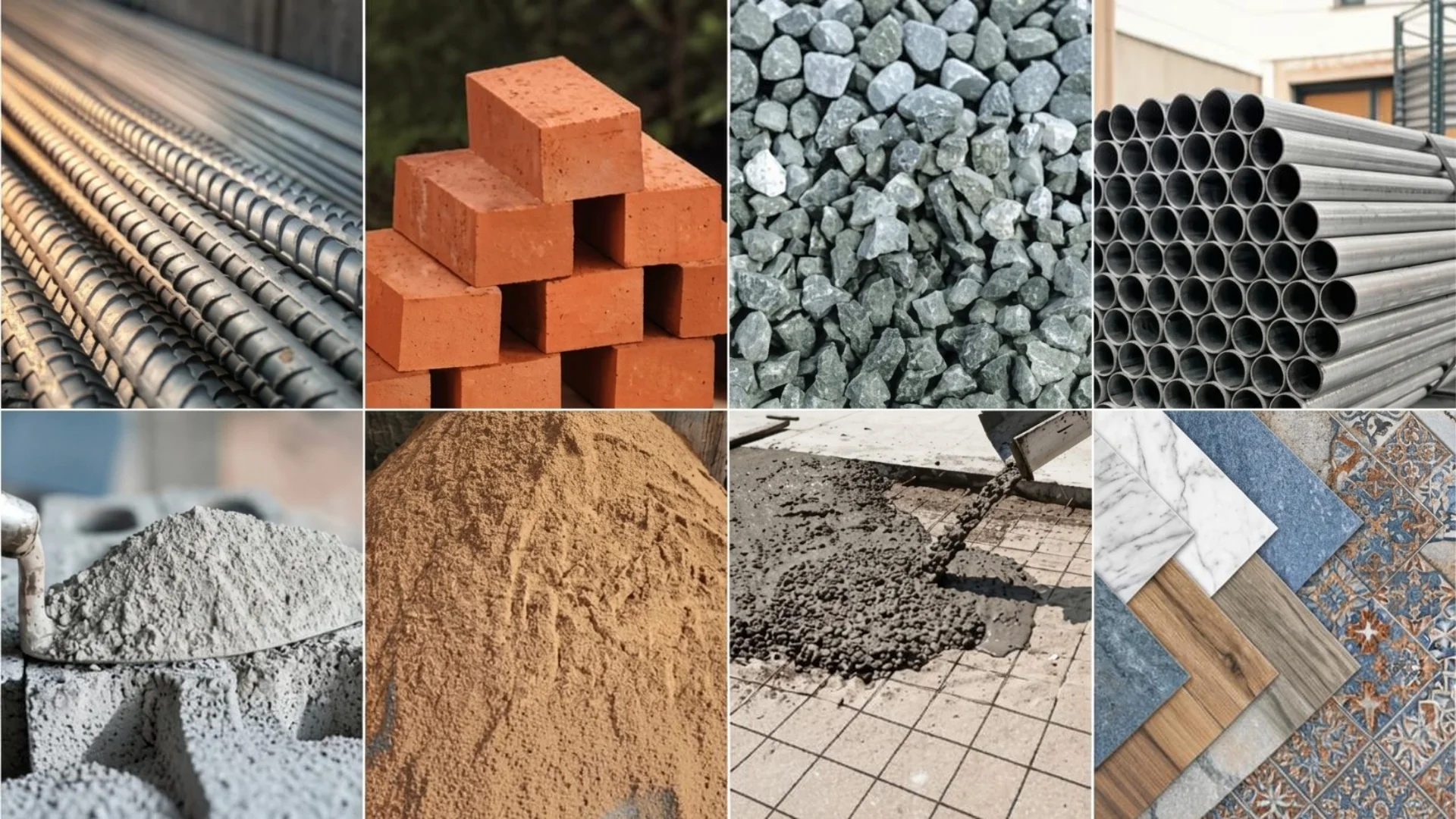
Building a house requires heavy investments. One mistake while choosing the building materials can raise the cost of the whole project by millions of rupees. Moreover, purchasing low-quality materials will only cause problems such as cracking, leaking, corrosion, or costly repairs.
But what are the materials needed to build a house in Pakistan?
This guide on building material requirements provides information about all the necessary materials for building a house from the bottom to top. It includes the current construction materials price list, estimated material cost, factors affecting prices, and ways to manage the budget of your construction project.
The construction prices are subject to fluctuations. Monthly price statistics from the Pakistan Bureau of Statistics include urban and rural construction item prices that keep providing the construction price statistics for Pakistan.
Complete House Construction Materials List in Pakistan
A house needs a lot more than just concrete, bricks, and steel. Materials used in constructing a house include building materials, electrical and plumbing supplies, doors and windows, flooring, paint, waterproofing materials, and finishing materials.
The list below gives you an idea of the quantities needed. It depends on many factors, including the floor area and the number of floors.
Cement and Concrete
Cement is one of the most important materials in house construction. It is used in concrete, mortar, plaster, screeds, and other construction work.
Common cement choices include:
Ordinary Portland Cement
Sulphate-resistant cement where specified
Blended cement
White cement for selected finishing work
Bricks and Blocks
Bricks form a large part of the masonry work in many Pakistani houses. Good bricks should have consistent shape and size. They should not crumble easily when handled.
Common choices include:
First-class fired bricks
Second-class bricks for selected noncritical applications
Concrete blocks
AAC blocks
Lightweight blocks
Steel and Reinforcement Materials
Steel reinforcement, commonly called sariya, provides tensile strength to reinforced concrete. Grade 60 reinforcement is commonly used in residential construction where specified by the structural design.
It is commonly used in:
Foundations
Columns
Beams
Roof slabs
Staircases
Other reinforced concrete elements
Sand, Crushed Stone and Aggregate
Sand and crushed stone are basic materials used in concrete, mortar, plaster, and other construction activities.
Common materials include:
River sand
Fine sand
Crush
Gravel
Coarse aggregate
Plumbing and Electrical Materials
A modern house needs a reliable plumbing and electrical system. Plumbing materials can include:
PPRC pipes
PVC pipes
UPVC drainage pipes
Water supply fittings
Valves
Floor traps
Sewerage fittings
Water tanks
Pumps
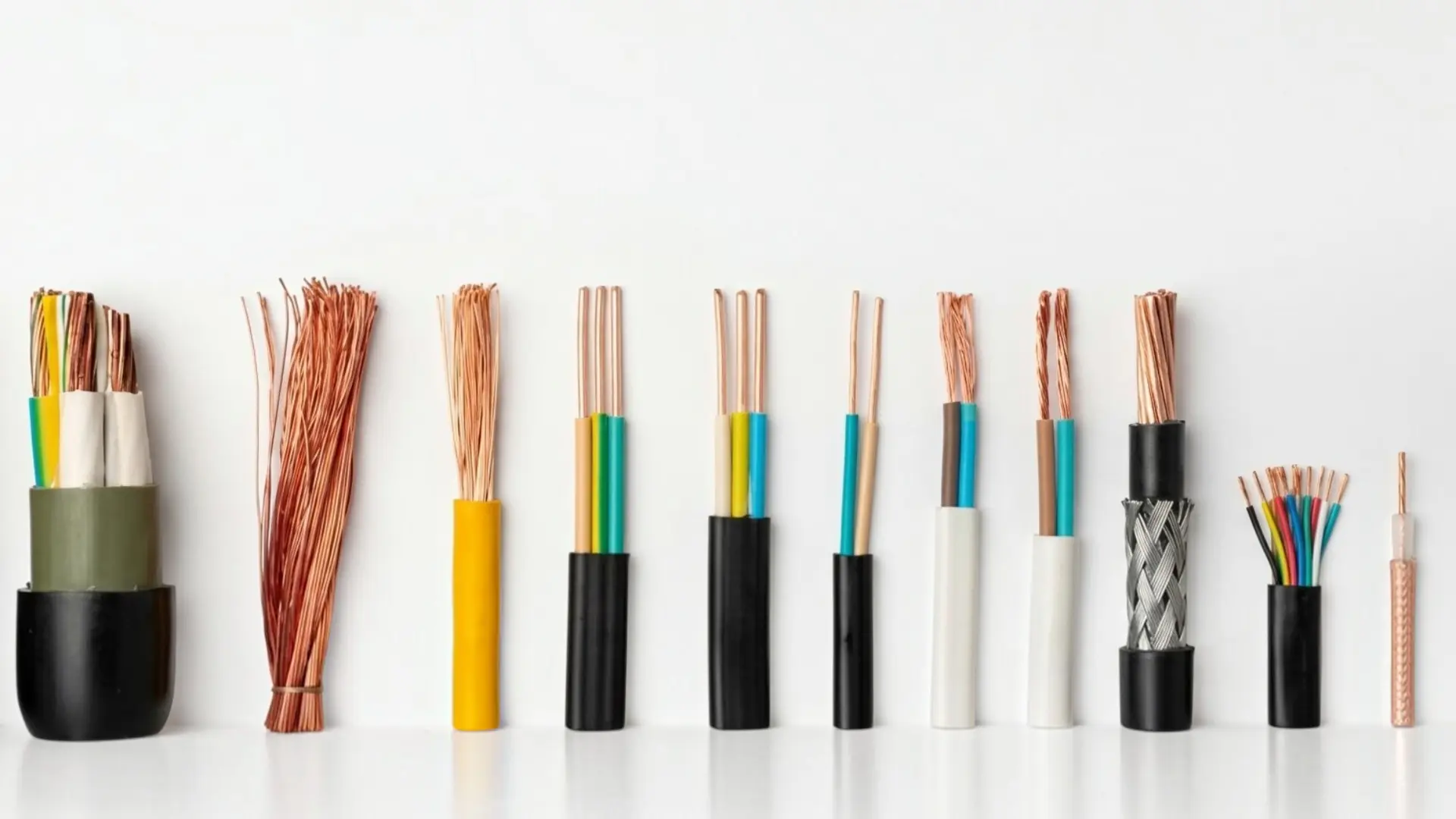
Electrical materials can include:
Electrical wires
Cables
PVC conduits
Switch boxes
Switches
Sockets
Circuit breakers
Distribution boards
Earthing materials
Electrical and plumbing products should be selected according to the electrical load, water requirements, building design, and applicable standards.
Doors, Windows, Glass and Aluminum
Doors and windows affect security, ventilation, lighting, insulation, and appearance.
Common options include:
Solid wood doors
Engineered wood doors
UPVC windows
Aluminum windows
Aluminum doors
Tempered glass
Laminated glass
Clear and tinted glass
Tiles and Flooring Materials
Tiles are used in bathrooms, kitchens, living areas, bedrooms, walls, and outdoor spaces.
Common flooring materials include:
Ceramic tiles
Porcelain tiles
Marble
Granite
Vinyl
Other engineered flooring products
Bathroom tiles should provide suitable slip resistance for wet areas. Outdoor tiles also need to be selected according to exposure and expected use.
Wood, PVC and Interior Materials
Wood and manufactured boards are commonly used for:
Doors
Wardrobes
Kitchen cabinets
Shelves
Wall panels
Furniture
Decorative work
Common sheet materials include plywood, MDF, particle board, and PVC boards.
Paints, Waterproofing and Finishing Materials
Finishing materials give the house its final appearance and also provide protection. A waterproofing system should be selected according to the source of moisture and the surface being treated.
Common products include:
Wall putty
Primer
Interior paint
Exterior paint
Texture coatings
Waterproofing coatings
Roof waterproofing systems
Sealants
Adhesives
Eco-friendly Construction Materials
Sustainable construction is becoming more important as builders look for ways to reduce waste, energy use, and environmental impact.
Possible options include:
Blended cement
Recycled materials
Locally sourced materials
Energy-efficient windows
Efficient insulation
Low-emission paints
Reused construction materials where appropriate
Pakistan Engineering Council's Green Building Code of Pakistan includes provisions related to materials, resource conservation, environmental impacts, and construction waste management. The code includes a requirement for diversion of at least 25 percent of nonhazardous construction, demolition, or deconstruction waste through reuse, recycling, repurposing, or composting under its mandatory provisions.
How to Calculate Your House Construction Material Cost
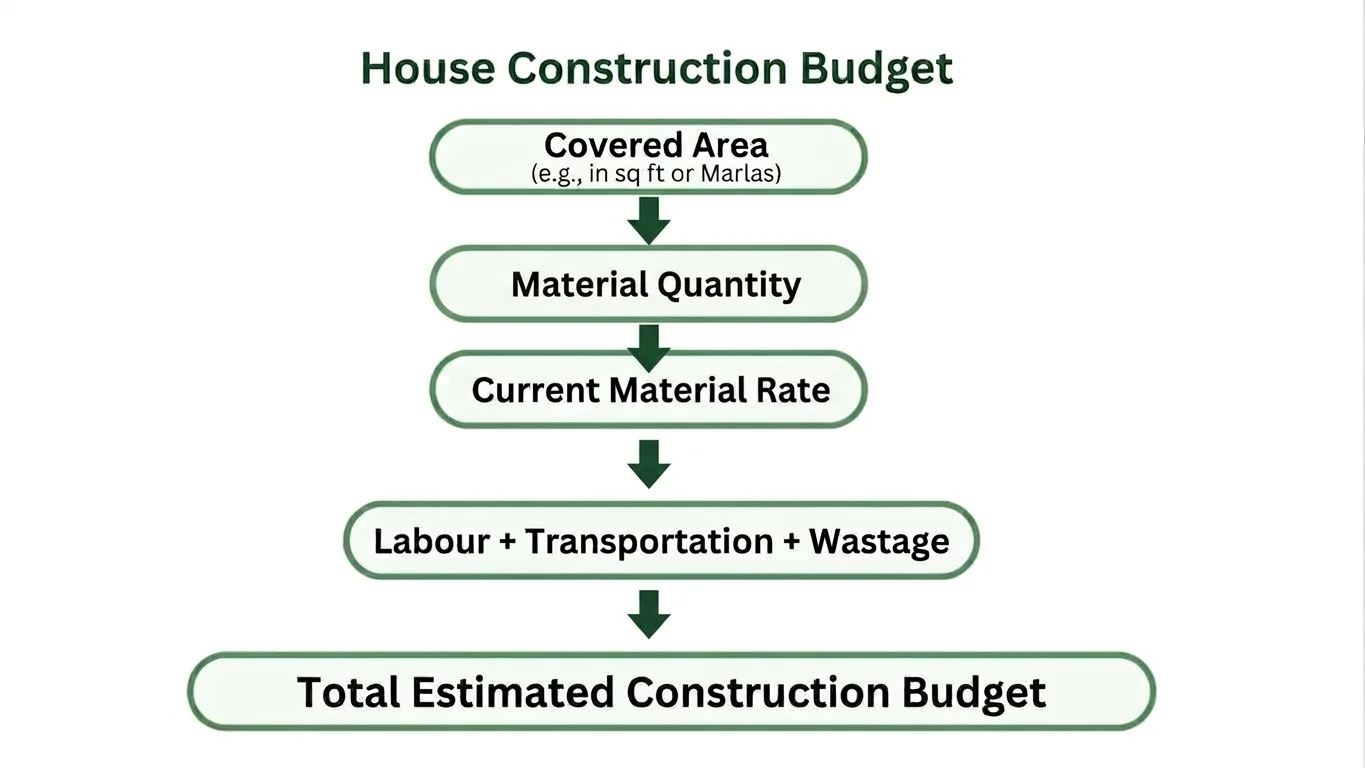
You do not need to guess your construction budget. A simple process can make your estimate much more accurate.
Calculate the total Covered Area.
Prepare a Material Quantity Estimate
Multiply Quantities by Current Market Rates
Add Labour, Transportation and Wastage
Keep a Contingency Budget
Construction Material Rates in Pakistan 2026
Construction material prices in Pakistan are not fixed nationwide. The Pakistan Bureau of Statistics collects and publishes price information and provides monthly urban and rural construction item prices. It released its August 2026 monthly inflation report with construction item price data.
For practical budgeting, recent 2026 market sources give the following indicative ranges for selected basic materials:
Material | Indicative 2026 Market Range | Unit |
Cement | PKR 1,430 to 1,580 | 50 kg bag |
Grade 60 steel | PKR 260 to 265 | kg |
First quality bricks | PKR 15,000 to 19,000 | 1,000 bricks |
Sand | PKR 65 to 95 | cubic foot |
Crush | PKR 90 to 145 | cubic foot |
What Affects Construction Material Prices in Pakistan?
Prices of construction materials are determined by various factors. Knowing about them will help you know how and when to buy your materials.
Cost of Fuel and Transportation
The cost of fuel determines the cost of transportation of cement, bricks, steel, sand, gravel, tiles, wood, and other building materials. This may especially be true for heavy building materials due to the high cost of transportation.
Government Taxes and Duties
Taxes and duties can affect both locally produced and imported materials.
Demand in the Housing Sector
When construction activity increases, demand for major materials can also increase.
Cement is a useful example. According to data reported by the All Pakistan Cement Manufacturers Association, total cement dispatches in Pakistan increased by 6.02 percent in July 2026 compared with July 2025. Local dispatches increased by about 17.28 percent during the same period.
Brand and Quality of Materials
Two items may be distinct from one another despite their similarities in performance. Luxury brands usually cost more because of specifications, quality control, warranty, distribution, or brand positioning. Nevertheless, the highest-priced item is not necessarily the best.
Estimated House Construction Material Cost in Pakistan
Material cost is only one part of the total house construction budget.
A complete construction budget may include:
Structural materials
Finishing materials
Labour
Electrical work
Plumbing work
Transportation
Equipment
Contractor overhead
Design and professional fees
Approvals and other project costs
Recent 2026 market estimates show how widely house construction costs can vary.
For example, one Lahore-based 2026 estimate puts a standard 5 Marla double-storey house at about PKR 1.06 crore to PKR 1.25 crore for complete construction, while its estimated grey structure cost is about PKR 62.5 lakh to PKR 73.37 lakh.
Another recent Lahore market estimate gives a wider planning range of PKR 96 lakh to PKR 1.62 crore for a 5 Marla house with approximately 1,600 to 1,900 square feet of covered area, depending on specifications.
These differences show why plot size alone cannot determine your construction budget.
How to Reduce House Construction Costs in Pakistan
Saving money does not mean buying the cheapest material. The better approach is to reduce unnecessary spending while maintaining quality and safety.
Compare Material Prices Before Buying
Buy Frequently Used Materials in Bulk
Choose the Right Material Quality
Work With Professional Contractors
Plan Material Quantities in Advance
Monitor Construction Material Rates
Minimize Material Waste
Final Takeaway
Housing construction becomes easy if your material planning, price comparison of prices, and purchasing are organized. Begin by looking at your covered area. Prepare a BOQ. Look for the prevailing prices of materials. Compare your suppliers. Consider the cost of transportation and wastage. Have an extra budget provision. Most importantly, never sacrifice quality for lower costs in construction.
Through proper planning, you will be able to maintain a budget while, at the same time, constructing a secure and comfortable house. Be prepared before purchasing with drawings and supplier quotes.
Frequently Asked Questions
What will be the house construction materials list?
Usually, a house construction materials list includes building materials, masonry materials, electrical and plumbing goods, flooring materials, doors and windows, woodwork, paint, waterproofing materials, sanitary products, and other finishing materials.
How do I lower the cost of construction materials for a house?
Compare prices, make strategic purchases of commonly used materials, avoid waste, measure accurately, pick the right specifications, and keep an eye on market prices.
How do I estimate the amount of materials for constructing a house?
Make a starting point from the structural and architectural drawings. The next step would be making a BOQ listing each material, its specification, quantity, unit price, and total price. Required quantities depend on covered area, structural type, floor plan, soil condition, and specifications of materials.
What construction materials should be taken into account to construct a durable house?
Main construction materials to consider are structural materials, such as concrete, reinforced steel, masonry materials, and well-specified aggregates.