 Contact Us
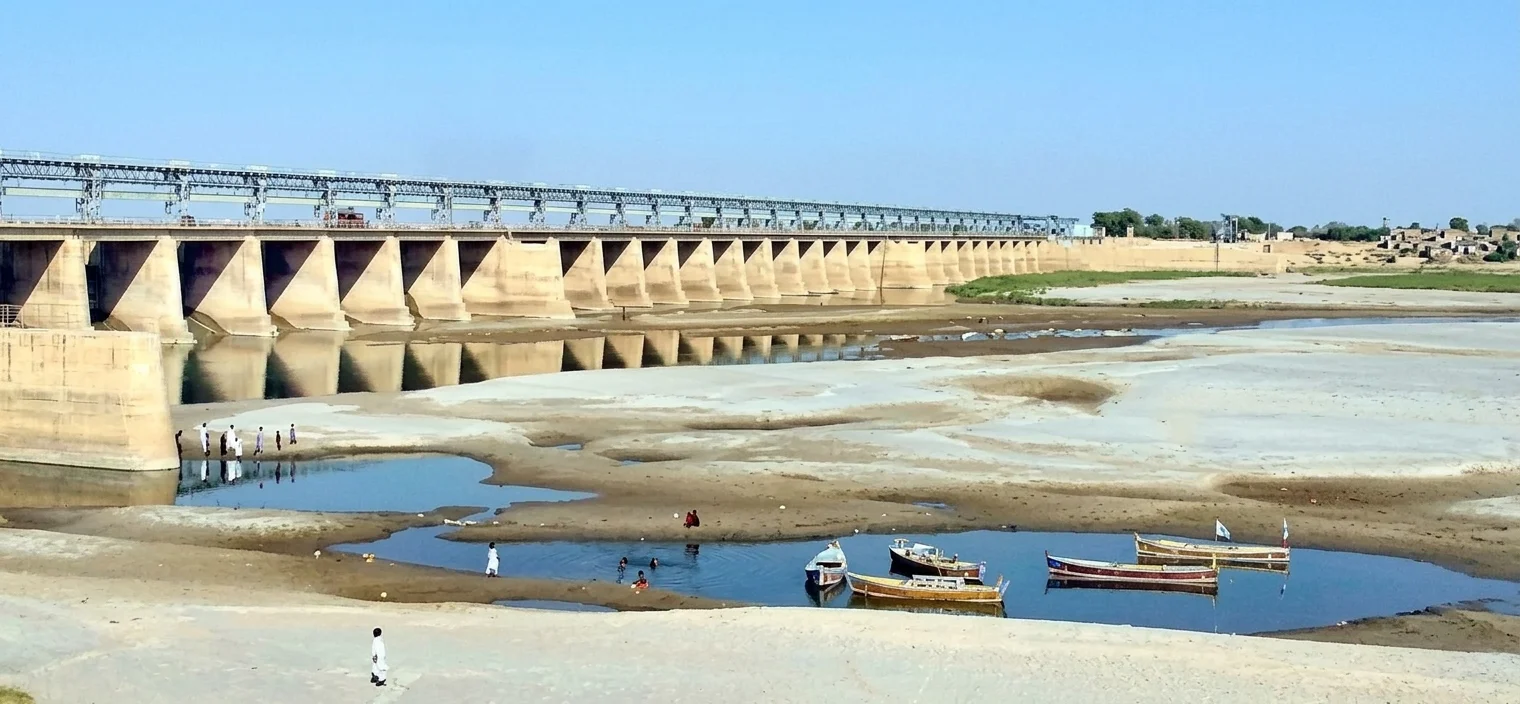
Think of a family that uses almost every rupee it earns every month. There is nothing left to fall back on in case of a bad month. Such is the situation in Pakistan regarding water. As per the data from the United Nations SDG 6 data portal, Pakistan withdraws almost 98% of its renewable freshwater resources. It is a water stress indicator at the national level. It does not imply that every tap has run out of water. It implies that there is little room left for droughts, increased populations, and wastage.
The water crisis in Pakistan implies that the country utilizes almost all of its freshwater while many citizens lack access to clean water. Its major causes include rapid population growth, climate change, over-extraction of groundwater, inefficient irrigation systems, pollution, aging infrastructure, and poor governance.
Water plays an essential role in the life of Pakistanis:
Drinking and hygiene: clean water eliminates the threat of diseases.
Sanitation: sanitation facilities require water to operate.
Agriculture: the biggest share of the country's water is used for irrigation.
Industry: industry requires water to produce goods.
Economy: all economic activities require a regular water flow.
Main Causes of the Water Crisis in Pakistan
It is important to know that the water crisis in Pakistan did not develop all of a sudden. Rather, it developed over many years due to increased demands and poor management of this resource.
Water stress in Pakistan is combined with unequal distribution, pollution, waste, and inadequate infrastructure. There is no solution to all of these problems at once. More effective water management must take place at all levels, starting from government policies to household appliances.
Rapid Population Growth and Rising Water Demand
An increase in population means an increase in demand for water. The number of individuals in Pakistan recorded by the 2023 census is 241.49 million, with an annual growth rate of 2.55 percent. With every increasing individual, there comes a decrease in the availability of water. A report the Water Resources Ministry presented to parliament estimated per capita availability to be around 860 cubic meters annually, down from 5,260 cubic meters in 1951.
Climate Change, Irregular Rainfall and Droughts
The impact of climate change has made Pakistan’s water supply unreliable because there are years when the rainfall is too low, causing drought conditions, and other years when there is excessive rain. In 2022, there were floods affecting 33 million people. Flooding water running down into the ocean in a matter of weeks does not help to replenish the water needed during dry spells.
Excessive Groundwater Extraction and Falling Water Tables
Pakistan's use of groundwater resources exceeds its natural recharge capacity. Groundwater withdrawals increased from an estimated 30,000 tubewells in the late 1960s to more than 1.2 million in 2020, while groundwater now supplies almost 50% of the country's irrigation requirements.
Inefficient Agricultural Irrigation and Water Wastage
Agriculture is the largest consumer of water resources. Irrigation practices in Pakistan use flooding practices to irrigate the entire field, which means a significant portion of water evaporates or seeps away before it reaches the crops.
Water Pollution From Industrial Waste and Sewage
Polluted water is lost water. Untreated sewage and factory waste enter rivers, canals, and groundwater. The UN reports that Pakistan treated only 38 percent of its domestic wastewater safely in 2022.to irrigate
Poor Water Storage and Ageing Distribution Infrastructure
Old pipes leak. Storage is limited compared with the volume of seasonal river flows. In cities, leaking supply lines waste treated water and can let contaminants in.
How Does the Water Crisis Affect Pakistan?
The causes above do not stay on paper. They show up in hospital wards, wheat fields, city tankers, and household budgets. Here is how the crisis touches daily life.
Effects on Drinking Water Availability and Public Health: Unsafe water spreads disease. The Pakistan Council of Research in Water Resources tested 2,205 water sources across 70 major cities. Only 707, or 32 percent, were safe. The rest were unsafe, mainly because of microbial contamination.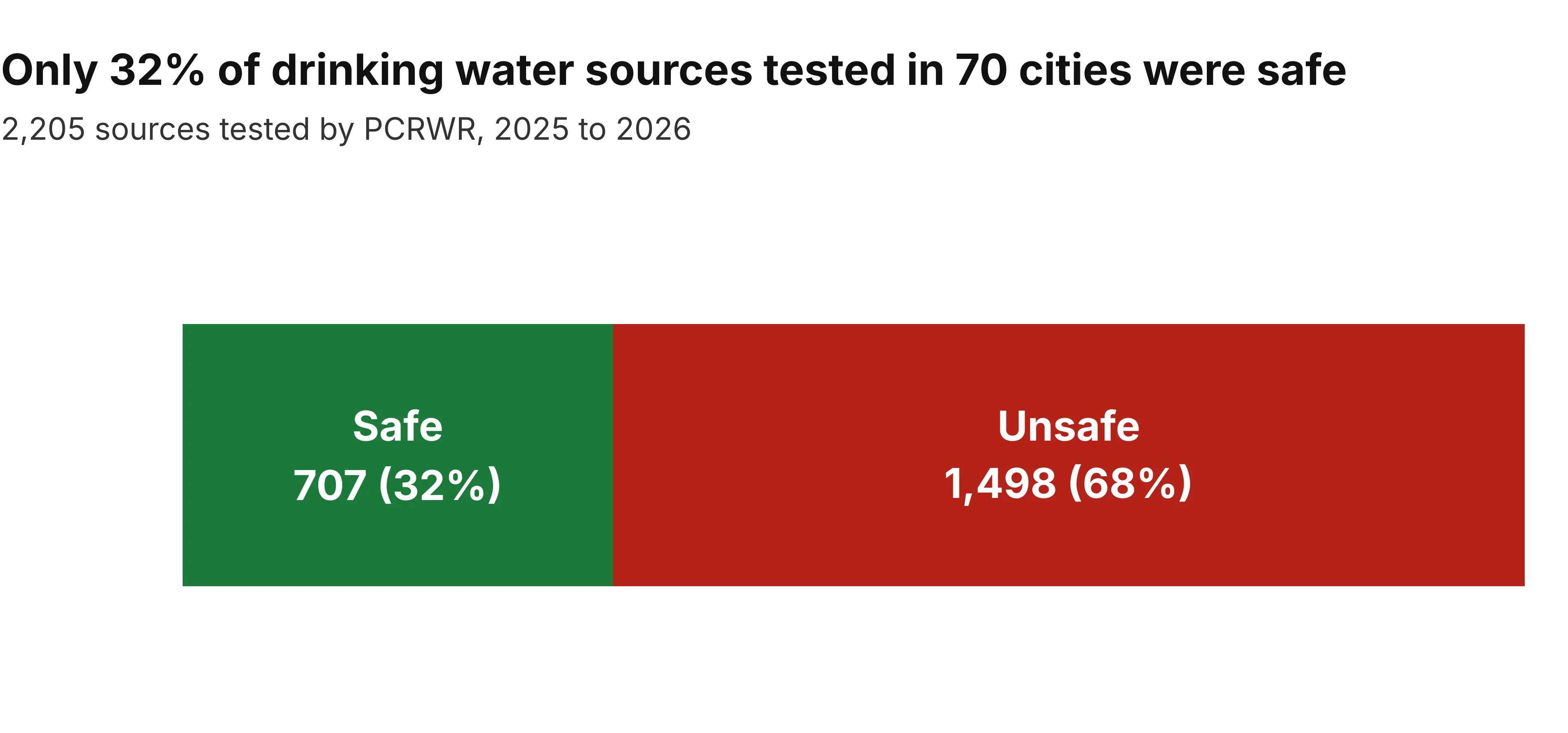 Impact on Agriculture, Crop Production and Food Security: When water runs short, crops suffer. Farmers pump more groundwater, which costs more in fuel and electricity and lowers the water table further.
Water Shortages in Major Cities Such as Lahore and Karachi: In Karachi, many households rely on costly private tankers in summer. Lahore depends heavily on groundwater due to agricultural land.
Economic Consequences for Households and Businesses: Shortages cost money. Families pay for tankers, filters, bottled water, and deeper bores. Businesses lose time and output. Sickness from unsafe water means medical bills and lost workdays.
Effects on Rivers, Wetlands and Biodiversity: When rivers are overused and polluted, wetlands shrink, and fish and birds lose their homes.
Practical Ways to Save Water at Home in Pakistan
The problems facing a nation must be solved on a national level, but what about our homes? Saving a litre of water at home translates to reduced pumping, reduced strain on the municipal system, and reduced bills. The following measures require minimal expense and begin to work immediately.
Repairing Dripping Taps, Toilets, and Water Supply Pipes
Installing Water-Efficient Taps and Shower Fittings
Using Water Storage Wisely and Avoiding Overflows
Using Suitable Household Water for Non-Drinking Purposes
Monitoring Daily Water Usage
Preventing Unnecessary Water Usage during Cleaning and Gardening
Related: https://gharhub.com/bathroom-accessories-trends-pakistan
Better products help a home waste less, but they cannot solve the national crisis on their own. That needs the bigger changes covered next.
How Can Pakistan Improve Water Management?
Home savings help, but the biggest gains lie in farms, cities, and policy. These areas offer the largest room for improvement.
Improve Agricultural Irrigation Efficiency
Since agriculture uses the most water, small gains here matter most. Lining watercourses, levelling fields, and using drip or sprinkler systems where suitable all reduce losses. Watering crops based on need rather than routine also helps.
Strengthen Groundwater Monitoring and Regulation
With over 1.2 million tubewells pumping, it is hard to manage what is not measured. Mapping wells, metering large users, and setting limits in the most stressed areas can slow the fall in water tables.
Repair Leaking Water Supply Networks
Treated water lost from old city pipes is wasted money and wasted water. Finding and fixing leaks also stops dirty water from seeping into supply lines.
People Also Search For: https://gharhub.com/plumbing-pipes-pakistan
Improve Wastewater Treatment and Reuse
With only 38 percent of domestic wastewater safely treated in 2022, there is huge room to grow. Treated wastewater can be reused for irrigation and industry, easing demand on fresh sources.
Expand Rainwater Harvesting and Groundwater Recharge
Catching rain on roofs and in recharge wells helps refill aquifers, especially in cities like Lahore where groundwater is falling. We cover this in detail below.
Improve Water Storage and Catchment Management
More storage helps capture high seasonal flows for use in dry months. Protecting catchments by reducing erosion and keeping forests keeps reservoirs from filling with silt.
Enforce Water Quality Standards and Pollution Controls
Industries should treat waste before discharge, and cities should treat sewage. Regular testing and penalties for polluters protect rivers and groundwater.
Improve Coordination Between Government Agencies and Water Users
Water crosses boundaries between provinces, cities, and farms. Shared data and clear roles help everyone plan together instead of competing.
Rainwater Harvesting in Pakistan: How It Works and Why It Matters
Pakistan experiences heavy rains during the monsoon season, but most of the water goes down the roof or roads into the drains. Rainwater harvesting manages to capture some of this water before it is lost. In water-stressed cities, rainwater harvesting will provide non-potable water as well as help recharge depleting aquifers. Rainwater harvesting is the process of collecting rainwater from roofs or other surfaces and storing it, or allowing it to percolate into the soil and recharge the groundwater.
Cities such as Lahore withdraw excess amounts of groundwater from rainfall. The purpose of recharge wells and pits is to ensure that the rainwater percolates down into the aquifer instead of draining away. This gradually prevents further depletion of the water table.
How Can Homes and Buildings Collect Rainwater?
A basic household rainwater harvesting system consists of four components:
Catchment: The roof from which rainwater falls.
Gutters and downpipes: They take the rainwater away from the roof.
First-flush diverter/ filter: It diverts the dirtiest initial rainfall.
Storage tank/ recharge well: They store the collected water.
This system is already a requirement by the Lahore Development Authority's Building Regulations. According to the regulations, every house with an area of 5 Marla or above must have a rainwater harvesting storage tank, with a larger tank for larger plots. Every house with an area of 15 Marla or above must have a recharge well or recharge pit.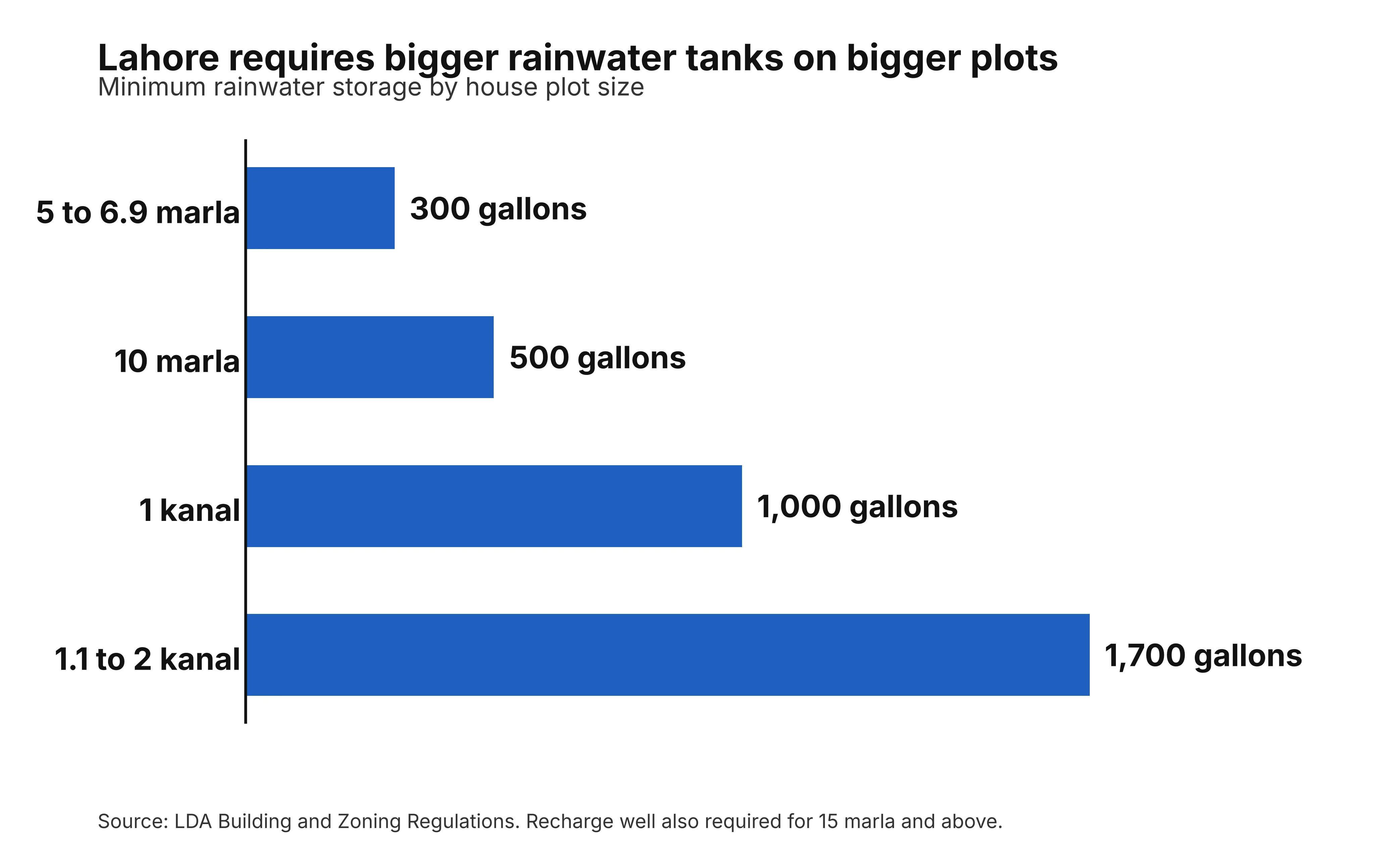
Safety Measures Before Reusing Collected Rainwater
Rain picks up dust, bird droppings, and leaves from roofs. The LDA rules say the first 10 minutes of rainwater should be drained away to avoid contamination.
Other good practices:
Keep roofs and gutters clean.
Cover tanks to keep out mosquitoes, insects, and dirt.
Use stored rainwater for gardening, cleaning, and flushing.
Do not drink it unless it has been properly treated and tested.
Greywater Recycling and Wastewater Reuse: Can Pakistan Make Better Use of Water?
Most of the water that goes into household use is disposed of via drains after just one usage cycle. There is much of this water that can be recycled for additional usage and is currently underutilized. Only 38% of Pakistan’s domestic sewage is properly processed.
What Is Greywater and How Is It Different From Sewage?
Greywater | Blackwater (sewage) | |
Comes from | Sinks, showers, baths, washing machines | Toilets |
Contamination | Lower, but still contains soap, dirt, and some germs | High, contains human waste |
Reuse potential | Can be reused after suitable treatment | Needs full treatment |
How Can Treated Greywater Be Used for Irrigation and Other Non-Potable Purposes?
Once treated, greywater can water gardens and lawns, flush toilets, and wash floors or vehicles. It must never be used for drinking, cooking, or bathing.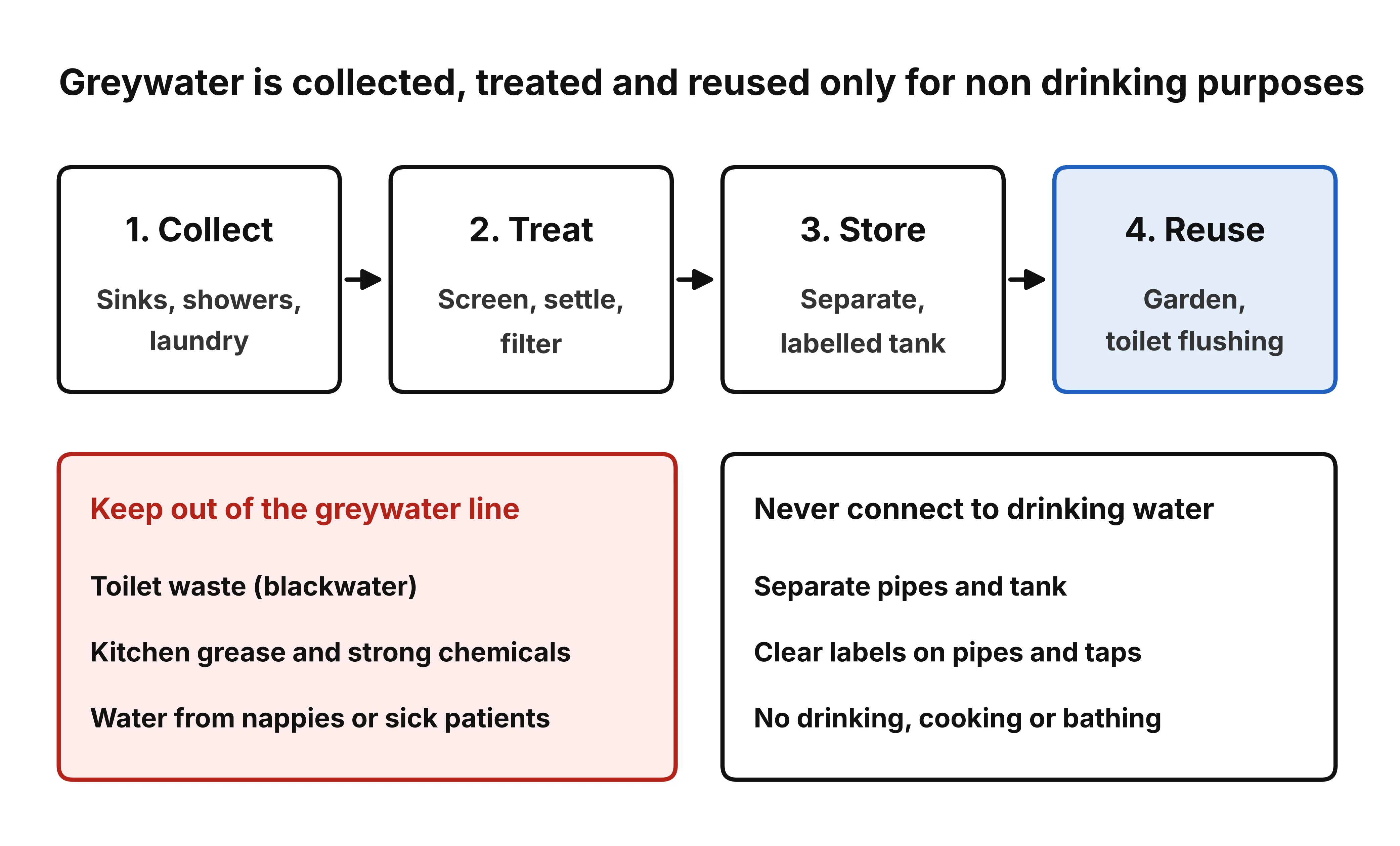
Why Is Proper Treatment Important Before Reuse?
Untreated greywater can carry germs and clog soil. The World Health Organization's guidelines on the safe use of wastewater, excreta, and greywater set out how to manage these health risks, especially in agriculture. Basic steps include screening out solids, letting the water settle, filtering, and avoiding long storage, which can make it smell.
Water Management in Construction: How Can Buildings Reduce Water Waste?
In many cases, most problems with water are created right from the start. A leak that is concealed, improperly installed pipes, or a tank that overflows may result in years of wasted water, which could easily have been prevented during the initial building process.
Design Plumbing System to Facilitate Leak Detection: Design pipes with simplicity and short lengths. Cluster all wet areas close together. Locate shut-off valves in accessible locations so that one area can be isolated without stopping water supply to the entire building.
Choose the Appropriate Pipes and Fittings for the Application: Hot water pipes, cold water pipes, and drainage pipes require appropriate piping systems. Choosing the wrong kind will cause cracking and leaking.
Inspect the Water Connections before Concealing Them: If the pipes are concealed in the walls or floor, the leakage could remain unnoticed for a long period of time.
Think about Collecting Rainwater during Building Design: It is much easier to incorporate gutters, downpipes, storage tanks, and recharge pits during construction than after the building is built.
Keep Storage Tanks in Good Condition: Install float valves or level controllers on overhead tanks. Keep the tanks clean and check lids.
Related: https://gharhub.com/plumbing-cost-pakistan
Conclusion
The water problem in Pakistan is caused by multiple factors acting together. These include a rapidly increasing population, changes in climate, over-extraction of groundwater, inefficient irrigation systems, polluted rivers, leakages in infrastructure, and lack of coordination. The amount of water per capita has decreased from 5,260 cubic metres in 1951 to 860 in modern times, and 45 percent of people have access to safely managed drinking water. A sustainable solution requires efficient irrigation, improved groundwater management, reduced pollution, proper infrastructure, wider wastewater treatment, and efficient use in households.
Efficient water use in households is important, and fixing every leak counts. However, true water security also requires good policy-making, consistent investments, maintenance, and coordination between government, private sector, farmers, and local communities.
Frequently Asked Questions
What are the major reasons behind the water crisis in Pakistan?
The major reasons include rapid population growth, climate change, excessive extraction of groundwater, poor irrigation practices, sewage and industrial pollution, outdated infrastructure, and lack of coordination among different departments.
How does climate change impact water availability in Pakistan?
Climate change impacts the predictability of rainfall and river flows. Pakistan experiences both droughts and severe floods, such as the flood of 2022, which affected 33 million people. The unpredictable floods cause wastage of water that should be stored during dry seasons.
Why is the groundwater decreasing in Pakistan?
The groundwater is extracted more rapidly than the rain replenishes it. Tubewells have increased from around 30,000 in the late 1960s to over 1.2 million in 2020. Groundwater provides nearly half of the irrigation needs.
What impact does polluted water have on public health?
Contaminated water causes waterborne diseases. Out of the 2,205 samples collected by PCRWR from 70 cities between 2025 and 2026, only 32 percent were found clean.
What steps can households take to cut down water wastage?
Replace leaky taps and toilets.
Install aerators on faucets.
Prevent overflowing overhead tanks.
Switch to buckets from hoses.
Reuse rinse water on plants.
What is rainwater harvesting, and how does it benefit Pakistan?
The process of collecting rain from roofs and storing or channeling it underground is known as rainwater harvesting. This technique provides water for non-potable uses and replenishes depleting aquifers.
What is the difference between greywater and wastewater?
Greywater | Wastewater | |
Meaning | Lightly used water from sinks, showers, and laundry | All used water, including toilet sewage |
Reuse | Can be reused after simple treatment | Needs full treatment |
What are some ways of ensuring that wastewater is safely used?
Reuse water should be treated to match how it will be used. It should be carried using different pipes and tanks and never connected to drinking water.
How can farmers reduce water wastage when irrigating crops?
Farmers can line their canals, level their fields, use drip/sprinkler irrigation where appropriate, and irrigate depending on crop requirements rather than habitually.
How do leakages from pipes cause water losses?
Leakages cause water losses throughout the day. According to the US EPA, it has been estimated that about 10% of households have leaks that cause a loss of more than 90 gallons, or approximately 340 litres of water per day.