 Contact Us
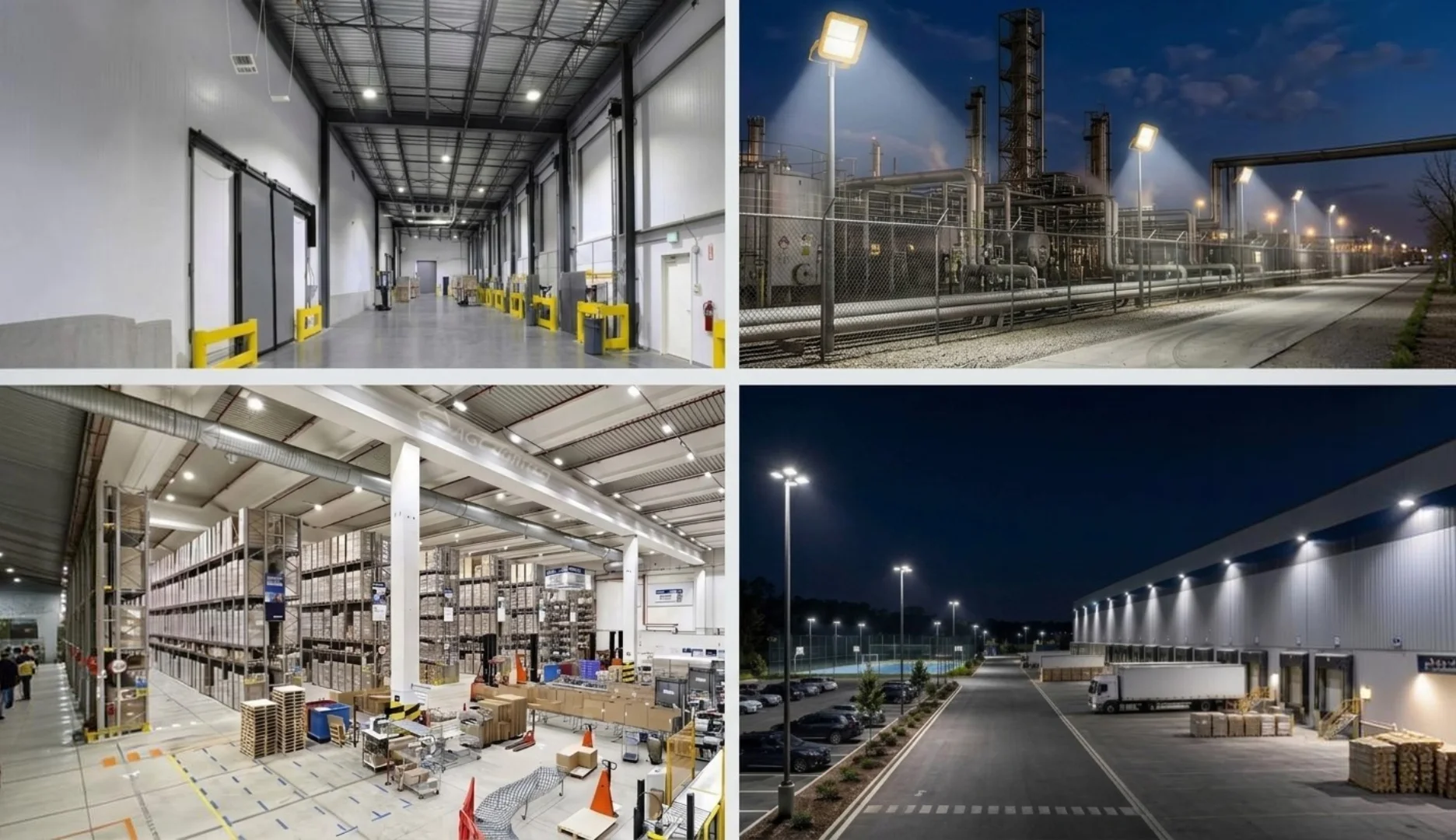
Floodlights with LEDs are used in factories, warehouse, and workshops because they provide an extensive lighting range within the facility. This kind of lighting will assist workers in viewing machines, stock, loading, and outdoor areas better. Besides being energy-efficient and having various levels of lighting, LED floodlights are ideal for the tough industrial environment.
A factory does not shut down with the end of the day's light. The factory needs to have lighting that is adequate to enable people to see what they are doing. Therefore, there is a need to choose appropriate lighting for the factory.
According to the Pakistan Bureau of Statistics, 2.7% of employed individuals suffered from occupational injury or illness within the last 12 months before the Labour Force Survey 2024 to 2025. Poor lighting is not listed as one of the causes of this statistic, but it shows why workplace safety is important.
Why Industrial Buildings Need Better Lighting
Good lighting is essential in factories, warehouses, and workshops because employees need to be able to see well in their environment. Such buildings usually have spacious interiors, high ceilings, big equipment, and not much light coming from the outside.
Good lighting allows employees to:
See equipment, instruments, and materials well.
Notice any obstacles on the floor of a factory.
Read labels and signs on the goods stored.
Move safely during loading/unloading operations.
The right lighting also depends on the work being performed. A worker operating heavy machinery may need a different light level from someone inspecting small electrical components.
Explore GharHub's lights and floodlight products to find suitable options for your lighting requirements.
What Makes Floodlights Different from Regular Lights?
Floodlighting is a type of lighting where light is distributed over a larger area. It is often applied in outdoor places like factories, car parks, workshops, etc., that require extensive lighting.
Whereas a conventional bulb lights up the area surrounding it, a floodlight can project a strong beam in a certain direction. LED floodlights are made using light-emitting diodes as their source of light. There are various types of floodlights with varying wattage, brightness, and protection against weather elements.
Usage of Wide Beam Covers in Large Working Areas:
Large-scale industries and warehouses require lighting that can provide light to varying places on the floor. One normal light bulb can cause darker spots in storage spaces or areas beyond machines.
Floodlights are useful for extending the lighting into broader areas in a building. They are adjustable in their direction and angle. The angle is crucial. A wide-angle will illuminate a large area, while a narrow-angle will concentrate light into a specific point. This all depends on the height and distance of the installation.
Why Factories and Warehouses Prefer LED Floodlights
The LED floodlight is a good choice for industrial buildings since it offers high light output along with energy efficiency and versatility in installation. Industrial plants run for extended periods. The same applies to warehouses that may require lighting during night and early morning shifts. Proper lighting helps these plants function efficiently during their operating hours.
Better Visibility Across Large Work Areas
Workers require visibility to operate machinery, check products, and move materials. Lack of adequate lighting may make it hard to recognize objects, understand instructions, and observe obstacles.
These are especially helpful in:
Assembly lines where workers move materials.
Operating machines where there is a need for inspection.
Storage rooms where workers recognize products.
Loading docks where goods are transported from one place to another.
Outdoor factory areas where natural light is inadequate.
Lower Electricity Use Over Long Working Hours
Electricity consumption is one of the key problems that factories and warehouses face. Lights may be kept on during the whole shift, which raises operational costs. LED floodlights will assist in reducing electricity consumption compared to other inefficient lighting sources when providing the necessary light by consuming less electricity.
Buyers should understand the difference between watts and lumens:
Watts: The electrical power consumed by a light.
Lumens: The amount of visible light produced by a light.
Lux: The amount of light falling on a particular surface.
A higher wattage does not always mean a better lighting solution. Buyers should compare lumen output and actual lighting coverage before purchasing.
Strong Performance in Demanding Work Environments
Factory and workshop environments may be dusty, humid, hot, and subject to variable conditions. The lighting fixtures installed in such an environment must suit the environment in which they will be installed.
There are some industrial floodlights that have protective casings and sealing to protect the lamp from dust and water. It is very important to have the right protection rating for outdoor factory environments and loading areas.
People Also Search For: https://gharhub.com/infrastructure-development-construction-material-prices-pakistan.
Floodlights Applications in Industrial Buildings
Floodlights are useful in several parts of an industrial facility. However, each area has different lighting needs. Choosing the right fixture depends on the type of work, building layout, and surrounding conditions.
1. Factory Floors and Production Areas
Machinery, production lines, workstations, and material handling equipment are all found on factory floors. Proper lighting is needed for workers to operate equipment and inspect products. LED floodlights can provide wide coverage in open production areas. They can also aid in reducing shadow areas surrounding bulky machinery.
2. Warehouses and Storage Areas
Warehouses house items, equipment, packaging, and construction materials. Visibility is crucial for locating items, checking labels, and moving materials.
In cases where there are high storage racks, it is necessary for the light to illuminate the surfaces that are supposed to be worked on. High bay lights could be appropriate in this case, whereas floodlights would work in specific outdoor areas.
3. Workshops, Loading Bays and Outdoor Yards
Tools, machines, vehicle parts, and workbenches can be found in workshops. Proper lighting will help workers examine materials and perform repairs.
Floodlights are handy in:
Vehicle repair and maintenance shops.
Welding and fabrication shops.
Outdoor workstations.
Loading and unloading docks.
Factory entrances and boundaries.
For welding and other detailed work, a suitable task light may still be necessary. A general floodlight should not replace lighting designed for a specific operation.
Related: https://gharhub.com/best-led-lights-prices-pakistan
Difference between Floodlights and High Bay Lights for Industrial Buildings
A floodlight generally directs a broad beam towards an area. A high bay light is designed for general illumination in buildings with high ceilings.
Feature | LED high bay light | |
Main purpose | Broad area illumination | General indoor illumination |
Common location | Factory yards, loading areas and open spaces | Warehouses and large indoor buildings |
Light distribution | Directed beam | Designed for ceiling lights |
Installation | Wall, pole, or suitable mounting bracket | Usually ceiling-mounted |
Outdoor use | Suitable models are available | Depends on the model and protection rating |
Best for | Open areas and targeted lighting | General lighting in high ceiling spaces |
Floodlight Buyers Checklist
Choosing an industrial floodlight requires more than checking its price and wattage. Buyers should compare its technical specifications, construction quality, and suitability for the installation location.
Here is a practical checklist.
Wattage and Lumens to Ensure Appropriate Brightness: Wattage is the measure of electricity consumption by a floodlight. Lumens are the measure of light emission from a floodlight. An efficient product will emit sufficient light using less electricity.
IP Rating for Dust and Water Protection: The IP rating is the measure of how well an electrical housing protects its inner components from dust and water.
Color Temperature and Beam Angle: Color temperature refers to the color of light emitted by a product. The beam angle determines how widely light can be spread through the beam.
Housing Material, Warranty and Product Life: The outer part of a floodlight protects the inner parts of the product.
Common Floodlight Buying Mistakes
Buying the wrong floodlight can result in poor coverage, unnecessary electricity use, and repeated replacement costs. Here are some of the mistakes that industrial buyers should avoid.
Do Not Choose Lights Based on Their Wattage Only: One common mistake people make is believing that the more wattage there is, the better the light will be.
Tips for Checking Authentic Products & Warranty: Fake or poor-quality lights may have misleading technical specifications.
Poor Positioning and Distribution of Light: The placement of a floodlight may affect its performance even if it is a high-quality one.
Installation and Maintenance of Industrial Floodlights
Correct installation is important for getting the best performance from industrial lights. A suitable floodlight can still produce poor results if its mounting position, wiring, or direction is incorrect. The wiring and protection system should comply with applicable electrical safety requirements. The correct cable size and protective devices must be selected according to the actual electrical load and installation conditions.
For electrical materials, explore GharHub's Cables and Wires range.
Consider the following:
Identify the main production and storage areas.
Mark the positions of machines and workstations.
Plan electrical wiring routes.
Identify suitable wall, ceiling, and pole mounting points.
Lighting should be installed by a qualified electrician
Keep maintenance access in mind.
Consider future changes in the factory layout.
Regular inspection helps identify problems.
Maintenance routine should include:
Inspect the fixture for visible damage.
Check mounting brackets and supports.
Look for loose or damaged connections.
Clean dust from the outer surface according to the manufacturer's instructions.
Check for flickering or unusual changes in brightness.
Replace damaged components through qualified maintenance staff.
The inspection schedule should follow the manufacturer's recommendations and the working conditions of the site.
Common installation mistakes include:
Mounting lights at unsuitable heights.
Directing light towards workers' eyes.
Leaving dark spaces behind machinery.
Installing too few lights for the required coverage.
Ignoring shadows created by storage racks.
Using indoor fixtures in exposed outdoor locations.
Conclusion: Choosing the Right Flood Light for Industrial Use
A proper flood light could help provide complete visibility in all of the factories, warehouses, workshops, and open spaces where work is being done. It will serve its purpose well due to its wide coverage area, making it ideal for production lines, loading docks, storerooms, and factory yards.
Nevertheless, it takes more than just comparing wattage and cost to purchase the best product. A comparison of lumen output, beam angle, IP rating, quality of housing, and warranty period is needed when selecting the proper product.
The best way for the industrial buyer in Pakistan is to choose a product based on their actual conditions. Compare verified specifications and choose products that meet the lighting requirements of your facility.
Frequently Asked Questions
1. Why are LED floodlights used in factories and warehouses?
LED floodlights are used in factories and warehouses to illuminate them evenly. It helps to see equipment, products, storage facilities and loading docks.
2. Which wattage floodlight is suitable for a warehouse?
Depending on the size of the warehouse, its height, the placement of storage racks, the luminous flux, and the needed level of illuminance, you can decide which wattage of light to install. Large warehouses sometimes don't require just one strong floodlight.
3. What is the difference between a floodlight and a high bay light?
Floodlights provide even light directed into a specific place, for instance, to the outdoor yard or to the loading dock. High bay lights are used for overall illumination of a building.
4. How many watts of electricity are required for an LED floodlight?
Electricity consumption is determined based on the wattage of the floodlight and hours of operation. You can find the consumption value by multiplying the wattage by the number of hours of operation per day and days, and dividing the result by 1,000.
5. What is the recommended IP rating for industrial floodlights?
The correct IP rating depends on the level of dust and water that the floodlight will be exposed to during its operation. IP65 offers dust-tight protection and protection from water jets, whereas IP66 is resistant to strong water jets.