 Contact Us
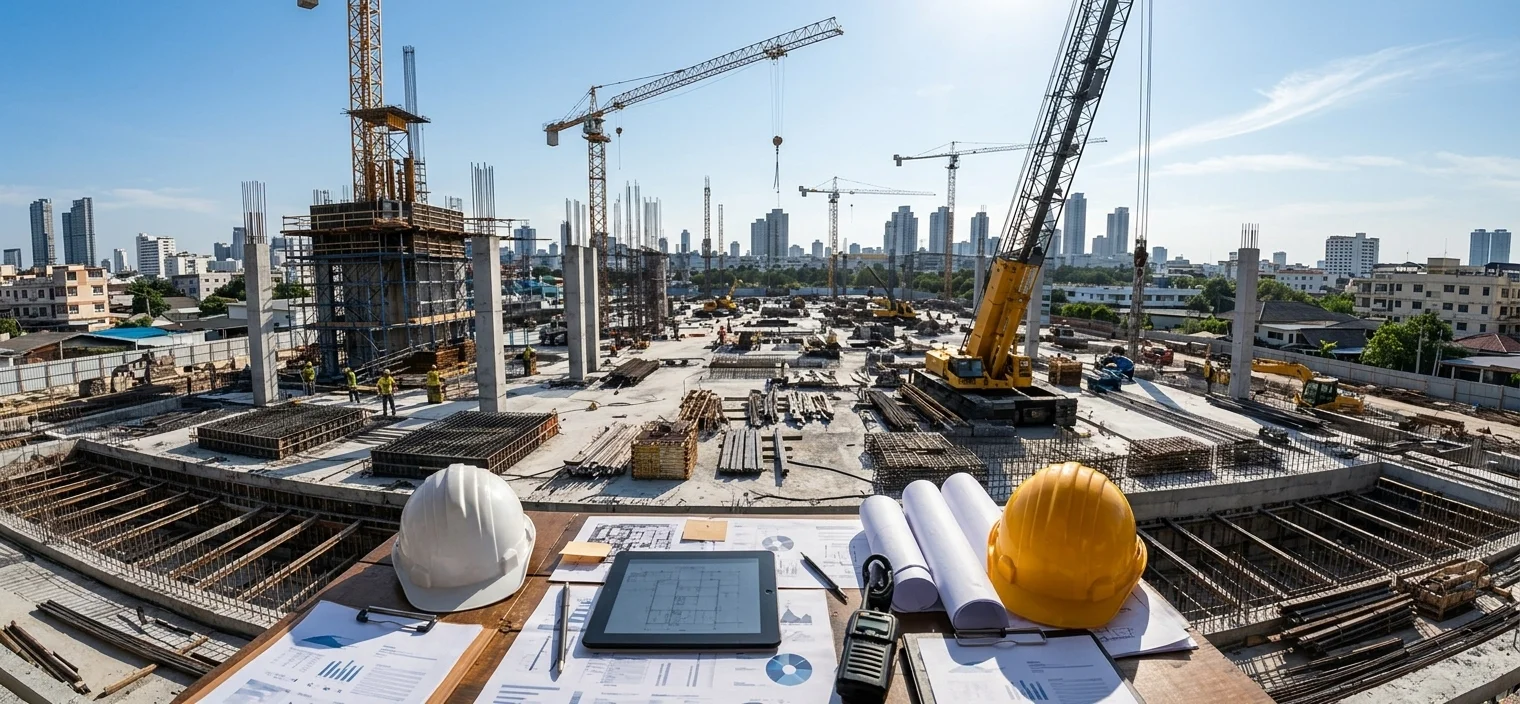
Infrastructure development means building the big public systems a country runs on. In Pakistan, that includes motorways, highways, bridges, dams, power plants, railways, ports, and city services like water and sewerage. Most of it is planned through the federal and provincial development budgets.
In fiscal year 2025 to 2026, three numbers moved together in Pakistan:
Measure (FY2025 to 26) | Figure |
Federal development budget (PSDP) | Rs 1,000 billion |
Construction sector growth | 5.73% |
Local cement dispatches | 41.51 million tons, up 9.5% |
More public building money. More construction. More cement sold at home. If you are building a house, that should make you curious. Big projects are huge buyers of building materials. A motorway needs cement, steel, crush and bitumen. A dam needs mountains of concrete. When many projects run at once, they join homeowners and builders in the same market. That is where the link to prices begins.
But the link is not simple. Here is why prices can rise in one city and stay flat in another:
A project may draw stone from a nearby quarry and leave other quarries untouched.
Cement and steel are made in a few places, so distance and freight matter.
New roads can cut delivery costs for some towns.
Fuel, the rupee, taxes, and inflation often move prices more than any single project.
People Also Search For: https://gharhub.com/updated-construction-materials-pricelist
Major types of Infrastructure Development and their Importance
Infrastructure falls into a few clear groups. Here is how they line up in Pakistan:
Type | Examples in Pakistan | Main materials used |
Transport | Motorways, highways, bridges, railways | Cement, steel, crushed stone, bitumen |
Water and power | Dams, hydropower, canals, barrages | Concrete, steel, aggregates |
Urban services | Flyovers, water lines, drainage, metro buses | Concrete, steel, pipes, bricks |
Housing | Housing schemes, apartment blocks | Bricks, cement, steel, sand, crushed stone |
Industrial | Special economic zones, factories, warehouses | Steel structures, concrete, blocks |
Highways, Motorways, and Bridges
Good roads move people and goods faster and cheaper. Farmers reach markets sooner. Factories get raw materials on time. Trucks spend less time in traffic. That is why transport gets the biggest share of federal development money. In the FY2026 to 27 budget, transport infrastructure received Rs 365 billion, the largest PSDP allocation of any sector.
Dams, Hydropower Plants, and Irrigation Projects
Pakistan depends on the Indus River system for farming, drinking water, and electricity. Dams store water for dry months and make cheap power. They also protect against floods. Dams are among the most concrete-heavy projects a country builds.
Urban Development and Housing Projects
Cities keep growing. New housing schemes need roads, sewers, water lines and parks before a single house goes up. Then come the houses, shops and schools. This kind of work spreads demand across many small buyers. It uses the same bricks, cement, steel, sand and crush that you use for your own home. So urban growth is the type of infrastructure most likely to compete directly with home builders.
Difference between public and private infrastructure projects
Public projects are paid for by the government through the PSDP and provincial budgets. Private projects are paid for by companies, developers, or investors. Some are mixed, called public-private partnerships (PPP).
The difference matters for material demand. Public projects depend on how much money is actually released, not just announced. In the first five months of FY2025 to 26, only Rs 348.97 billion of the Rs 1,000 billion PSDP was authorised for use. Private projects depend more on interest rates, sales, and investor confidence.
How Do Major Infrastructure Projects Influence Material Demand in Pakistan?
A project's own shopping list is a fact, but its effect on the wider market is a separate question.
Motorways and highways: Cement, steel, asphalt, and aggregates
A motorway is mostly layers of stone. The base and sub-base use crushed stone. The top uses asphalt, which is aggregate bound with bitumen. Bridges, culverts, and interchanges add cement and steel. Pakistan's road network is large. The N 25 Karachi Quetta Chaman project alone has a combined approved cost of over Rs 415 billion.
Dams and hydropower projects: Concrete, steel, and aggregates
Dams are concrete giants. Their spillways, tunnels and powerhouses need steady supplies of cement, steel and graded aggregates for years. Big dam sites often set up their own crushing plants close to the work. That means a dam can draw heavily on nearby stone, while barely touching the crush market in far-off cities.
Bridges and flyovers: Structural steel and concrete demand
Bridges and flyovers need high-strength concrete and a lot of steel per square metre. They use piles, girders, and decks that are heavily reinforced. In cities, they also use ready-mix concrete from nearby plants.
Railways and public transport: Construction materials and civil works
Railways need ballast stone under the tracks, concrete sleepers, steel rails, and bridges. The ML 1 upgrade is the biggest railway project in the plan. Its Karachi to Rohri section received Rs 25 billion in the FY2026 to 27 budget. Metro bus systems add flyovers, stations, and road works inside cities.
Industrial zones and commercial developments: Building material demand
Factories and warehouses use steel frames, concrete floors, and block walls. Commercial plazas use more glass, aluminium, and finishing materials. This demand follows business investment, which moves with interest rates and confidence.
Housing and urban expansion: Residential construction materials
Housing is the material demand most homeowners feel directly. It uses bricks, cement, steel, sand, and crushed stone in every street.
Here is a quick comparison of what each project type leans on:
Project type | Heaviest material demand | Who supplies it |
Motorways | Aggregates, bitumen | Quarries, refineries, nearby crushers |
Dams | Concrete, aggregates | Cement plants, on-site crushers |
Bridges and flyovers | Steel, high-strength concrete | Steel mills, ready mix plants |
Railways | Ballast, sleepers, rails | Quarries, precast yards, steel makers |
Industrial zones | Structural steel, concrete | Steel mills, cement plants |
Housing | Bricks, cement, steel, sand, crush | Kilns, dealers, local quarries |
Construction Material Prices in Pakistan: GharHub Product Listings
This section shows real listed prices from GharHub, kept apart from the analysis so you can tell facts from explanations.
GharHub sells sand and crush by the cubic foot (cft). The table shows the average listed price for each category, worked out from every cft product in it:
Category | Products averaged | Lowest listing | Highest listing | Average listed price per cft |
6 | Rs 147 to 152 (Dina Bajjar) | Rs 200 to 205 (Margalla A Grade) | about Rs 177 to 182 | |
3 | Rs 85 to 95 (Chenab Regular) | Rs 250 to 260 (Lawrencepur) | about Rs 143 to 153 | |
7 | Rs 1,510 to 1,595 (Flying Cement OPC) | Rs 1,610 to 1,705 (Maple Leaf OPC) | about Rs 1,570 to 1,651 per bag | |
4 | Rs 244 to 246 (Kamran Grade 60) | Rs 256 to 258 (Mughal Grade 60) | about Rs 248 to 250 per kg | |
4 | Rs 24 to 26 (Machine Made Awwal) | Rs 31 to 32 (Special A+ Grade) | about Rs 27.4 to 28.6 per brick |
Ravi sand and Ghassu Ravi sand are sold per dumper, not per cft, so they are not included in the sand average. Lawrencepur sand costs much more than Chenab sand, so it pulls the sand average up. Freight and loading are charged extra.
How Infrastructure Development Can Affect the Prices of Different Construction Materials
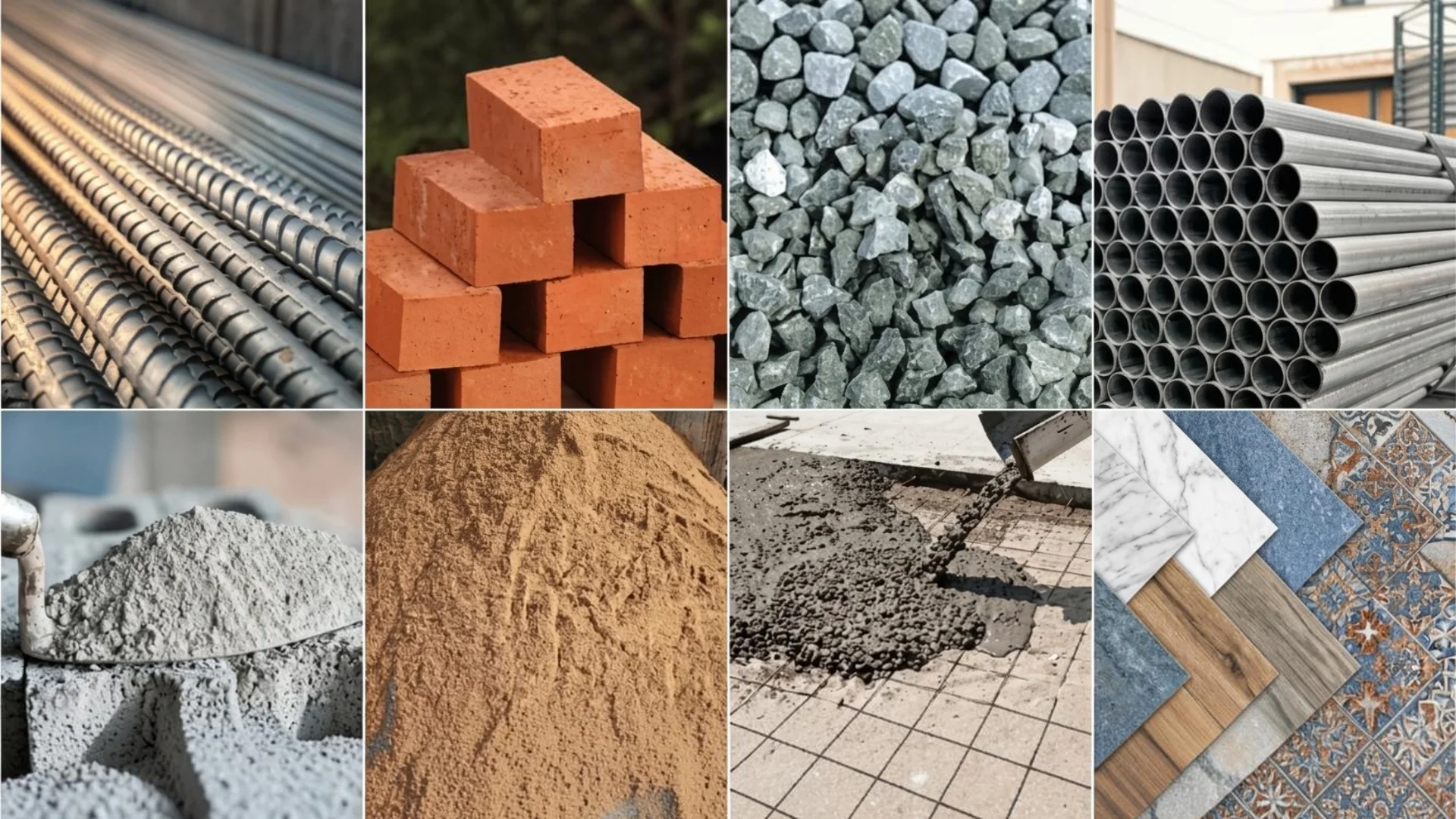
Each material reacts to infrastructure in its own way. Some are made in big factories. Others are dug from the ground a few kilometres from your site.
Cement prices and large-scale infrastructure demand
Cement is made in large plants and sold across the country. That makes its price fairly even, with a north and south split. In late 2023, CemNet linked a price rise to higher freight after new limits on how much trucks may carry on highways.
Steel prices and structural construction requirements
Steel bars are needed in every bridge, flyover, and building frame. Big projects keep mills busy. But steel prices in Pakistan follow imported scrap, energy costs, and the rupee more closely than local project demand.
Crush and aggregate prices due to quarrying and transportation
Crush is where infrastructure can matter most. Motorways and dams use enormous amounts of stone. If a big project buys from the same quarries as your city, local crush can get tighter. Transport is the other big part of crush cost, because stone is heavy.
Sand prices and regional supply availability
Sand comes from riverbeds, and each region has its own source: Ravi and Chenab in Punjab, Lawrencepur in the north. Supply depends on river conditions and extraction rules, as well as demand.
Bricks and blocks amid residential and commercial development
Bricks are mostly used in housing and commercial buildings, not motorways or dams. So infrastructure affects brick prices mainly through the housing and urban growth that follows it. Kiln rules, fuel, and winter shutdowns also shape brick supply.
Construction chemicals and Specialised infrastructure requirements
Dams, bridges and tunnels need special chemicals: waterproofing, concrete admixtures and repair mortars. Many depend on imported ingredients, so the rupee affects them more than local demand does.
Material comparison chart: how each material is exposed to infrastructure demand.
Material | Typical infrastructure use | Residential use |
Cement | Dams, bridges, road structures | Foundations, slabs, plaster |
Steel bars | Bridges, flyovers, dams | Columns, beams, slabs |
Crush | Road base, asphalt, dam concrete | Concrete for the frame |
Sand | Concrete, mortar, fill | Concrete, mortar, plaster |
Bricks and blocks | Some urban works | Walls |
Insulation | Road surfacing | Waterproofing |
Construction chemicals | Waterproofing, admixtures | Waterproofing, repairs |
Why Construction Material Prices Differ Across Pakistani Cities
You have seen that some materials are national and some are local. That is exactly why the same bag or truckload costs different amounts in different cities. Government price data for January 2026 makes the gaps clear:
City | Cement (per bag) | Iron bars (per tone) | Bricks (per 1,000) | Sand (per truck) |
Islamabad | Rs 1,377 | Rs 222,583 | Rs 24,732 | Rs 11,773 |
Lahore | Rs 1,467 | Rs 212,333 | Rs 17,463 | Rs 7,573 |
Karachi | Rs 1,391 | Rs 211,331 | Rs 18,000 | Rs 6,811 |
Peshawar | Rs 1,353 | Rs 208,162 | Rs 18,331 | Rs 6,208 |
Quetta | Rs 1,490 | Rs 227,994 | Rs 14,742 | Rs 6,199 |
Lahore has some of the country's busiest housing activity and many city projects such as roads and flyovers. In the January 2026 data, its cement price was among the highest in these five cities, at Rs 1,467 a bag. Islamabad had the highest brick and sand prices in the table. Bricks were Rs 24,732 per thousand, compared with Rs 14,742 in Quetta.
Karachi is Pakistan's main port city. Imported steel scrap, bitumen, and chemicals land there first. That can help keep some imported inputs cheaper locally. A new motorway can turn a long, slow trip into a short one. For smaller towns along the route, that can mean more suppliers able to deliver, and less freight per load. Towns far from any motorway do not get that benefit.
A city close to a good quarry or river sand source pays less for aggregates. One far away pays more freight on every load. Local competition matters too. Several suppliers in one area usually means sharper prices than a single seller.
Effect of Transportation and Logistics on Construction Material Prices
The city gaps above point to one big hidden cost: moving material. Building materials are heavy. Every kilometre between the quarry or factory and your site adds to the bill.
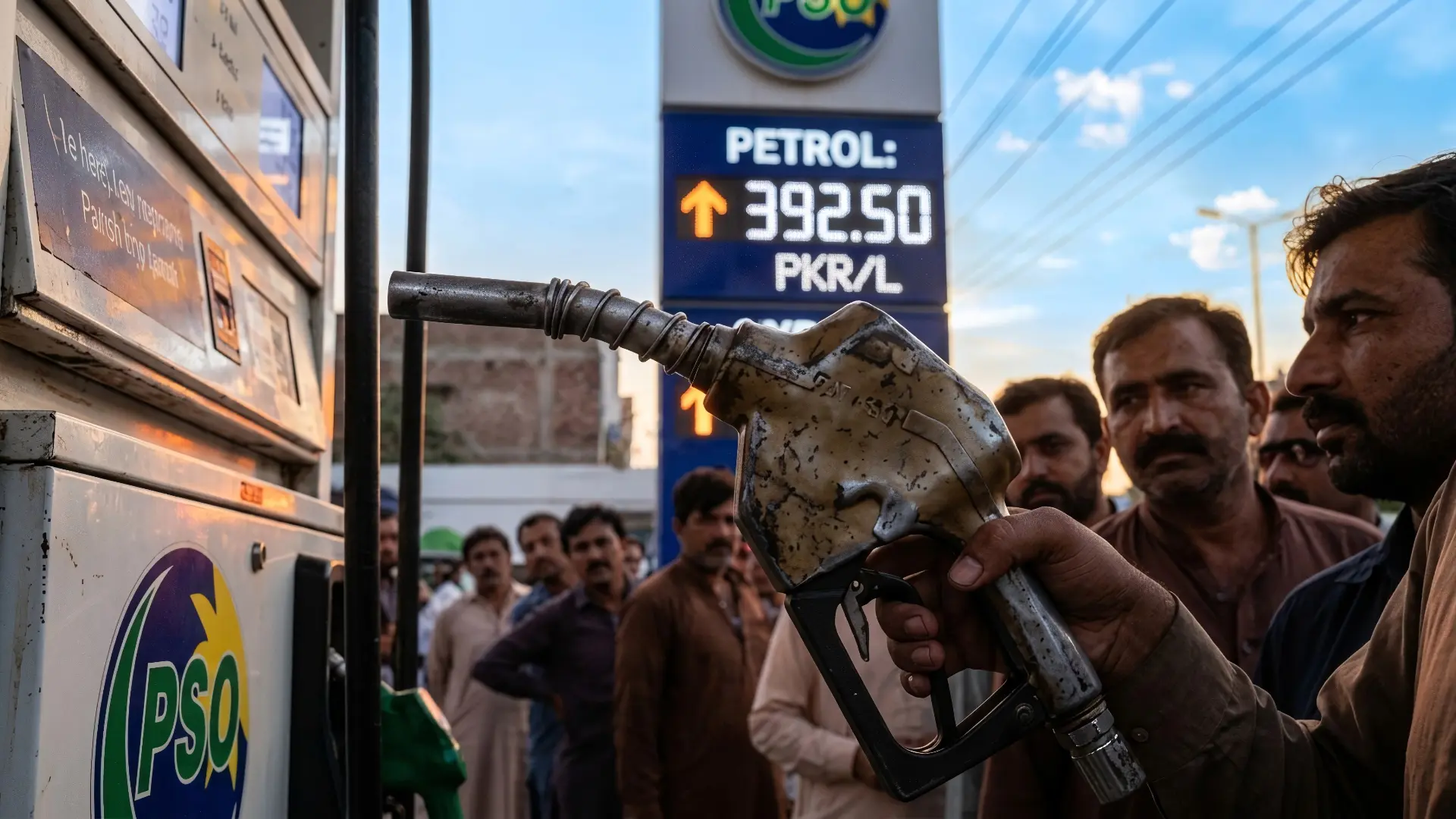
Trucks in Pakistan run on high-speed diesel. In late October 2026, its price was about Rs 400 per litre: Rs 398.07 on 28 October and Rs 400.67 from 30 October. When diesel rises, transporters raise freight. That flows into the delivered price of cement, steel, sand and crush.
Better roads let trucks travel faster and more safely. They spend less time and fuel on each trip and suffer less wear. Over time, that can lower freight rates on improved routes. Time is money for a truck. Jams, city entry limits for heavy vehicles and closures for road works all add hours. Ironically, a road being built can slow deliveries while work is under way.
Related: https://gharhub.com/petrol-price-construction-material-cost-pakistan
Can Infrastructure Development Reduce Construction Material Prices?
Most talk about infrastructure focuses on higher demand. But the transport story shows another side. In the right conditions, development can help bring prices down or keep them steady.Shorter, smoother trips mean trucks can make more deliveries in a day. Each delivery then carries less fixed cost. That saving can reach the buyer when transporters compete.
When a new road links a town to a bigger market, buyers there can choose from more suppliers. More choice usually means fairer prices. Sellers have to compete instead of relying on being the only option nearby.New cement lines, steel mills, or crushing plants add supply. If they open near growing cities, they can shorten supply chains and ease shortages.
Infrastructure like power lines and roads helps such plants get built. Ports, railways, and highways together form a distribution network. A stronger network lets material flow from where it is plentiful to where it is needed. That can narrow price gaps between regions over time.
What Other Factors Influence Construction Material Prices in Pakistan?
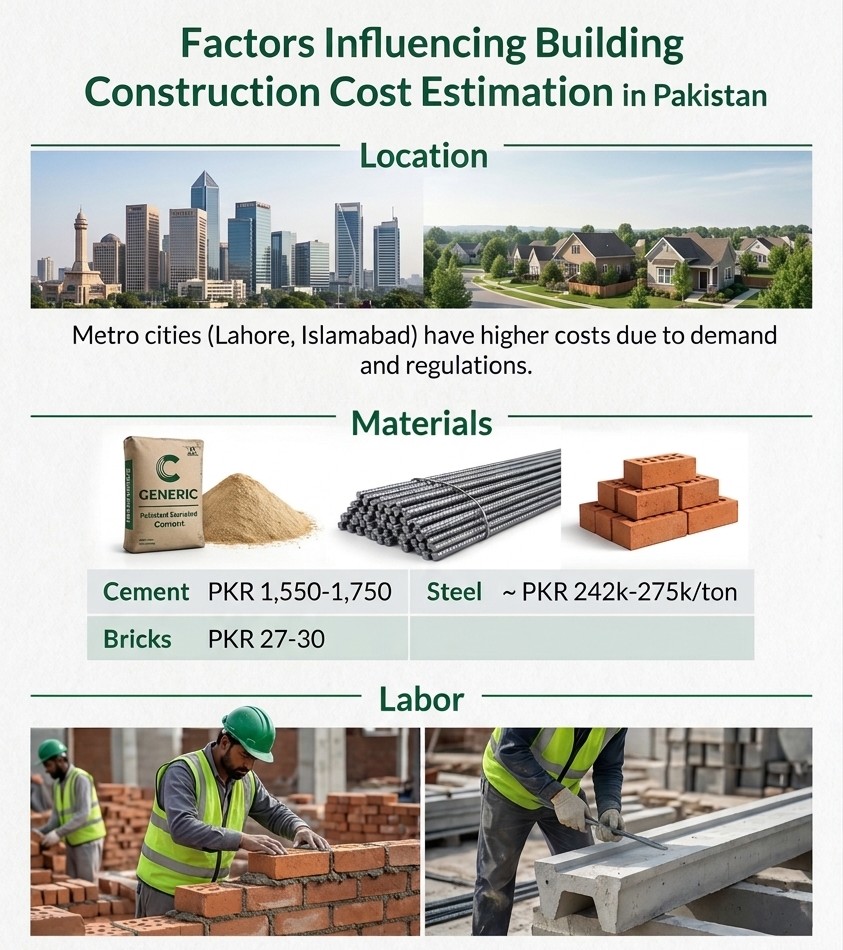
Infrastructure is one possible influence on prices. It is not the only one, and often not the biggest. Blaming every price rise on development projects would mislead you. These eight factors deserve just as much attention.
Inflation and purchasing power
Currency depreciation and imported construction inputs
Fuel and electricity prices
Government taxes, duties, and construction policies
Seasonal construction demand
Import restrictions and international commodity prices
Labour shortages and transportation disruptions
Supply chain challenges and supplier competition
Related: https://gharhub.com/pakistan-in-5-years-prediction
Infrastructure Development Future Trends and Construction Material Demand
Future demand depends on which projects actually get built, not which ones get announced. So we sort them into three groups: approved, under way, and still proposed.
Future motorway and highway development
Roads lead Pakistan's development pipeline. The Economic Survey 2025 to 26 says the NHA is running 71 road projects worth Rs 226.98 billion under the FY2025 to 26 PSDP. Most of that money (Rs 224.83 billion) goes to finishing ongoing work.
Dam and hydropower construction
Water projects take years and use huge amounts of concrete. Mohmand Dam is the clearest current example. WAPDA expects it to be finished in 2026 to 27. Once a dam's main concrete work ends, its pull on local cement and aggregate supply eases.
Urban development and housing demand
Housing is the steady, everyday source of demand. It does not depend on one big contract. It depends on families, developers, and how much they can afford. Local cement dispatches grew 9.5% in FY2025 to 26, according to APCMA data. Those figures cover all local buyers, public and private.
Industrial zones and commercial infrastructure
Industrial zones, warehouses, and commercial buildings use a lot of structural steel, concrete floors, and block walls. CPEC includes plans for special economic zones.
Potential opportunities for construction material suppliers
For suppliers, a project pipeline is a sales forecast. Those who plan early can gain the most:
Quarries and crushers near motorway routes can supply aggregates for both roads and nearby housing.
Cement and steel dealers can stock ahead of known pour seasons.
Transporters gain when new roads open shorter routes.
Suppliers in towns along new motorways may reach buyers who were too far before.
Conclusion
Infrastructure and material prices are linked, but not in a straight line. Motorways, dams, bridges and housing schemes buy the same cement, steel, sand and crush that home builders buy. When that demand grows faster than local supply, prices can rise, especially for heavy local materials like crush and sand.
At the same time, infrastructure builds the roads, ports and railways that move materials. Over time, that can lower freight, widen supplier choice and narrow price gaps between cities. The real effect on your budget depends on several things at once:
Location: how close you are to the project and to material sources
Timing: whether a big project is buying at the same time as you
Supply capacity: whether plants and quarries can keep up
Fuel costs: diesel near Rs 400 a litre in late October 2026
The rupee: which drives imported steel scrap and chemicals
Government policy: taxes, duties and transport rules
The smart move is to watch verified prices, not headlines. Check live supplier rates before every big purchase, get written quotes that include freight, and buy in stages that match your construction work.
FAQs
How does infrastructure development affect construction material prices in Pakistan?
Infrastructure projects increase demand for cement, steel, sand, crush, and bitumen. If supply cannot keep up, local prices can rise. New roads can also cut transport costs over time. The overall effect depends on location, timing, supply, fuel costs, and the rupee.
Does CPEC increase construction material prices?
CPEC projects add demand while they are being built, mainly for cement, steel and aggregates near project sites. Its finished roads and power plants can also help lower costs over time.
How do motorways affect cement and steel prices?
Motorways use cement and steel in bridges, culverts, and interchanges, but mostly they use aggregates and bitumen. Cement and steel prices depend more on fuel, energy, scrap prices, and the rupee. Over time, motorways can reduce freight costs for cement and steel.
Can dam construction increase crush and aggregate prices?
Yes, near the dam site. Dams use huge amounts of graded aggregate for years. If they buy from the same quarries as nearby towns, local crush prices can rise. Cities far from the dam are usually affected much less.
How do fuel prices affect cement, steel, sand, and crush?
Fuel affects them twice. Cement and steel need energy to make, and all four need diesel to transport. Sand and crush feel freight costs most, because they are heavy and cheap per cubic foot.
Does infrastructure development increase housing construction costs?
It can raise costs for a while if big projects compete with homes for local materials. It can also lower costs later through better roads and more suppliers. Inflation, fuel, and the rupee often matter more for housing costs.
What materials are most commonly used in infrastructure projects?
The most common are cement, steel bars, crushed stone, sand, and bitumen. Dams and bridges use a lot of concrete and steel. Roads use mostly aggregates and bitumen. Railways use ballast stone, concrete sleepers, and steel rails.